

Blog
Tuna Steak Recipe (Seared Ahi with Soy-Ginger Marinade)

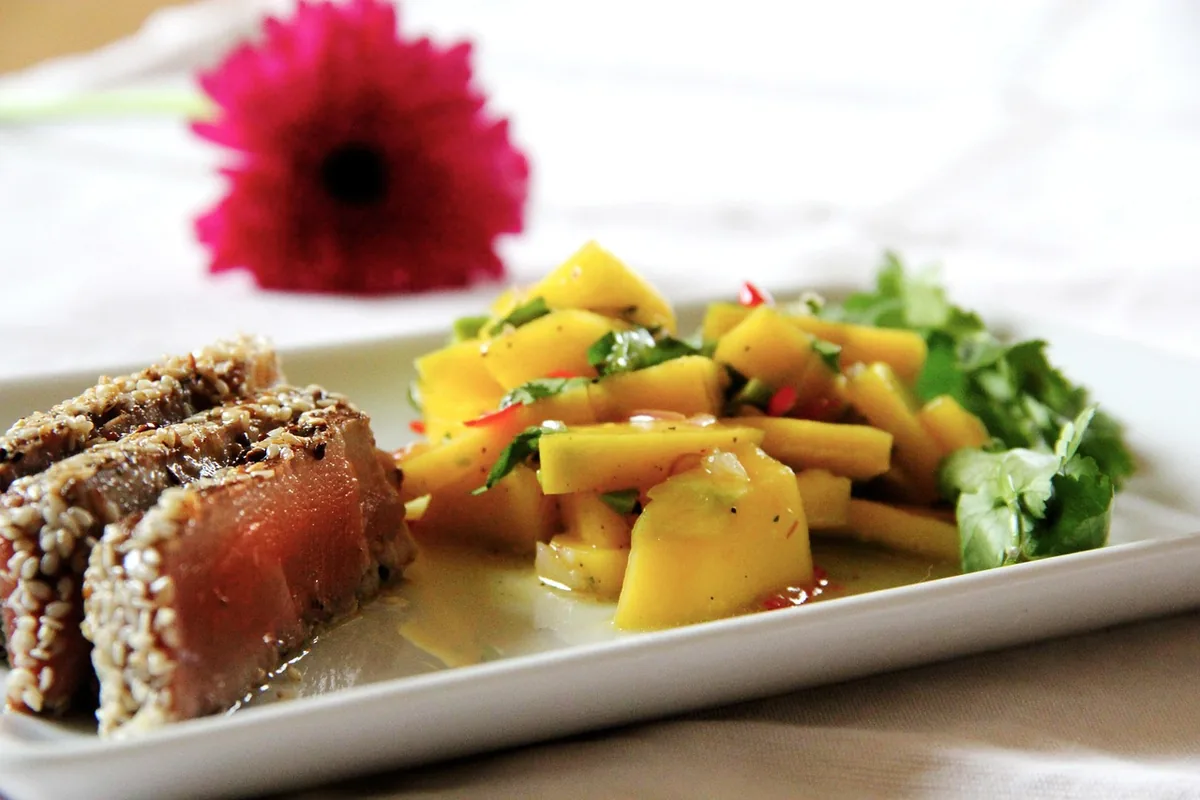
This tuna steak recipe gives you seared ahi with a dark, savory crust and a rosy center in about 5 minutes of cooking. Two thick tuna steaks sit for 15 minutes in a soy, ginger, lime and sesame marinade, then go into a smoking-hot skillet for about a minute per side. Slice them across the grain and you have a restaurant-style dinner for two.
Below you’ll find how to buy tuna steaks (what “sushi grade” does and doesn’t mean, fresh vs. frozen, and color), why the marinade time is short, and a sear time chart by thickness. There’s also an honest look at rare tuna and food safety, grilled and broiled versions, serving ideas, a fix-it table and a recipe card.
Why This Seared Tuna Works
Tuna is very lean, and the muscle firms up and turns dry and flaky once the center gets past medium. That’s why most seared tuna is cooked hard and fast: the outside browns while the inside barely warms. A good tuna steak recipe is mostly about heat, timing and thickness, not a long list of steps.
- Thick steaks. At 1 to 1¼ inches (2.5 to 3 cm), there’s enough room for a crust and a rare-to-medium-rare band in the middle. Thin steaks cook through before they brown.
- A short marinade. Soy sauce, ginger, garlic, lime and toasted sesame oil add flavor in 15 minutes without changing the texture.
- A very hot pan. Cast iron or carbon steel holds heat when the cold fish goes in, so the sugar in the honey and soy caramelizes fast.
- Optional sesame crust. Pressing sesame seeds onto the steaks gives a nutty, crunchy shell and a little insulation for the center.
Ahi is the Hawaiian name used for both yellowfin and bigeye tuna. Most ahi tuna steaks in US stores are yellowfin, which is what this recipe was written for. Albacore steaks work too, but they’re paler and softer and cook a little faster.
How to Buy Tuna Steaks
Good tuna steaks are the whole dish here, so it pays to know what you’re looking at. Ask the counter when the fish came in and whether it was frozen, and buy it last on your shopping trip so it stays cold.
What “sushi grade” really means
In the US there is no legal standard for “sushi grade” or “sashimi grade.” It’s a seller’s term that usually means the fish was handled and frozen with raw eating in mind, but no agency inspects or certifies it. Our guide to sushi grade salmon explains the label, freezing rules and how to judge a seller in more detail.
- Buy from a fishmonger or store with high turnover that can tell you the species, where it was caught and whether it was frozen.
- Tuna is less prone to parasites than many fish, but it can cause scombroid poisoning if it sat warm after the catch. Cooking does not destroy that toxin, so cold handling from boat to counter matters more than any label.
- If you plan to eat it rare, treat “sushi grade” as a starting question for the seller, not a promise.
Fresh vs. frozen tuna steaks
Much of the “fresh” tuna in stores was frozen at some point, and that’s fine. Tuna frozen quickly at sea is often better than fresh fish that spent a week traveling. Look for vacuum-sealed frozen steaks with no ice crystals or frost inside the bag.
| Option | Pros | Watch for |
|---|---|---|
| Fresh, never frozen | Firm, silky texture, no thawing | Cook within 1 to 2 days; costly; ask how old it is |
| Frozen at sea, vacuum-packed | Good quality, easy to keep on hand | Thaw overnight in the fridge, never at room temperature |
| Previously frozen, sold thawed | Convenient | Don’t refreeze; cook within 1 to 2 days |
To thaw frozen tuna steaks, leave them in their sealed bag in the fridge for 8 to 12 hours. In a hurry, set the sealed bag in a bowl of cold water for 30 to 45 minutes. Cook them right away after a cold-water thaw.
Color and smell
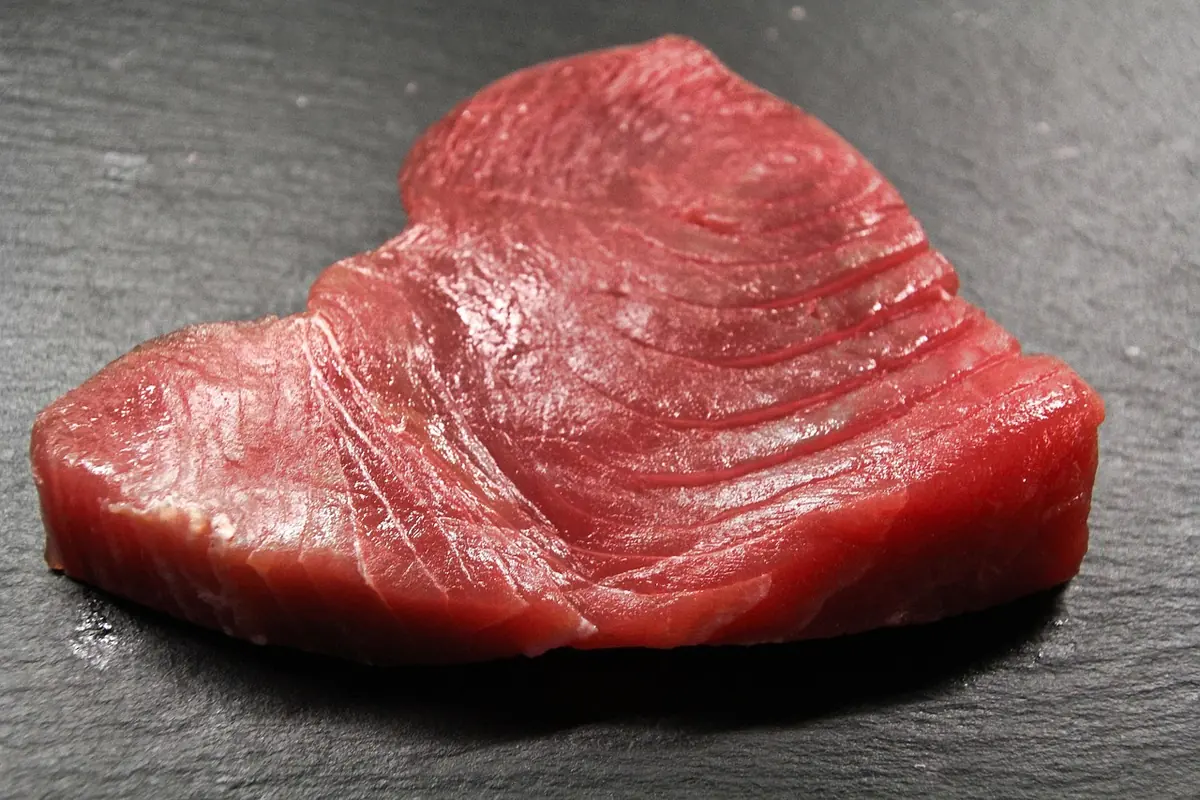
- Color. Yellowfin should be deep red to ruby; albacore is pink-beige. Dull brown edges or rainbow sheen point to age.
- Too red? Some frozen tuna is treated with filtered smoke or carbon monoxide, which keeps it bright cherry red for a long time. It’s allowed in the US, but it means color alone can’t tell you freshness.
- Smell and feel. It should smell clean like the sea, never fishy or sour, and feel firm, moist and not sticky.
- Shape. Choose even steaks 1 to 1¼ inches thick, about 8 oz (225 g) each, with little or no dark bloodline.
Ingredients for the Tuna Steak Marinade
This tuna steak marinade is salty, a little sweet and bright with ginger and lime. These amounts are for 2 steaks:
- 2 ahi tuna steaks, about 8 oz (225 g) each, 1 to 1¼ inches thick.
- Low-sodium soy sauce, 3 tablespoons (45 ml). Use tamari for gluten-free.
- Toasted sesame oil, 1 tablespoon (15 ml).
- Unseasoned rice vinegar, 1 tablespoon (15 ml).
- Fresh lime juice, 1 tablespoon (15 ml), from about half a lime.
- Honey, 2 teaspoons, or brown sugar.
- Fresh ginger, 1 tablespoon, finely grated.
- Garlic, 1 large clove, finely grated.
- Neutral oil, 1 tablespoon (15 ml), such as avocado or canola, for searing. Toasted sesame oil burns at high heat, so it stays in the marinade.
- To finish: 2 sliced green onions, toasted sesame seeds and lime wedges.
- Optional sesame crust: 2 tablespoons (18 g) white and black sesame seeds.
You’ll want a 10- or 12-inch cast iron or carbon steel skillet, a shallow dish or zip-top bag for marinating, tongs and a very sharp knife. If you like Asian-style flavors on fish, the same balance of salty, sweet and sour shows up in our salmon seasoning guide.
Swaps
- Spicy: add 1 to 2 teaspoons sriracha or ½ teaspoon red pepper flakes.
- Citrus: swap the lime for orange juice and add a little grated zest.
- No soy: use coconut aminos and add a pinch of salt.
How Long to Marinate Tuna Steaks
Marinate tuna steaks for 15 to 30 minutes, and no longer than an hour. Tuna is dense but delicate. Lime juice and vinegar start to “cook” the outside, the way ceviche works, and salt from the soy sauce pulls out moisture. Leave the fish too long and the outer layer turns pale, firm and mushy at the same time.
| Time in the marinade | What happens |
|---|---|
| 10 to 15 minutes | Light flavor on the surface; best for thin steaks |
| 15 to 30 minutes | The sweet spot: seasoned outside, silky center |
| 30 to 60 minutes | Saltier; the edges start to look opaque |
| Over 1 hour | Gray, cured-looking edges and a soft, mealy texture |
Marinate in the fridge, turning the tuna steaks once. If you need to prep ahead, mix the tuna steak marinade without the lime juice up to 2 days early, and add the lime just before the fish goes in.
Want a sauce? Mix a second batch of the marinade before it touches raw fish and keep it for drizzling. Never serve marinade that held raw fish unless you boil it first for at least 1 minute.
How to Make This Tuna Steak Recipe Step by Step
Have everything ready before the pan heats up, because the cooking takes only a few minutes.
- Mix the marinade. Whisk the soy sauce, sesame oil, rice vinegar, lime juice, honey, ginger and garlic in a shallow dish.
- Marinate. Add the tuna steaks, turn to coat and refrigerate for 15 to 30 minutes, turning once.
- Dry the fish. Lift the steaks out, let the extra drip off and pat them dry with paper towels. A wet surface steams instead of searing. Throw out the used marinade.
- Add the crust (optional). Spread the sesame seeds on a plate and press each side of the tuna into them.
- Heat the pan. Heat the skillet over high heat for 3 to 4 minutes. Add the neutral oil and wait until it shimmers and just starts to smoke.
- Sear. Lay the steaks in, away from you. For rare, sear 45 to 60 seconds per side; for medium-rare, 1½ to 2 minutes per side. Don’t move them while they sear.
- Brown the edges. Use tongs to hold each steak on its edges for 10 to 15 seconds each.
- Rest and slice. Move the tuna to a board and rest 2 minutes. Slice ¼ to ½ inch thick across the grain with a sharp knife, using one long stroke per cut.
- Finish. Top with green onions, sesame seeds and a squeeze of lime.
Sesame-crusted seared tuna browns faster, so watch the heat: if the seeds darken in under a minute, turn the burner to medium-high. Open a window or run the fan; a proper sear makes smoke.
How to slice seared tuna
- Find the white lines in the flesh and cut across them, not along them.
- Wipe the knife between cuts for clean slices.
- Pull the knife through in one stroke instead of sawing, which tears the soft center.
Seared Tuna Time Chart by Thickness
These times are per side in a preheated cast iron skillet over high heat, for tuna that came straight from the fridge after marinating. Stoves vary, so use the chart as a guide and check the cut edge or a thermometer.
| Thickness | Rare (about 110 to 115°F / 43 to 46°C center) | Medium-rare (about 120 to 125°F / 49 to 52°C) | Well done (145°F / 63°C) |
|---|---|---|---|
| ¾ inch (2 cm) | 30 to 45 sec | 1 min | 2½ to 3 min, medium heat |
| 1 inch (2.5 cm) | 45 to 60 sec | 1½ min | 3 to 4 min, medium heat |
| 1¼ inches (3 cm) | 1 min | 2 min | 4 to 5 min, medium heat |
| 1½ inches (4 cm) | 1 to 1½ min | 2 to 2½ min | 5 to 6 min, medium heat |
For well-done tuna steaks, sear 1 minute per side on high to brown them, then turn the heat to medium and keep cooking, flipping once, until the center is opaque and reaches 145°F (63°C). Fully cooked tuna is firm and pale throughout; a little sauce helps.
- Rare: a thin cooked band, deep red middle that’s cool to barely warm.
- Medium-rare: a wider cooked band and a warm, pink-red center.
- Medium and beyond: mostly opaque with a narrow pink line, turning firmer and drier as it goes.
Is Rare Seared Tuna Safe? Food Safety and Mercury
Here’s the plain answer. The safe minimum internal temperature for fish listed on FoodSafety.gov is 145°F (63°C), or until the flesh is opaque and separates easily. Rare and medium-rare seared tuna are below that number.
Eating tuna seared on the outside and rare inside is a common choice in restaurants and at home, but it is a choice, and it carries some risk of foodborne illness. You lower that risk by buying from a trusted seller, keeping the fish cold, and cooking it the day you thaw or buy it. You can’t remove it entirely.
Cook tuna all the way to 145°F (63°C), and skip rare fish, for:
- pregnant or breastfeeding people;
- babies, young children and older adults;
- anyone with a weakened immune system, liver disease or other condition that raises the risk of foodborne illness.
Mercury: which tuna to choose
Tuna is a good source of protein and omega-3 fats, but larger tuna carry more mercury. The FDA’s advice about eating fish sorts tuna by type, which matters most for children and anyone pregnant or breastfeeding:
| Tuna type | FDA category | Guideline |
|---|---|---|
| Canned light (mostly skipjack) | Best choice | 2 to 3 servings a week |
| Yellowfin (most ahi) | Good choice | 1 serving a week |
| Albacore (white tuna) | Good choice | 1 serving a week |
| Bigeye | Choice to avoid | Skip it, especially for children and during pregnancy |
Because “ahi” can mean yellowfin or bigeye, ask which species you’re buying. Check the FDA page for current serving sizes by age.
Grilled and Broiled Tuna Steaks
The same marinade and timing work outdoors or under the broiler. Keep the steaks thick and the heat high.
| Method | Heat | Rare to medium-rare | Main tip |
|---|---|---|---|
| Cast iron skillet | High, oil just smoking | 45 sec to 2 min per side | Best crust, most control |
| Gas or charcoal grill | Direct, 500°F+ (260°C+) | 1 to 2 min per side | Clean, well-oiled grates |
| Broiler | High, rack 3 to 4 inches from heat | 2 to 3 min per side | Preheat the pan under the broiler |
Grilled tuna steaks
Heat the grill to high for 10 to 15 minutes, scrub the grates and oil them well with a folded paper towel and tongs. Pat the marinated tuna dry and brush it lightly with neutral oil. Grill with the lid open, 1 to 2 minutes per side for rare to medium-rare, without moving it, so it releases cleanly. Our guide to how to grill steak covers heat zones and grill marks, which work the same way for fish.
Broiled tuna steaks
Set a rack 3 to 4 inches (8 to 10 cm) below the broiler and heat a cast iron pan or rimmed sheet pan under it for 5 minutes. Add the oiled tuna and broil 2 to 3 minutes, flip and broil 1 to 2 minutes more. Broiling gives less crust than a skillet, so the sesame coating is a good addition here.
How to Serve Seared Tuna
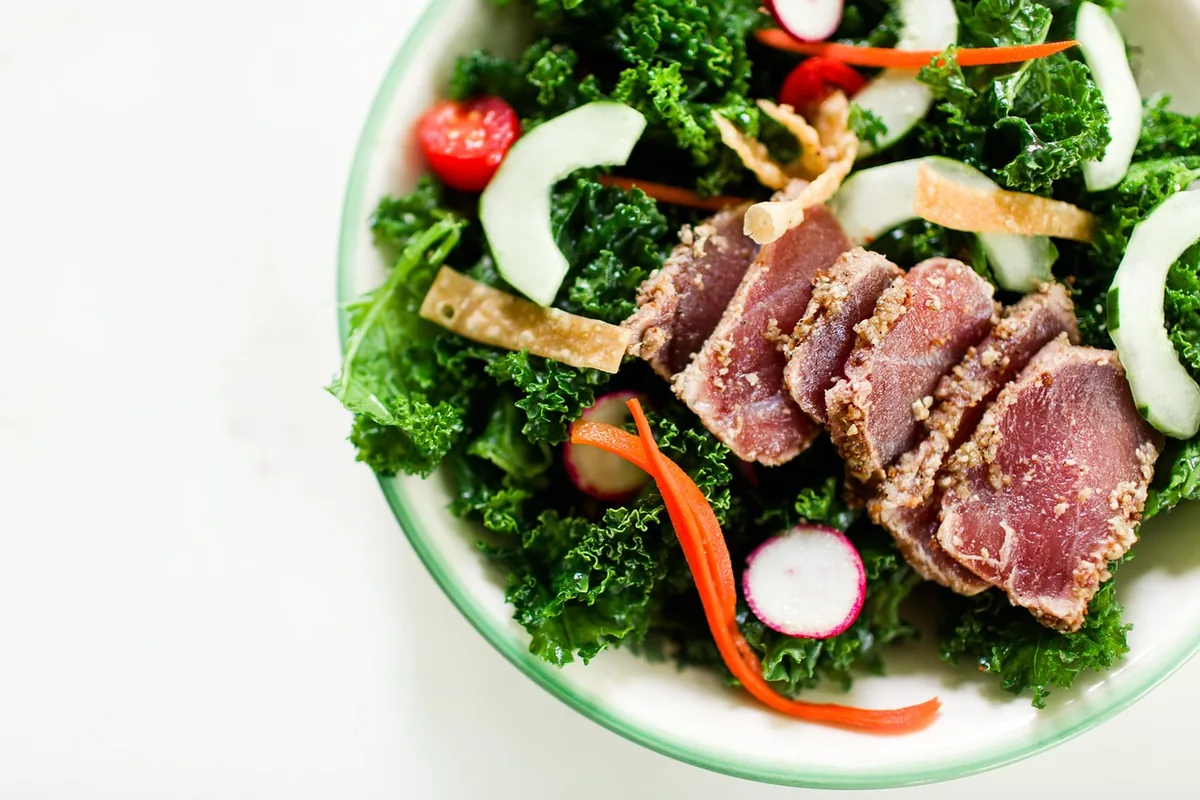
Seared tuna is rich and meaty, so it pairs well with rice, crunchy vegetables and something tangy.
Seared tuna rice bowls
- Base: warm jasmine, sushi or brown rice, about ¾ cup (140 g) cooked per bowl.
- Toppings: sliced cucumber, avocado, shredded carrot, edamame, pickled ginger and sliced radish.
- Sauce: a reserved batch of fresh marinade, or mayonnaise mixed with sriracha.
- Finish: furikake or sesame seeds and green onions.
Seared tuna salad
- Toss mixed greens or shredded cabbage with a dressing of 2 tablespoons rice vinegar, 1 tablespoon soy sauce, 1 teaspoon sesame oil and 1 teaspoon honey.
- Add cucumber, snap peas, mango or orange segments, then lay the sliced tuna on top.
- For a Niçoise-style plate, use boiled potatoes, green beans, olives and a soft-boiled egg with a lemon vinaigrette.
More sides and sauces
- Sesame noodles, stir-fried bok choy or garlicky green beans.
- A wasabi-soy dipping sauce, ponzu, or a creamy herb sauce such as our lemon dill sauce for salmon, which also suits well-done tuna.
- For a seafood spread, add one of these easy shrimp recipes on the side.
Plan one 8-ounce tuna steak per person for dinner, or half a steak per person sliced over a bowl or salad.
Troubleshooting Tuna Steaks
| Problem | Likely cause | Fix next time |
|---|---|---|
| Gray all the way through | Cooked too long or steaks too thin | Buy 1-inch steaks, use the chart, and pull early |
| No crust, pale outside | Wet fish or pan not hot enough | Pat very dry; preheat 3 to 4 minutes until the oil smokes |
| Mushy, cured outer layer | Marinated too long | Keep it to 15 to 30 minutes |
| Burnt, bitter crust | Honey or sesame seeds scorched | Wipe off excess marinade; lower the heat slightly for sesame crust |
| Fish stuck to the pan or grill | Moved too soon or grates not oiled | Wait until it releases on its own; oil the grates well |
| Ragged slices | Dull knife or cut with the grain | Slice across the white lines with one long stroke |
| Too salty | Regular soy sauce or long marinade | Use low-sodium soy and stick to 30 minutes |
| Strong, fishy flavor | Older fish or dark bloodline left on | Buy from a trusted counter; trim the dark strip |
Storing and Using Leftover Tuna Steaks
Refrigerate cooked tuna within 2 hours in a sealed container. Well-done leftovers keep 3 to 4 days, per the cold food storage chart. Rare seared tuna is best eaten the same day; if you keep it, eat it within 1 day. Raw tuna steaks keep 1 to 2 days in the fridge, or 2 to 3 months frozen for best quality.
- Serve cold: sliced seared tuna is good straight from the fridge over salad or rice. Reheating rare tuna turns it gray and dry.
- To reheat: if you’d like it hot, warm well-done slices in a covered pan over low heat to 165°F (74°C), the guideline for leftovers.
- Repurpose: flake cooked tuna into a pasta salad, fried rice or lettuce wraps.
- More fish dinners: browse all of our seafood recipes.
Seared Ahi Tuna Steak Recipe Card
Calories are an estimate per serving (1 tuna steak, counting all of the marinade and oil, without the optional sesame crust, rice or sides) based on USDA FoodData Central values for raw yellowfin tuna, low-sodium soy sauce, sesame oil, vegetable oil, honey, lime juice, ginger and garlic.

Seared Ahi Tuna Steaks with Soy-Ginger Marinade
Ingredients
Equipment
Method
- Whisk the soy sauce, sesame oil, rice vinegar, lime juice, honey, ginger and garlic in a shallow dish.
- Add the tuna steaks, turn to coat and refrigerate for 15 to 30 minutes (no longer than 1 hour), turning once.
- Lift the tuna out, let the excess drip off and pat it dry with paper towels. Discard the used marinade. For a sesame crust, press both sides into the 2 tablespoons of sesame seeds.
- Heat the skillet over high heat for 3 to 4 minutes. Add the neutral oil and heat until it shimmers and just begins to smoke.
- Sear the tuna without moving it: 45 to 60 seconds per side for rare, or 1½ to 2 minutes per side for medium-rare. Hold each steak on its edges for 10 to 15 seconds to brown them. For well done, sear 1 minute per side, then cook over medium heat, flipping once, until the center reaches 145°F (63°C).
- Rest the tuna 2 minutes, then slice ¼ to ½ inch thick across the grain. Top with green onions and sesame seeds and serve with lime wedges.


