

Blog
Souffle Pancakes (Tall, Jiggly Japanese Soufflé Pancakes)

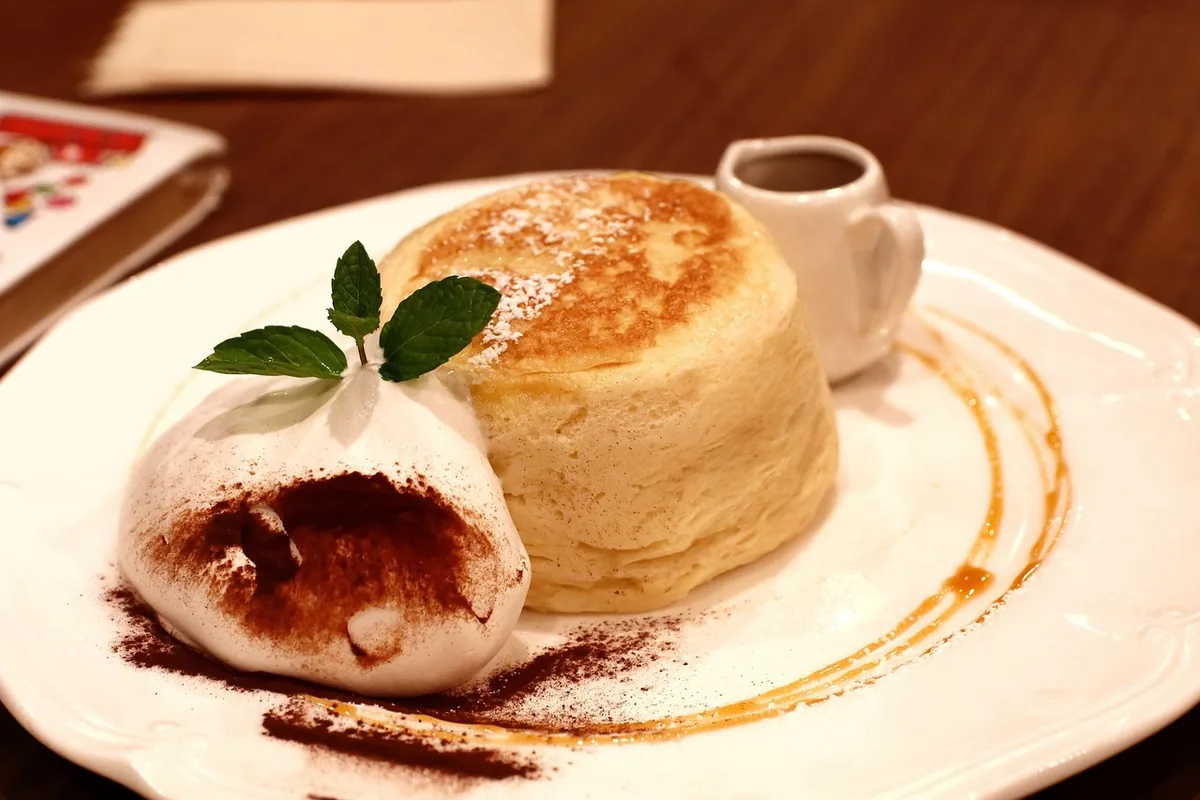
These souffle pancakes are the tall, jiggly Japanese pancakes you see wobbling on cafe plates, made at home with 3 eggs, a little flour and a pan with a lid. A rich egg-yolk batter is folded into a glossy meringue, piled high and cooked slowly in gentle steam until each pancake is golden outside and as light as a cloud inside.
They take patience more than skill. Below you’ll find what makes Japanese souffle pancakes different from regular pancakes, a step-by-step method with ring molds or piped mounds, a time chart, why they deflate and how to stop it, a troubleshooting table, egg safety, toppings, a matcha version and a printable recipe card for 6 pancakes that serves 2.
Souffle Pancakes at a Glance
Here’s the whole method in seven steps, so you know what’s coming before you crack an egg.
- Separate 3 cold eggs. Yolks go in one bowl, whites in a clean, dry bowl.
- Make the yolk batter: whisk the yolks with milk and vanilla, then sift in cake flour, baking powder and salt.
- Whip the meringue: beat the whites with cream of tartar, adding the sugar slowly, to firm, glossy peaks.
- Fold gently in three additions until no white streaks remain.
- Pile it tall in greased ring molds or as piped mounds in a nonstick pan on the lowest heat.
- Steam and cook: add a spoonful of water, cover, cook 6 to 7 minutes, flip, add water again and cook 5 to 6 minutes more.
- Serve right away with butter, maple syrup, powdered sugar and berries.
What Are Japanese Souffle Pancakes?
Japanese souffle pancakes are thick, round pancakes, often 1½ to 2 inches tall, that get almost all their lift from whipped egg whites. They’re cooked over very low heat under a lid, so the inside sets like a soufflé while the outside turns an even golden brown. Cut one open and the crumb is moist, airy and slightly custardy.
They became a cafe favorite in Japan and spread worldwide as “jiggly” or “fluffy pancakes.” Here’s how they compare with other breakfast pancakes:
- vs. American buttermilk pancakes: regular fluffy pancakes rely on baking powder or baking soda in a thick batter cooked fast on a hot griddle. Souffle pancakes use a meringue and much lower heat, and they’re two or three times as tall.
- vs. a German pancake: a Dutch baby has no meringue at all; it puffs in a very hot oven from steam and then falls. Our German pancake recipe is the easier choice for a lazy morning.
- vs. dorayaki and hotcakes: Japanese hotcakes are thick but cakey. Japanese pancakes in the soufflé style are softer, wetter and far lighter.
For quicker everyday stacks, browse our easy pancake recipe ideas, then come back to this recipe when you want a weekend project.
Ingredients for Souffle Pancakes
The list is short, but each ingredient has a job. Measure by weight if you can; in souffle pancakes, small errors matter.
| Ingredient | Amount | Why it matters |
|---|---|---|
| Large eggs, cold | 3, separated | Cold eggs separate cleanly. The whites become the meringue that lifts the pancakes; the yolks add richness and color. |
| Whole milk | 3 tablespoons (45 ml) | Loosens the yolk batter so it folds easily into the meringue. |
| Vanilla extract | ½ teaspoon | Rounds out the eggy flavor. |
| Cake flour | ½ cup (60 g) | Low protein means a tender, soft crumb. Sift it. |
| Baking powder | ¾ teaspoon | Backup lift that helps the pancakes hold their height. |
| Fine salt | ⅛ teaspoon | Keeps the pancakes from tasting flat. |
| Cream of tartar | ¼ teaspoon | Stabilizes the egg whites so the meringue stays firm. Use 1 teaspoon lemon juice instead if you don’t have it. |
| Granulated sugar | ¼ cup (50 g) | Beaten into the whites, it makes the meringue glossy and stable. Superfine sugar dissolves fastest. |
| Neutral oil | 1 teaspoon | A thin film on the pan and rings so nothing sticks. |
| Water | 2 tablespoons, divided | Turns to steam under the lid and cooks the tops gently. |
No cake flour? Measure ½ cup all-purpose flour, remove 1 tablespoon, add 1 tablespoon cornstarch and sift twice. The pancakes will be slightly less tender but still very good.
Tools: Ring Molds, Piping Bag and a Lidded Pan
You don’t need special gear, but a few tools make tall, even Japanese pancakes much easier.
- A large nonstick skillet with a lid: a 12-inch pan fits 6 small mounds if you pipe them close together. The lid traps steam, which cooks the tops while the bottoms brown slowly. A sheet pan or foil works as a lid in a pinch.
- Ring molds (optional): 3-inch (7.5 cm) metal rings, about 2 inches tall, give perfectly straight sides. Grease them and line each one with a parchment collar that stands 1 inch above the rim.
- A piping bag or zip-top bag: piping lets you build height without pressing air out. Two large spoons also work.
- Electric mixer: a hand mixer or stand mixer makes a stable meringue in 3 to 4 minutes. By hand it takes 8 to 10 minutes of hard whisking.
- Thin offset spatula: for sliding under and flipping each pancake in one quick move.
How to Make Souffle Pancakes Step by Step
Read through once before you start. The meringue for souffle pancakes won’t wait long, so have the pan, rings, water and spatula ready first.
1. Prepare the pan
Brush the skillet with a thin layer of oil and set it over the lowest heat on your stove for 2 to 3 minutes. If you’re using rings, oil the insides, add the parchment collars and set them in the pan. The surface should be warm, around 300°F (150°C), not sizzling hot.
2. Make the egg-yolk batter
- Whisk the 3 yolks, milk and vanilla in a medium bowl until smooth and pale.
- Sift the cake flour, baking powder and salt over the top.
- Whisk just until there are no dry spots. The batter will be thick and sticky, like a soft paste.
3. Whip the meringue
Use a bowl with no trace of grease or yolk, or the whites won’t whip. Beat the whites with the cream of tartar on medium speed until foamy, about 1 minute. Then add the sugar one spoonful at a time while beating on medium-high.
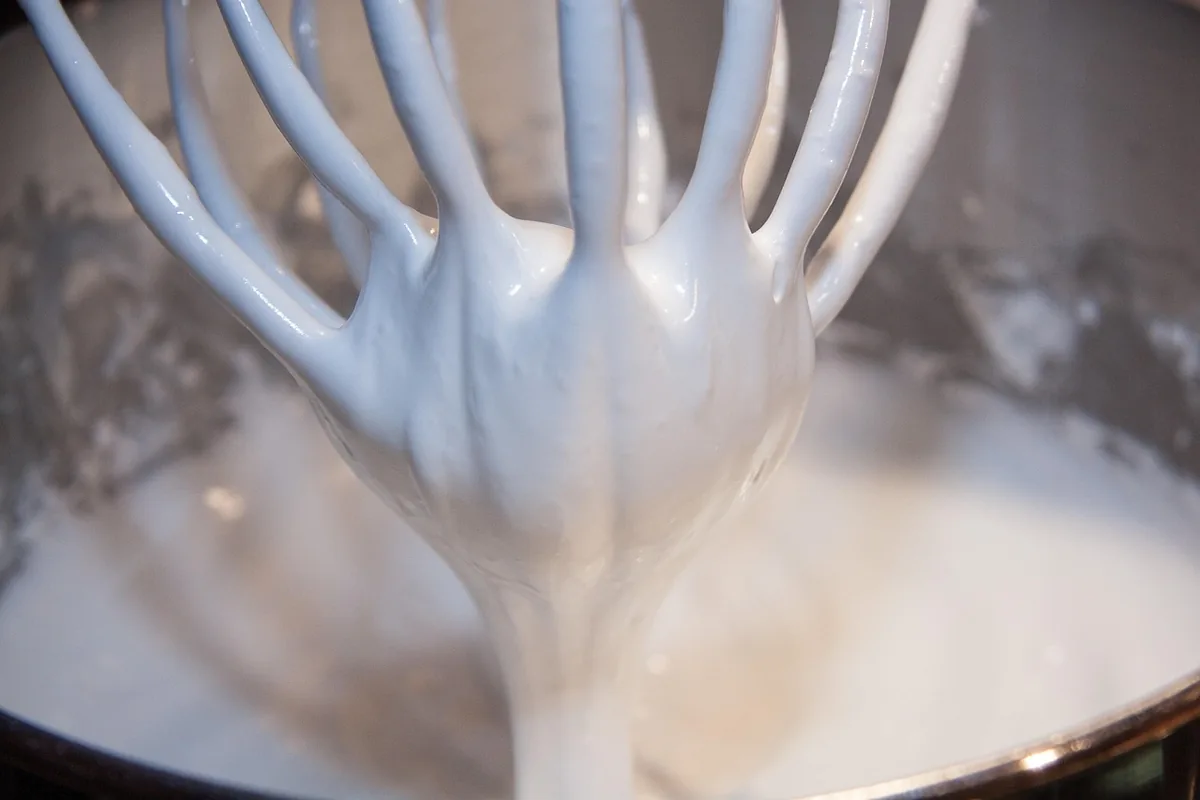
Stop when the meringue is glossy and holds a peak that stands up with only a slight curl at the tip, usually 3 to 4 minutes. That’s a firm peak. Don’t beat until it looks dry or lumpy; overwhipped whites crack, won’t fold smoothly and lose air in the pan.
4. Fold the batter
- Stir one third of the meringue into the yolk batter with a whisk to loosen it. You can be a little rough here.
- Add half of the remaining meringue and fold with a silicone spatula: cut down the middle, sweep along the bottom and turn the batter over, rotating the bowl as you go.
- Pour this mixture back into the remaining meringue and fold until no white streaks remain. Stop as soon as it looks even. The batter should be thick enough to hold soft mounds.
5. Build the pancakes tall
Spoon the batter into a piping bag. If you’re piping freehand, pipe 6 mounds about 2½ inches (6 cm) wide and 1½ inches tall, leaving a little space between them. If you’re using rings, fill each one about two thirds full.
Add 1 tablespoon of water to the empty spaces in the pan, cover and cook 2 minutes. Then pipe the rest of the batter on top of each mound to build height. This stacking trick gives the tallest Japanese souffle pancakes.
6. Steam, flip and finish
- Cover and cook another 4 to 5 minutes, until the bottoms are golden and the sides look set and matte.
- Slide the spatula fully under each pancake and flip it in one quick, low motion. Ring pancakes flip ring and all; lift the rings off after a minute.
- Add the second tablespoon of water, cover and cook 5 to 6 minutes more, until a toothpick in the center comes out clean.
- Turn off the heat and serve immediately.
Getting the Meringue Right
The meringue is where souffle pancakes succeed or fail. You want it stable enough to hold air in a warm pan, yet soft enough to fold into the yolk batter without lumps.
| Stage | What it looks like | Use it? |
|---|---|---|
| Foamy | Loose bubbles, still clear and liquid | Not yet. Start adding sugar now. |
| Soft peaks | White and fluffy; the peak flops over | Not yet. The pancakes will spread and flatten. |
| Firm peaks | Glossy; the peak stands with a slight curl | Yes. This is the target. |
| Stiff peaks | Very firm, peak points straight up | Acceptable, but fold carefully. |
| Overbeaten | Dry, grainy, starts to separate | No. It deflates as you fold. |
A few habits make the meringue more forgiving:
- Separate the eggs cold, then whip right away. Cold whites take a little longer to whip but form smaller, more stable bubbles.
- Add an acid. Cream of tartar or lemon juice strengthens the egg proteins, so the foam holds up during folding and cooking.
- Add sugar slowly. Dumping it in at once collapses the foam.
- Keep yolk out. Even a speck of fat can keep whites from whipping. Separate each egg over a small cup first.
Souffle Pancakes Time Chart
Low heat is the secret to fluffy pancakes this tall. Every stove runs differently, so use these times as a guide and watch the pancakes, not the clock.
| Shape | First side (covered) | Second side (covered) | Total |
|---|---|---|---|
| Piped mound, 2½ in wide, stacked | 6 to 7 min | 5 to 6 min | 11 to 13 min |
| 3-inch ring, two thirds full | 7 to 8 min | 6 to 7 min | 13 to 15 min |
| 3-inch ring with a parchment collar, filled to 2½ in | 8 to 9 min | 7 to 8 min | 15 to 17 min |
| Electric griddle at 300°F (150°C), tented | 6 to 7 min | 5 to 6 min | 11 to 13 min |
The heat is right when you hear only a faint sizzle as the water goes in and the bottoms of your souffle pancakes turn an even golden brown, not dark.
Why Souffle Pancakes Deflate (and How to Fix It)
Some sinking is normal. Japanese souffle pancakes are held up by tiny air bubbles, and as they cool, the air contracts. Expect them to settle about 10 to 15 percent within a few minutes. Big collapses, though, have a clear cause.
- Underbeaten meringue: soft peaks don’t have the strength to hold the batter up. Beat to firm, glossy peaks.
- Overmixing during folding: every extra stroke knocks out air. Fold just until the streaks disappear; overmixed souffle pancakes bake up short.
- Batter waited too long: a meringue batter starts losing air after about 5 minutes. Cook it right away, using two pans if one is too small.
- Underbaked center: if the middle is still wet, the structure isn’t set and it collapses. Cook until a toothpick comes out clean.
- Heat too high: the outside sets and browns before the inside rises and cooks. Lower the flame and add a minute or two.
- No steam: without the lid and water, the tops dry out and the pancakes cook unevenly.
Serve them the moment they come off the heat. Fluffy pancakes like these are at their tallest in the first two minutes.
Troubleshooting Japanese Pancakes
When a batch of Japanese pancakes doesn’t look like the photos, one of these is usually the reason.
| Problem | Likely cause | Fix |
|---|---|---|
| Flat or spread out | Soft meringue, overfolded batter, or batter that sat too long | Whip to firm peaks, fold in three additions and pipe right away. Use rings for guaranteed height. |
| Raw or gummy center | Heat too high, too short a cook, or no lid | Lower the heat, keep the pan covered with water for steam and add 1 to 2 minutes per side. |
| Tastes eggy | Underbaked, too little vanilla or salt | Cook until set all the way through, and don’t skip the vanilla or salt. A little lemon zest in the yolk batter helps too. |
| Burnt bottom, pale top | Pan too hot, or a thin pan with hot spots | Use the lowest heat and a heavy nonstick pan. If your burner runs hot, set the pan on a flame diffuser. |
| Stuck to the pan or rings | No oil, or the parchment collar is missing | Oil the pan and rings well, and line rings with parchment. |
Egg Safety for Souffle Pancakes
Souffle pancakes are mostly egg, and the gentle heat that makes them tender also means you need to cook them through.
- Cook until set. The center should spring back and a toothpick should come out clean. Egg dishes are safe at 160°F (71°C) in the center, per the FoodSafety.gov safe minimum internal temperatures chart. An instant-read thermometer slid in from the side will tell you if you’re unsure.
- Consider pasteurized eggs. They’re a good choice for young children, older adults, pregnant people or anyone with a weakened immune system. Pasteurized whites whip a bit more slowly, so give them an extra minute or two.
- Don’t eat the raw batter. Raw eggs can carry Salmonella, and raw flour isn’t ready to eat either. The FDA explains why in its guide to handling flour safely.
Toppings and a Matcha Variation
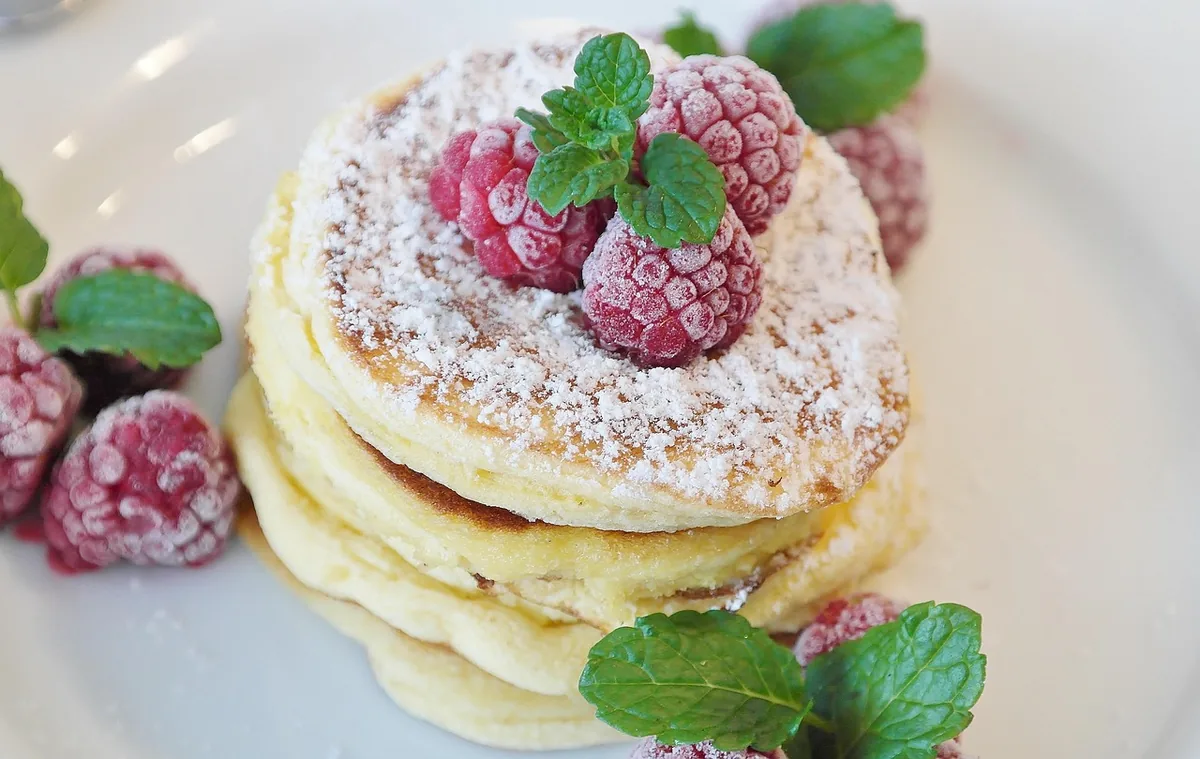
The classic cafe plate is simple: a pat of butter melting on top, a pour of maple syrup, a dusting of powdered sugar and fresh berries. Because souffle pancakes are delicate, keep toppings light so they don’t weigh them down.
- Butter and maple syrup: 1 tablespoon of butter and 2 tablespoons of syrup for the whole batch.
- Berries and powdered sugar: a cup of sliced strawberries, blueberries or raspberries and a light snow of sugar.
- Whipped cream: softly whipped cream with a little sugar and vanilla, spooned on the side.
Matcha souffle pancakes
For pale green pancakes with a gentle, grassy bitterness, swap some flour for matcha.
- Remove 1 tablespoon (8 g) of the cake flour and replace it with 2 teaspoons (4 g) of culinary-grade matcha powder.
- Sift the matcha with the flour, baking powder and salt twice, so there are no green specks.
- Make and cook the souffle pancakes exactly as written. Serve with whipped cream, a dusting of matcha and a drizzle of honey or sweetened red bean paste.
Serving, Make-Ahead and Storage
Souffle pancakes are best eaten within minutes, so have plates, toppings and coffee ready before the pancakes go into the pan. Three pancakes make one generous serving.
- Brunch spread: pair them with a skillet Dutch baby from our German pancake recipe, or a batch from our easy waffle recipe ideas, and browse all our breakfast recipes for more.
- For dessert: a stack with whipped cream and berries makes a light dessert. If you love a creamy, eggy bake, try our mini cheesecake recipe or a warm bread pudding.
- Make ahead: measure the dry ingredients, separate the eggs and keep the whites covered in the fridge up to a day ahead. Don’t whip or fold until you’re ready to cook.
Refrigerate leftovers within 2 hours in an airtight container and eat them within 2 to 3 days, following the cold food storage chart. They will be denser. Reheat covered in a skillet on low with a teaspoon of water for 3 to 4 minutes, or microwave for 15 to 20 seconds.
Souffle Pancakes FAQ
Why are my Japanese souffle pancakes not fluffy?
Usually the meringue was too soft or the batter was overfolded. Beat the whites to firm, glossy peaks with cream of tartar or lemon juice, fold in three additions and cook right away on low heat with a lid.
Can I make souffle pancakes without ring molds?
Yes. Pipe tall mounds, cook them covered for 2 minutes, then pipe more batter on top to build height. They’ll be a little less even than ring pancakes, but just as light.
How do I know when they’re done?
The sides look dry and set, both faces are golden, and a toothpick in the center comes out clean. The center should reach 160°F (71°C).
What’s the difference between fluffy pancakes and souffle pancakes?
Regular fluffy pancakes get their rise from baking powder in a thick batter. Souffle pancakes get most of it from whipped egg whites, cook slowly under a lid and stand two or three times as tall.
Souffle Pancakes Recipe Card
Calories are an estimate per serving (3 pancakes) based on USDA FoodData Central values for whole eggs, whole milk, cake flour, sugar, vanilla, oil, butter, maple syrup, powdered sugar and strawberries. Whipped cream is extra.

Japanese Souffle Pancakes
Ingredients
Equipment
Method
- Brush a 12-inch nonstick skillet with the oil and set it over the lowest heat for 2 to 3 minutes. If using ring molds, oil them, line each with a parchment collar standing 1 inch above the rim and set them in the pan.
- Whisk the egg yolks, milk and vanilla until smooth. Sift in the cake flour, baking powder and salt and whisk just until no dry spots remain.
- In a clean, grease-free bowl, beat the egg whites with the cream of tartar on medium speed until foamy, about 1 minute. Add the sugar a spoonful at a time on medium-high and beat 3 to 4 minutes, until glossy firm peaks form.
- Whisk one third of the meringue into the yolk batter. Fold in half of the rest with a spatula, then fold that mixture into the remaining meringue until no white streaks remain. Don’t overmix.
- Transfer the batter to a piping bag. Pipe 6 mounds about 2½ inches wide and 1½ inches tall, or fill the rings two thirds full, keeping some batter back.
- Add 1 tbsp water to the empty spaces in the pan, cover and cook 2 minutes. Pipe the remaining batter on top of each mound, cover and cook 4 to 5 minutes more, until the bottoms are golden and the sides look set.
- Flip each pancake with a thin spatula in one quick, low motion. Add the remaining 1 tbsp water, cover and cook 5 to 6 minutes, until a toothpick in the center comes out clean and the center reaches 160°F (71°C).
- Serve right away, 3 pancakes per plate, with butter, maple syrup, powdered sugar and berries.


