

Blog
Mini Cheesecake Recipe (Easy Cream Cheese Bites in a Muffin Tin)

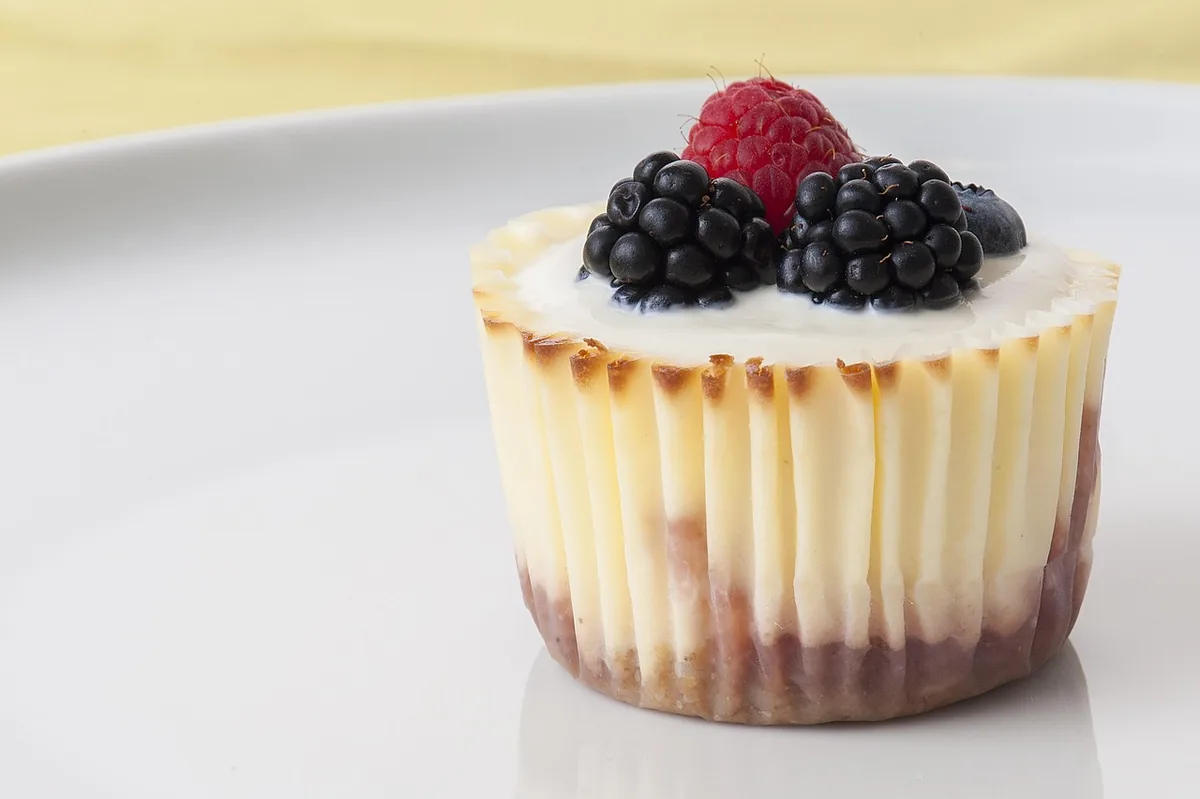
This mini cheesecake recipe bakes 12 creamy, single-serve cheesecakes in a regular muffin tin, each with a buttery graham cracker crust and a smooth vanilla cream cheese filling. You need no springform pan, no water bath and no fancy equipment, just paper liners, a mixer and a little patience while they chill.
Below you’ll find the ingredients and why each one matters, a step-by-step method, how to tell when they’re done, a fix-it table for cracks and sunken centers, baking times for standard and mini-muffin sizes, a toppings bar, and how to store, freeze and make them ahead. The printable recipe card is at the bottom.
Why You’ll Love This Mini Cheesecake Recipe
A full-size cheesecake asks a lot of you: a springform pan, foil wrapping, a roasting pan of hot water and an hour or more in the oven. Minis skip almost all of that. Here’s what makes them easy:
- No water bath. Each cup holds only about ¼ cup of filling, so the heat reaches the center quickly and evenly at 325°F (165°C). The edges don’t overcook while the middle catches up, which is the whole reason big cheesecakes need a water bath.
- Short bake. 18 to 22 minutes instead of 60 to 90.
- Built-in portions. No slicing, no crumbly wedges, no fighting a knife through a cold cake.
- Party-friendly. They travel in the muffin tin, sit happily on a dessert table (for up to 2 hours) and take any topping you like.
- Simple ingredients. Graham crackers, butter, sugar, cream cheese, eggs, sour cream and vanilla.
One more perk: the slight dip that forms in the center as they cool makes a natural little cup for cherry pie filling, berry sauce or caramel.
Ingredients for Mini Cheesecakes
These amounts make 12 standard mini cheesecakes. Weights are given because graham crumbs and sugar pack differently from cup to cup.
For the graham cracker crust
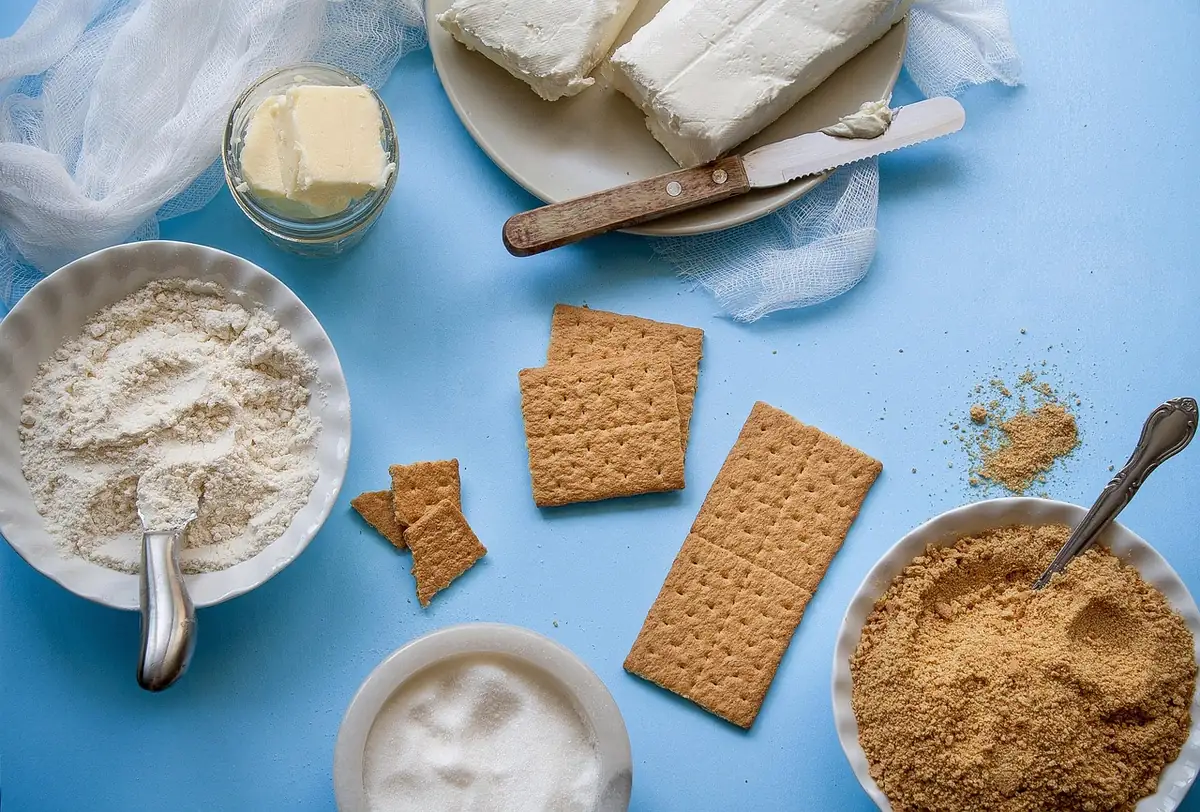
- Graham cracker crumbs, 1 cup (about 100 g), from about 7 full sheets. Store-bought crumbs work too.
- Granulated sugar, 2 tablespoons (25 g).
- Unsalted butter, 3 tablespoons (43 g), melted.
For the creamy filling
- Full-fat brick cream cheese, 16 oz (two 8-oz blocks, 452 g), softened at room temperature for 1 to 2 hours.
- Granulated sugar, ½ cup (100 g).
- All-purpose flour, 1 tablespoon (8 g). A small amount helps the filling set smoothly and resist cracking.
- Fine salt, a pinch.
- Full-fat sour cream, ⅓ cup (80 g), at room temperature, for a tangy, silky texture.
- Pure vanilla extract, 1 teaspoon.
- Large eggs, 2, at room temperature.
A note on cream cheese brands and full-fat vs. light
Buy cream cheese in foil-wrapped bricks, not tubs. Tub “spreadable” cream cheese has extra water and air whipped in, so the filling bakes up soft and can weep. Philadelphia is the classic choice because it’s consistent and fairly firm. Many store brands work fine, though some are softer or slightly saltier; if yours feels loose when softened, add 2 to 3 extra minutes to the bake.
Light cream cheese (often labeled Neufchâtel or “⅓ less fat”) works, but the result is softer, a little less rich and more likely to sink. Fat-free cream cheese isn’t worth it here: it turns rubbery and grainy in the oven. For the creamiest result, use full-fat cream cheese and full-fat sour cream.
Equipment You Need
You likely own everything already:
- Standard 12-cup muffin tin (cups about 2½ inches / 6.5 cm wide).
- 12 paper or foil liners. Foil liners peel away most cleanly; paper liners work if you chill the minis fully.
- Stand mixer or hand mixer, set to low. A sturdy whisk works if the cream cheese is very soft.
- Small glass or spice jar with a flat bottom to press the crusts.
- Cookie scoop or ¼-cup measure for even filling.
- Instant-read thermometer (optional but handy).
Have a mini cheesecake pan with removable bottoms? Skip the liners, grease the cups lightly and follow the same method. When they’re cold, push up each disc from below and slide a thin knife under the crust. A nonstick tin without liners isn’t recommended; the crust welds to the sides.
How to Make Mini Cheesecakes (Step by Step)
Plan on about 20 minutes of hands-on time, 25 minutes in the oven and at least 4 hours of chilling.
Make and prebake the crust
- Heat the oven to 325°F (165°C) with a rack in the center. Line the muffin tin with 12 liners.
- Mix the crust. Stir the graham crumbs, 2 tablespoons sugar and melted butter until it looks like wet sand and holds together when squeezed.
- Press. Spoon a heaping 1½ tablespoons into each liner and press it flat and firm with the bottom of a small glass.
- Prebake 5 minutes, then set the tin on a rack while you make the filling. Prebaking keeps the crust crisp instead of soggy.
Mix the filling
- Beat the cream cheese on low speed for about 1 minute until completely smooth, scraping the bowl and beater. This is the moment to get rid of lumps; they won’t disappear later.
- Add the sugar, flour and salt and beat on low for 1 minute more.
- Add the sour cream and vanilla and beat on low just until combined.
- Add the eggs one at a time on low speed, mixing only until each disappears. Scrape the bowl once more and fold by hand with a spatula. Stop as soon as it’s smooth; extra beating whips in air that puffs and cracks in the oven.
Fill, bake and cool
- Fill each liner almost to the top, a scant ¼ cup (about 4 tablespoons) each. Tap the tin on the counter 2 or 3 times to pop air bubbles.
- Bake 18 to 22 minutes, until the edges look set and slightly puffed and the centers still jiggle a little (see the next section). Don’t open the oven during the first 15 minutes.
- Cool slowly. Turn the oven off, prop the door open a few inches and leave the tin inside for 15 minutes. Then cool on a rack for 30 minutes.
- Chill at least 4 hours, or overnight, uncovered for the first hour so condensation doesn’t drip on the tops, then covered.
Raw batter contains raw eggs and raw flour, so skip licking the beaters. The FDA explains why in its guide to handling flour safely. Bake the minis fully, as described next.
How to Tell When Mini Cheesecakes Are Done
Minis go from perfect to overbaked in a couple of minutes, so check at 18 minutes. Look for these signs together:
- Set edges. The outer ½ inch looks matte and slightly puffed, not wet or shiny.
- A slight jiggle in the center. Gently nudge the tin. The middle (about the size of a nickel) should wobble like set gelatin, not ripple like liquid.
- No browning. The tops stay pale cream. Golden or tan tops mean they’re overbaked and will likely crack.
- Thermometer check (optional). The center of one mini reads about 150°F (66°C), the point where the egg custard is set.
The center keeps cooking from stored heat as they cool and then firms up completely in the fridge. If you wait until the middle is firm in the oven, the texture turns dry and the tops split.
Because the eggs in this filling cook only gently, use pasteurized-in-shell eggs if you’re serving anyone pregnant, very young, older or with a weakened immune system.
Why Mini Cheesecakes Crack or Sink (Troubleshooting)
Most problems trace back to four habits: overmixing, cold ingredients, overbaking and opening the oven. A shallow dip in the center as they cool is normal; deep craters and canyon cracks are not. Use this table to fix the next batch:
| Problem | Likely cause | Fix |
|---|---|---|
| Cracks across the top | Overbaked, or too much air beaten in | Pull them while the center still jiggles; mix on low and add eggs last |
| Deep sunken centers | Overmixing whipped in air that puffed, then collapsed | Beat only until smooth after each egg; tap the filled tin to release bubbles |
| Lumpy filling | Cold cream cheese | Soften 1 to 2 hours, or cut into cubes and leave 30 minutes; beat the cheese alone first |
| Curdled-looking batter | Cold eggs or sour cream | Warm eggs in a bowl of warm water for 10 minutes; bring sour cream to room temperature |
| Tops sank as soon as the oven opened | Door opened early or sudden temperature drop | Keep the door closed for 15 minutes; cool in the turned-off oven with the door ajar |
| Brown, puffed, dry tops | Oven runs hot or baked too long | Check with an oven thermometer; start checking at 16 to 18 minutes |
| Soggy crust | Crust not prebaked or packed too loosely | Press firmly and prebake 5 minutes |
| Liners stick to the sides | Not chilled long enough, or thin paper liners | Chill at least 4 hours; use foil liners or lightly spray paper ones |
Good news: a cracked mini tastes exactly the same, and a spoonful of topping hides any crack completely. Treat a cosmetic flaw as an excuse for extra cherry pie filling.
Getting them out of the liners
- Chill for the full 4 hours. Cold filling releases cleanly; warm filling tears.
- Peel the liner down in strips, from the top edge, like opening a cupcake.
- For a mini cheesecake pan, push up each removable bottom, then run a thin, warm knife between the crust and the metal disc.
Mini Cheesecake Sizes and Baking Times
The same batch of filling works in several pan sizes. Keep the oven at 325°F (165°C) for all of them and adjust the time and crust amount:
| Pan | Yield | Crust per cup | Filling per cup | Bake time at 325°F |
|---|---|---|---|---|
| Standard 12-cup muffin tin | 12 | Heaping 1½ tbsp | Scant ¼ cup | 18 to 22 minutes |
| Mini-muffin tin (24 cups) | About 24 | 2 tsp | About 1½ tbsp | 12 to 15 minutes |
| Jumbo muffin tin (6 cups) | 6 | 3 tbsp | About ½ cup | 25 to 30 minutes |
| Mini cheesecake pan (12 cups, removable bottoms) | 12 | 1½ tbsp | Scant ¼ cup | 17 to 20 minutes |
Scaling tips:
- Double the batch for 24 standard minis. Bake one tin at a time on the center rack for the most even results.
- Halve it with 8 oz cream cheese and 1 egg for 6 standard minis.
- Mini-muffin size needs the full chill too, but 2 to 3 hours is often enough because they’re so small.
- All sizes need the same doneness cues: set edges and a slight jiggle in the center.
Easy Topping Ideas
Top the minis right before serving so the crust and filling stay crisp and clean. Set out a toppings bar and let everyone build their own:
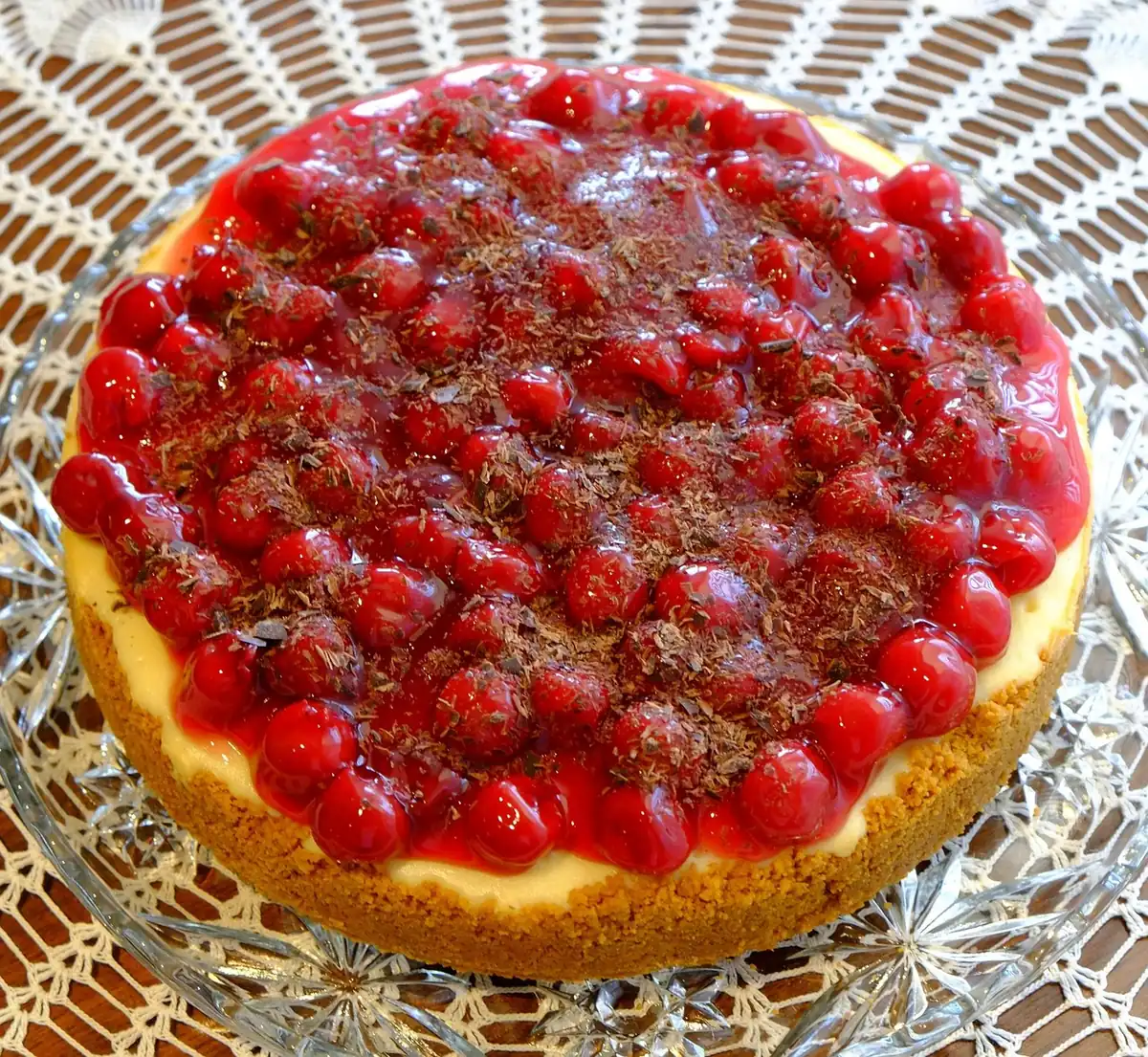
- Cherry pie filling: the classic. Spoon 1 tablespoon into each dip, or 2 or 3 cherries with a little sauce.
- Quick berry sauce: simmer 1 cup berries, 2 tablespoons sugar and 1 teaspoon lemon juice for 5 to 7 minutes until saucy, then cool.
- Caramel or turtle: drizzle with caramel sauce, then add chopped toasted pecans and a thread of melted chocolate.
- Chocolate ganache: heat ¼ cup heavy cream, pour over ½ cup chocolate chips, wait 2 minutes and stir smooth. Spoon on while slightly warm.
- Lemon curd: 1 teaspoon per mini, plus a few blueberries.
- Fresh fruit: sliced strawberries, raspberries, blackberries or kiwi.
- Whipped cream: a small swirl with a dusting of graham crumbs.
Love cherries? The same pie filling stars in our cherry dump cake recipe if you have a can left over.
Variations and Substitutions
Once you know the base, the variations are endless. Here are a few ideas, one line each:
- Turtle cheesecake minis: top with caramel, toasted pecans and chocolate drizzle.
- Caramel cheesecake minis: swirl 1 teaspoon thick caramel into each cup before baking.
- White chocolate raspberry: fold ½ cup melted, cooled white chocolate into the filling and top with raspberries.
- Pumpkin cheesecake bites: replace the sour cream with ½ cup pumpkin purée and add 1 teaspoon pumpkin pie spice; bake 2 minutes longer. For a bar-style pumpkin treat, see our pumpkin bars with cream cheese frosting.
- Oreo crust: use 1 cup finely crushed chocolate sandwich cookies (filling included) with 1 tablespoon butter, or set a whole cookie in each liner.
- Lemon: add 1 tablespoon lemon zest and 1 tablespoon lemon juice to the filling.
Common swaps:
| Instead of | Use |
|---|---|
| Graham crackers | Vanilla wafers, Biscoff cookies or digestive biscuits (skip the crust sugar for Biscoff) |
| Sour cream | Plain full-fat Greek yogurt or heavy cream |
| All-purpose flour | 1 tablespoon cornstarch (with a gluten-free crust, the minis become gluten-free) |
| Full-fat cream cheese | Light cream cheese (softer, more likely to sink) |
| Vanilla extract | ½ teaspoon almond extract, or the seeds of ½ vanilla bean |
Want a lighter-tasting baked cheesecake? Try our cottage cheese cheesecake, which also skips the water bath. And if you love cream cheese in baking, the cream cheese pound cake is a dense, buttery loaf version.
How to Store, Freeze and Make Ahead
Cheesecake is a perishable dairy and egg dessert, so it must be kept refrigerated. Don’t leave them at room temperature for more than 2 hours total (1 hour if it’s above 90°F / 32°C outdoors).
Refrigerate
- Store covered, without fruit or sauce toppings, for up to 5 days.
- Keep them in the muffin tin covered with plastic wrap, or in an airtight container in a single layer.
- Add toppings just before serving; fruit sauces soften the tops over time.
Freeze
- Freeze plain minis (no toppings) on a tray until firm, about 1 hour.
- Wrap each one in plastic wrap and store in a freezer bag for up to 2 months for the best texture.
- Thaw overnight in the fridge, still wrapped, so condensation forms on the wrap and not on the tops.
For general storage times, check the FoodSafety.gov cold food storage chart, and keep your fridge at 40°F (4°C) or below.
Make-ahead plan for a party
- Up to 1 month ahead: bake, cool, chill and freeze plain minis.
- 1 to 2 days ahead: bake fresh, or move frozen ones to the fridge to thaw.
- Day of: make the berry sauce or ganache and cool it.
- Just before serving: peel the liners or leave them on, add toppings and serve cold.
Cooking a big meal too? Make a dinner such as beef tips and gravy on the stovetop, then pull these out of the fridge for dessert. For more bakes, browse our cake recipes or try the carrot cake, which shares the same cream cheese love.
Mini Cheesecake Recipe FAQs
Do mini cheesecakes need a water bath?
No. A water bath protects the edges of a large cheesecake while the center slowly cooks. Each mini holds only about ¼ cup of filling, so it bakes evenly at 325°F (165°C) in about 20 minutes without one.
How long do mini cheesecakes need to chill?
At least 4 hours, and overnight is better. Chilling sets the texture, deepens the flavor and lets the liners peel away cleanly.
Why did my mini cheesecakes sink in the middle?
A slight dip is normal. A deep crater usually means the batter was overmixed and puffed with air, then collapsed. Beat on low and stop as soon as the eggs disappear.
Can I make mini cheesecakes without liners?
Use a mini cheesecake pan with removable bottoms, greased lightly. In a regular muffin tin, liners are the only reliable way to get them out whole.
How many mini cheesecakes does one batch make?
This batch makes 12 in a standard muffin tin or about 24 in a mini-muffin tin. Bake standard minis 18 to 22 minutes and mini-muffin size 12 to 15 minutes.
Can I use light cream cheese?
Yes, but they’ll be softer and less rich and may sink more. Avoid fat-free cream cheese, which turns rubbery when baked.
How long can mini cheesecakes sit out?
No more than 2 hours at room temperature, or 1 hour above 90°F (32°C). Keep extras in the fridge.
Mini Cheesecake Recipe Card
Calories are an estimate per mini cheesecake (1/12 of the recipe, without toppings) based on USDA FoodData Central values for graham crackers, sugar, butter, cream cheese, eggs, sour cream, flour and vanilla extract.

Mini Cheesecakes
Ingredients
Equipment
Method
- Heat the oven to 325°F (165°C) with a rack in the center. Line a standard 12-cup muffin tin with liners.
- Stir the graham crumbs, 2 tbsp sugar and melted butter until it looks like wet sand. Press a heaping 1 1/2 tbsp firmly into each liner with the bottom of a small glass.
- Bake the crusts 5 minutes, then set the tin on a rack.
- Beat the cream cheese on low speed about 1 minute until completely smooth, scraping the bowl. Add the sugar, flour and salt and beat on low 1 minute.
- Beat in the sour cream and vanilla on low, then the eggs one at a time, mixing only until each disappears. Scrape the bowl and fold by hand until smooth; don’t overmix.
- Fill each liner almost to the top (a scant 1/4 cup each) and tap the tin on the counter 2 or 3 times to release air bubbles.
- Bake 18 to 22 minutes, until the edges are set and the centers jiggle slightly. Don’t open the oven during the first 15 minutes.
- Turn off the oven, prop the door open a few inches and leave the tin inside 15 minutes. Cool on a rack 30 minutes.
- Refrigerate at least 4 hours or overnight. Peel off the liners and add toppings just before serving.


