

Blog
Cottage Cheese Cheesecake (Creamy, Lighter, No Water Bath)

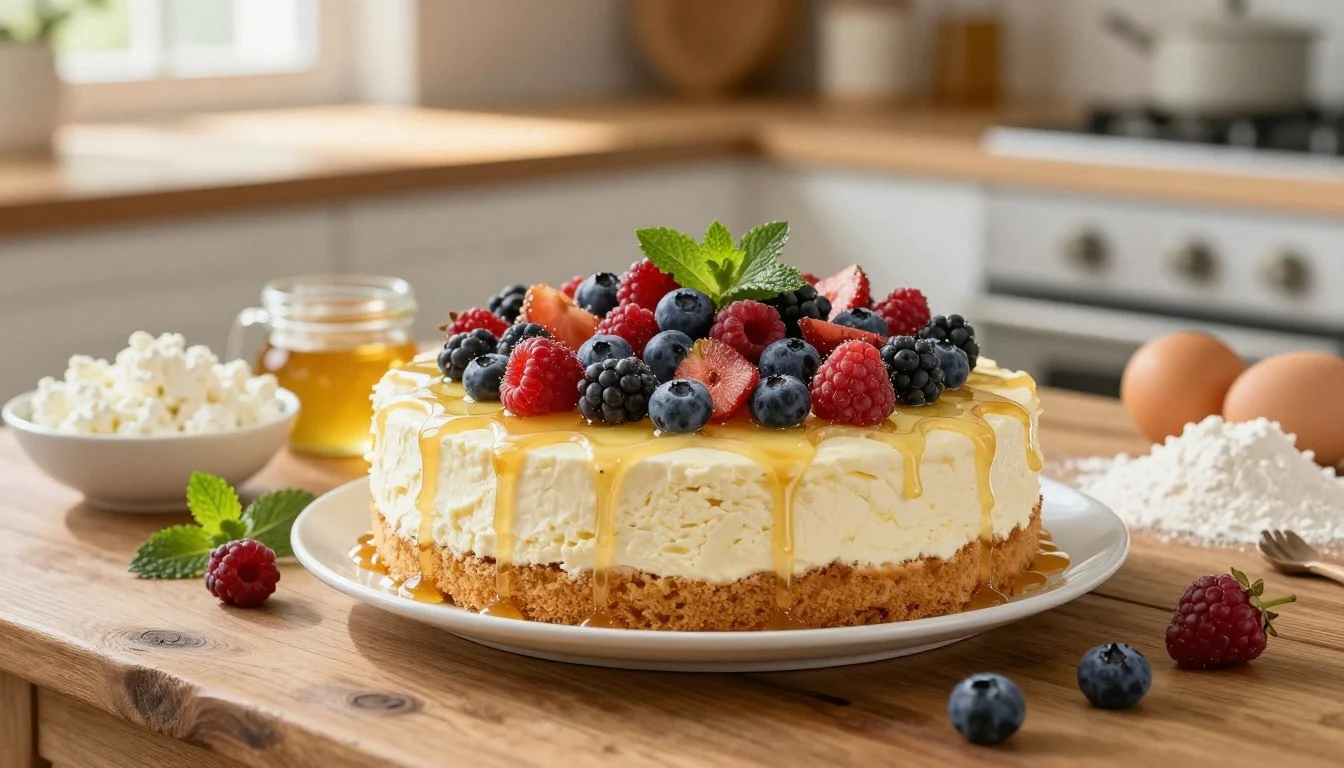
This cottage cheese cheesecake is creamy, tangy and surprisingly light. Blending cottage cheese until it’s completely smooth replaces half the cream cheese of a classic cheesecake, so you get a silky, New York–style texture with more protein and less fat. It bakes on a simple graham cracker crust and needs no water bath, just a gentle oven and patience while it chills.
Below you’ll find the ingredients with weights, how to blend cottage cheese smooth, step-by-step instructions, how to avoid cracks, topping ideas and storage. The printable recipe card is at the bottom.
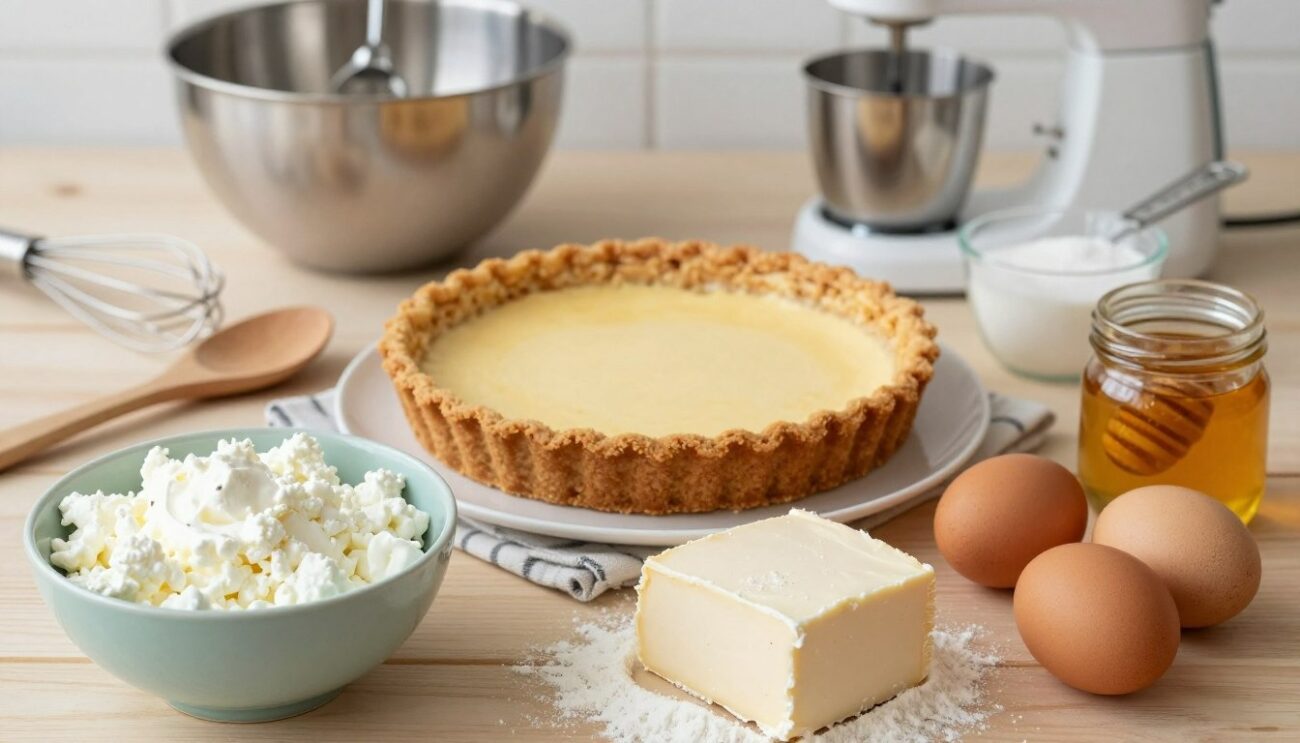
Ingredients for Cottage Cheese Cheesecake
For the crust
- Graham cracker crumbs, 1½ cups (150 g), from about 10 full sheets.
- Unsalted butter, 5 tablespoons (70 g), melted.
- Granulated sugar, 2 tablespoons.
For the filling
- Full-fat (4%) cottage cheese, 2 cups (16 oz / 450 g). Full-fat gives the creamiest texture.
- Cream cheese, 8 oz (225 g), full-fat block style, softened.
- Granulated sugar, ¾ cup (150 g).
- Large eggs, 3, at room temperature. Use pasteurized eggs if you want extra peace of mind (see the food safety note below).
- All-purpose flour or cornstarch, 2 tablespoons.
- Lemon, 1: 1 teaspoon zest and 1 tablespoon juice.
- Vanilla extract, 2 teaspoons, and a pinch of salt.
How to Make Cottage Cheese Cheesecake (Step by Step)
1. Make the crust
Heat the oven to 350°F (175°C). Stir the graham cracker crumbs, melted butter and sugar together and press firmly into the bottom of a 9-inch (23 cm) springform pan, using the bottom of a measuring cup. Bake for 10 minutes, then cool while you make the filling. Lower the oven to 325°F (165°C).
2. Blend the cottage cheese
Blend the cottage cheese in a blender or food processor for 1 to 2 minutes, scraping down the sides, until completely smooth with no curds left. This is the most important step; any curds that remain will show in the finished cheesecake.
3. Make the filling
Add the cream cheese, sugar, flour, lemon zest and juice, vanilla and salt to the blender and blend until smooth. Add the eggs and blend on low just until combined, about 10 seconds. Too much mixing after the eggs adds air bubbles that can cause cracks.
4. Bake
Pour the filling over the cooled crust and tap the pan gently on the counter to release bubbles. Set the pan on a rimmed baking sheet and bake for 45 to 55 minutes, until the edges are set and slightly puffed and the center still jiggles a little, like set gelatin, when you nudge the pan.
5. Cool slowly
Turn off the oven, prop the door open a few inches, and leave the cheesecake inside for 1 hour. Run a thin knife around the edge, then cool on a rack to room temperature.
6. Chill
Cover and refrigerate for at least 4 hours, or overnight, until fully set. Release the springform ring and slice with a hot, wiped knife.
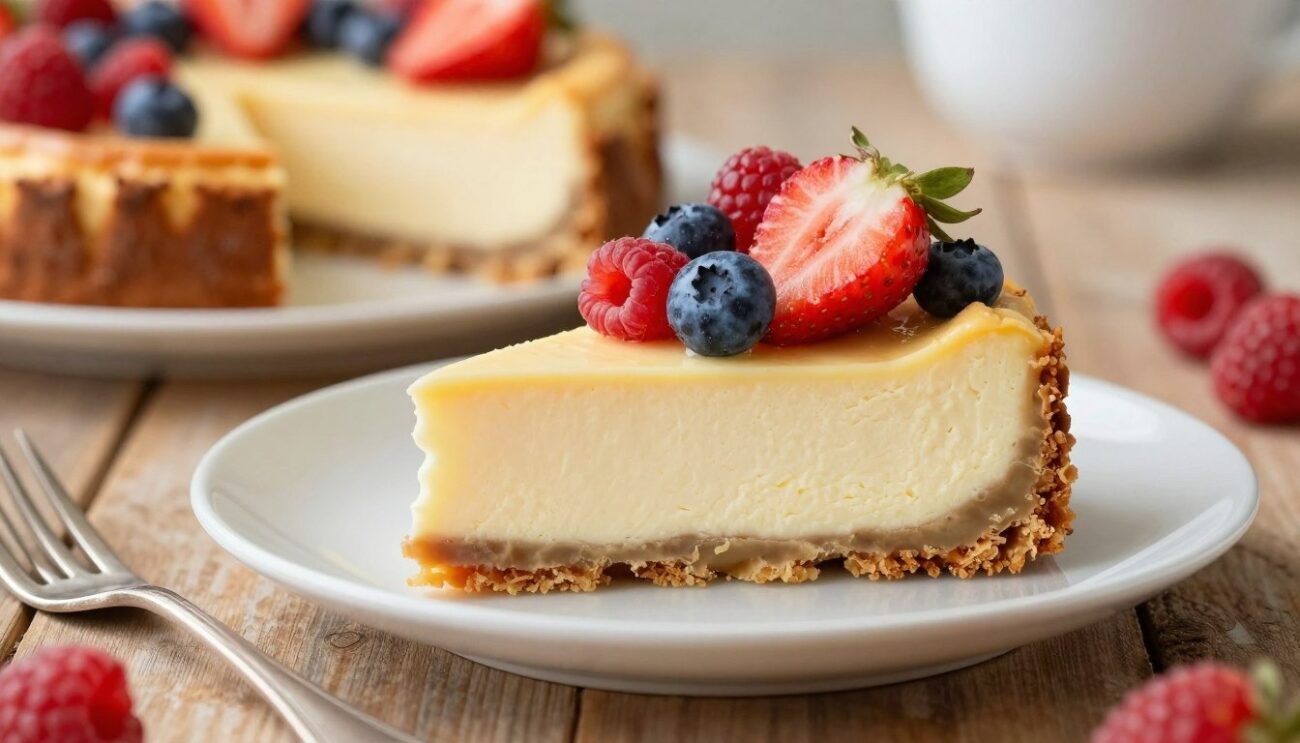
Chef Emma’s Tips
- Blend, don’t beat. A blender or food processor is what turns cottage cheese silky; a hand mixer won’t break down the curds.
- Room-temperature cream cheese and eggs blend smoothly and don’t leave lumps.
- Don’t overbake. The center firms up as it cools; if it’s firm in the oven, it’ll be dry later.
- Cool gradually. Sudden temperature changes are the main cause of cracks.
- Drain watery cottage cheese. If yours has a lot of liquid, let it sit in a fine strainer for 15 minutes before blending.
A Note on Food Safety
Cheesecake contains eggs, and USDA recommends cooking egg dishes to 160°F (71°C). A baked cheesecake is set with a slightly jiggly center at around 150°F (66°C), which is creamier but below that guideline. If you’re baking for someone who is pregnant, very young, older, or has a weakened immune system, use pasteurized eggs, or bake until the center reaches 160°F (the texture will be a bit firmer). See the FoodSafety.gov safe minimum temperature chart.
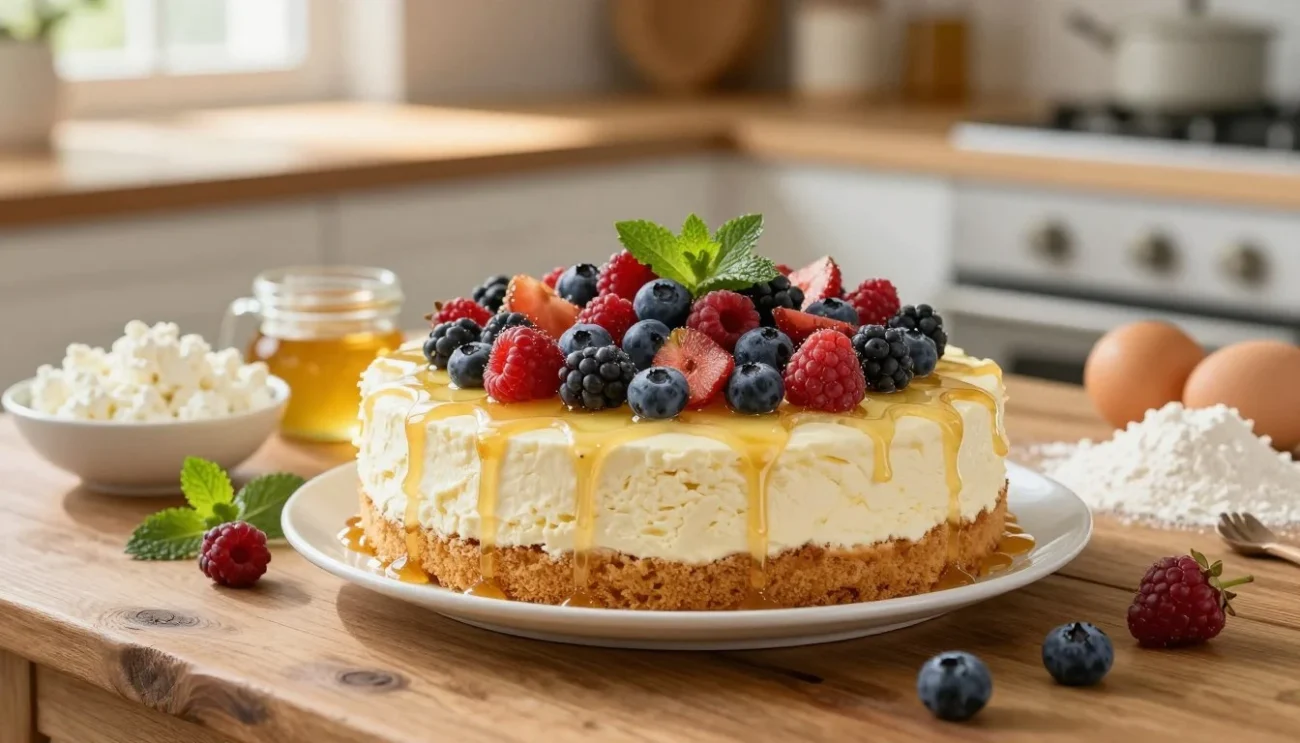
Topping Ideas
- Fresh berries: strawberries, blueberries and raspberries, as in the photo above.
- Quick berry sauce: simmer 2 cups frozen berries with 2 tablespoons sugar and 1 tablespoon lemon juice for 8 to 10 minutes, then cool.
- Lemon curd spread over the top.
- Honey and toasted nuts for a less sweet finish.
Variations
- Lighter: use reduced-fat (2%) cottage cheese and Neufchâtel; the texture will be slightly softer.
- Crustless: skip the crust, grease and line the pan with parchment, and bake as directed.
- Mini cheesecakes: divide the crust and filling among 18 lined muffin cups and bake at 325°F for 18 to 22 minutes.
- Chocolate: blend in ⅓ cup (28 g) cocoa powder and an extra 2 tablespoons sugar.
Love creamy desserts? Try our cream cheese pound cake, the fall pumpkin dump cake, or browse our cake recipes. For more ways to use soft cheese in a meal, see our paneer recipes.
Storage
- Refrigerate covered for up to 5 days. Cheesecake is perishable, so don’t leave it at room temperature for more than 2 hours.
- Freeze whole or in slices, wrapped in plastic and foil, for up to 2 months. Thaw overnight in the refrigerator, and add toppings after thawing.
Cottage Cheese Cheesecake FAQs
Can you taste the cottage cheese?
Not really. Once blended smooth, it tastes like a lightly tangy classic cheesecake.
Why did my cheesecake crack?
It was overbaked, over-mixed after the eggs were added, or cooled too quickly. A few small cracks are only cosmetic, and toppings cover them.
Can I make it without cream cheese?
Yes, but use 3 cups (680 g) cottage cheese and add 1 more tablespoon of cornstarch. The texture will be softer and more like a ricotta cheesecake.
Do I need a water bath?
No. Baking at 325°F and cooling slowly in the oven keeps this cheesecake creamy without one.
Cottage Cheese Cheesecake Recipe Card
Calories are an estimate per slice (1/12 of the cheesecake, without toppings) based on USDA FoodData Central values.

Cottage Cheese Cheesecake
Ingredients
Equipment
Method
- Heat the oven to 350°F (175°C). Press the crumb, butter and sugar mixture into a 9-inch springform pan and bake 10 minutes. Lower the oven to 325°F (165°C).
- Blend the cottage cheese 1 to 2 minutes until completely smooth.
- Blend in the cream cheese, sugar, flour, lemon, vanilla and salt, then the eggs on low just until combined.
- Pour over the crust and bake 45 to 55 minutes, until the edges are set and the center jiggles slightly.
- Turn off the oven, prop the door open and cool inside 1 hour, then cool to room temperature.
- Refrigerate at least 4 hours before slicing.


