

Blog
How to Grill Steak (Time Chart, Temperatures and Tips)

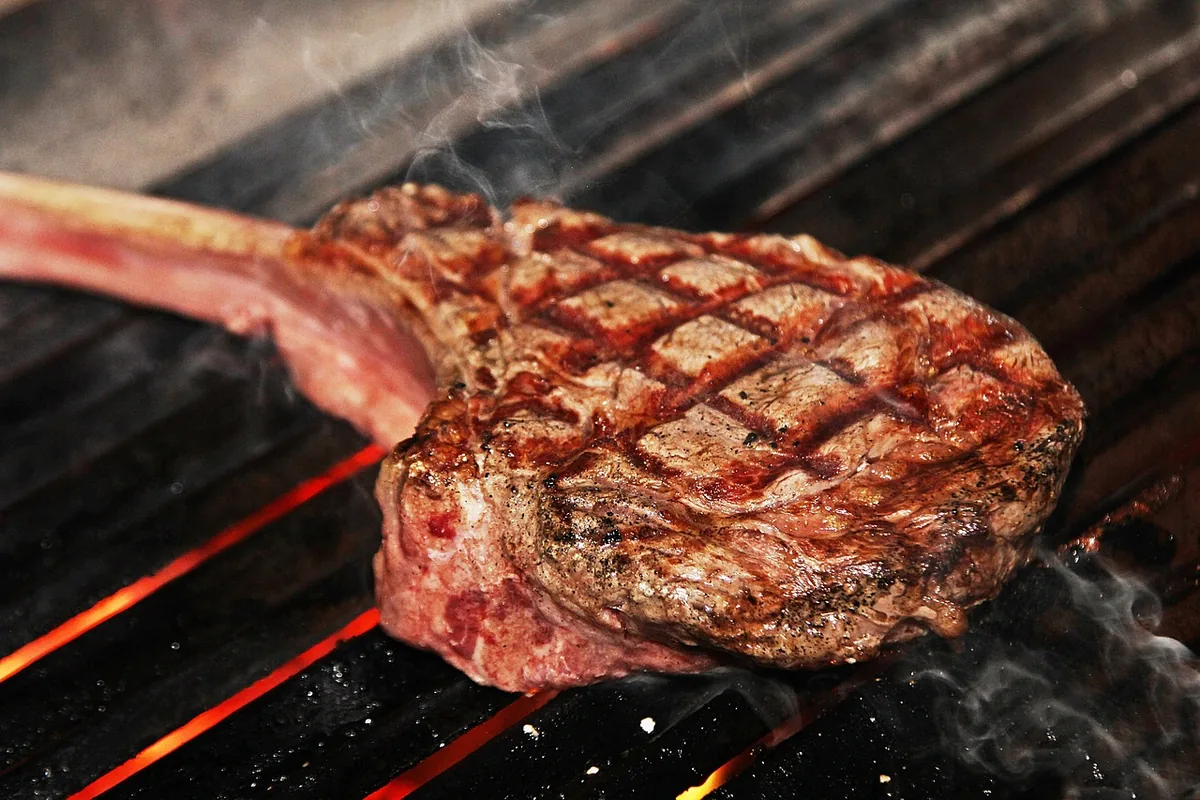
Learning how to grill steak comes down to five things: the right cut, salt at the right time, a grill with a hot side and a cool side, a thermometer, and a few minutes of rest before you slice. Get those right and a ribeye or New York strip comes off the grates with a dark, crusty outside and a juicy, evenly pink middle.
This guide covers it all in order: which cuts to buy, how thick, when to salt, how to set up a gas or charcoal grill, the step-by-step method, a time chart by thickness and doneness, reverse searing thick steaks, a grill-pan method for the stove, a fix-it table, and butter and sauce ideas. The printable recipe card for 2 grilled steaks is at the bottom.
How to Grill Steak: The Short Version
These are the steps for a 1- to 1¼-inch (2.5 to 3 cm) ribeye or strip, the easiest steak on the grill for a beginner, and the fastest way to learn how to grill steak.
- Salt early. Season with kosher salt at least 45 minutes ahead, or up to 24 hours ahead in the fridge.
- Build two zones. One side of the grill on high, the other low or off.
- Preheat hard. Lid closed for 10 to 15 minutes, until the grate is 450°F to 500°F (230°C to 260°C).
- Clean and oil the grates.
- Sear over direct heat, about 4 to 5 minutes per side for medium-rare.
- Check the temperature with an instant-read thermometer in the thickest part.
- Rest 5 to 10 minutes, then slice against the grain.
Choosing the Best Steak for the Grill
Almost any tender cut makes a good grilled steak, but each cut wants slightly different heat. Marbling protects the meat over open flame, so fatty cuts are more forgiving. Lean cuts dry out quickly past medium, and thin, loose-grained cuts need the hottest fire and the shortest time.
This chart shows 8 popular cuts for grilled steak, their usual thickness, the heat they like and a typical total time to medium-rare.
| Cut | Thickness | Best heat | Time to medium-rare | Notes |
|---|---|---|---|---|
| Ribeye | 1 to 1½ inches | Direct high, cool zone for flare-ups | 8 to 12 minutes | Rich marbling; the most forgiving grilled steak. A cheaper cousin is chuck eye steak. |
| New York strip | 1 to 1¼ inches | Direct high | 8 to 12 minutes | Firm and beefy. Score the fat strip so it doesn’t curl. See our New York strip steak. |
| Top sirloin | 1 inch | Direct high | 7 to 10 minutes | Lean and affordable; best at medium-rare to medium. Try our top sirloin steak recipe. |
| Filet mignon | 1½ to 2 inches | Reverse sear | 30 to 45 minutes | Very tender and lean; thick, so it needs gentle heat first. |
| Flank | ¾ to 1 inch | Direct very high | 8 to 10 minutes | Long, visible grain. Great marinated; slice thin. |
| Skirt | ¼ to ½ inch | Hottest direct heat | 4 to 6 minutes | Thin and full of flavor. Cut it into grill-size pieces. |
| Flat iron | ¾ to 1 inch | Direct high | 8 to 10 minutes | Tender, well-marbled shoulder cut. See our flat iron steak recipe. |
| Picanha | 1½-inch steaks | Direct medium-high, fat side first | 10 to 14 minutes | Thick fat cap bastes the meat; watch for flare-ups. See our picanha steak guide. |
Cuts to skip for fast grilling: round steaks such as eye of round steak are so lean they turn tough over high heat unless you keep them rare and slice them paper-thin. For more cuts and methods, browse all our steak recipes.
Thickness, Grade and What to Buy
When you grill steak, thickness matters more than the cut name. A thin steak overcooks inside before it browns, and a very thick one burns outside before the center warms. To grill steak with a good crust and a pink center, buy it 1 to 1¼ inches (2.5 to 3 cm) thick.
- Under ¾ inch: hottest fire, 2 to 3 minutes per side; it will land closer to medium.
- 1 to 1¼ inches: the sweet spot for direct high heat and what the recipe card uses.
- 1½ inches and up: finish over indirect heat, or use the reverse sear below.
- Grade: Prime has the most marbling, Choice grills very well, and Select is leaner and less forgiving.
- Look for fine flecks of fat through the meat, even thickness and a dry surface.
- Per person: 6 to 8 ounces (170 to 225 g) of raw boneless steak.
Seasoning and Dry Brining: When to Salt Steak
Salt is the one seasoning a grilled steak can’t do without, and timing matters. Salt first pulls moisture to the surface, then that salty liquid is slowly reabsorbed. If the steak goes on the grill halfway through, the wet surface steams instead of searing.
| When you salt | What happens | Verdict |
|---|---|---|
| Right before grilling | Salt sits on a dry surface | Good |
| 10 to 30 minutes before | Beads of liquid on the meat | Avoid, or pat very dry |
| 45 minutes to 2 hours before | Brine is reabsorbed; drier surface | Very good |
| 12 to 24 hours, uncovered in the fridge | Seasoned through, best crust | Best |
That longer method is dry brining. Salt the steaks on all sides, set them on a wire rack over a plate and refrigerate uncovered. Use about 1 teaspoon of Diamond Crystal kosher salt per pound (450 g) of meat, or half that of table salt.
- Black pepper: add it just before grilling.
- Fresh garlic burns on the grill, so save it for the butter.
- Rubs: a sugar-free blend like our steak seasoning recipe works well. Sugary rubs burn above 350°F, so use medium heat.
- Marinades suit flank, skirt and sirloin. Pat a marinated steak very dry before you grill it.
Setting Up a Two-Zone Grill
A two-zone fire is the most useful habit when you learn how to grill steak. The hot side sears; the cooler side is a safe place to move a steak when fat flares up or when the outside is done before the inside.
Gas grill
- Open the lid before you turn on the gas, then light the burners following the manufacturer’s directions.
- Turn all burners to high, close the lid and preheat 10 to 15 minutes.
- Just before cooking, turn one or two burners to low or off. That’s your cool zone.
Charcoal grill
- Fill a chimney starter with about 5 quarts of briquettes or lump charcoal and light it.
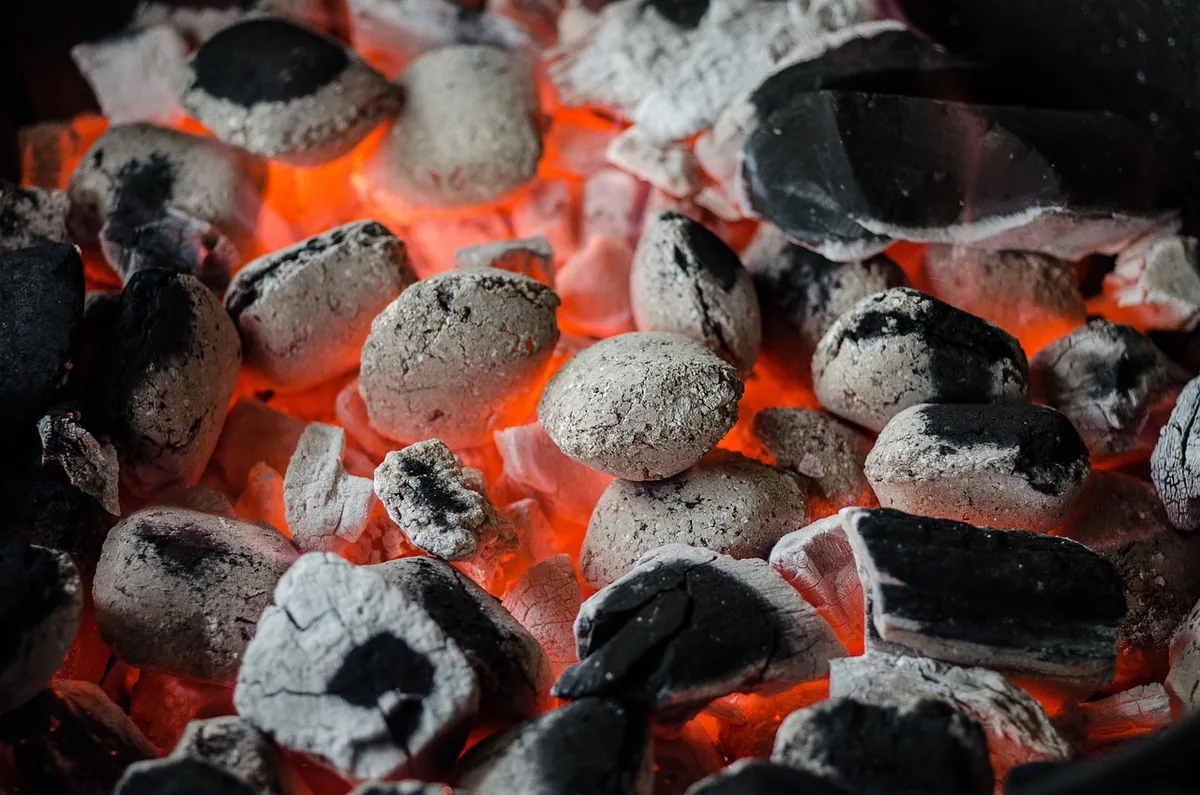
- Wait 15 to 20 minutes, until the top coals are covered in gray ash.
- Pour the coals onto one half, put the grate on, close the lid with the vents open and heat 5 minutes.
How hot is hot enough?
For searing, you want the grate at 450°F to 500°F (230°C to 260°C). A lid thermometer reads the air near the lid, so it’s only a rough guide. The hand test works: hold your palm about 5 inches above the grate. If you have to pull away after 2 to 3 seconds, the fire is high.
Then scrape the grates clean and wipe them with an oiled paper towel held in long tongs. Hot, clean, oiled grates are the main reason a steak on the grill releases instead of sticking.
How to Grill Steak Step by Step
This is the full method for a grilled steak: 1- to 1¼-inch ribeye or strip steaks over direct high heat, and it matches the recipe card.
- Take the steaks out of the fridge 20 to 30 minutes ahead, while the grill heats.
- Pat them dry, brush lightly with oil and add pepper.
- Lay each steak on the grill’s hot side at a 45-degree angle to the bars. Don’t press on them.
- Close the lid for 2 to 3 minutes, until they release easily.
- Turn them 90 degrees on the same side for crosshatch marks and cook 1 to 2 minutes more.
- Flip and repeat on the second side.
- Check the temperature after about 7 minutes total, sliding the thermometer in from the side to the center.
- Move to the cool side if the outside is dark but the inside needs a few more degrees.
- Pull the steaks about 5°F below your target, 125°F to 130°F (52°C to 54°C) for medium-rare.
- Rest 5 to 10 minutes, topped with a pat of butter if you like.
How often should you flip?
Both ways work. Flipping once gives bold grill marks and is the classic way to grill steak. Flipping every minute cooks a little more evenly and faster, with less of a gray band. The chart below assumes one flip.
- Lid open is fine for steaks under 1 inch.
- Lid closed for 1 inch and up, so the center catches up with the crust.
Grilled Steak Time Chart by Thickness and Doneness
Times are minutes per side for boneless steaks over direct heat of 450°F to 500°F (230°C to 260°C), lid closed, flipped once. Grills and weather vary, so let the thermometer decide.
| Thickness | Rare | Medium-rare | Medium | Medium-well |
|---|---|---|---|---|
| ¾ inch (2 cm) | 2 to 3 | 3 to 4 | 4 to 5 | 5 to 6 |
| 1 inch (2.5 cm) | 3 to 4 | 4 to 5 | 5 to 6 | 6 to 7 |
| 1¼ inches (3 cm) | 4 to 5 | 5 to 6 | 6 to 7 | 7 to 8, last 3 on the cool side |
| 1½ inches (4 cm) | 5 to 6 | 6 to 7, last 2 on the cool side | 7 to 8, last 3 on the cool side | Reverse sear |
| 2 inches (5 cm) | Use the reverse sear method below | |||
- Bone-in steaks take 1 to 2 minutes longer per side.
- Flipping often usually shaves 1 to 2 minutes off the total.
- Charcoal often runs hotter than gas, so check a minute or two sooner.
Steak Doneness Temperatures
A thermometer is the only reliable way to grill steak to the doneness you want. A grilled steak keeps cooking as it rests, usually rising 3°F to 5°F, so pull it a little early.
| Doneness | Pull off the grill | After resting | Center looks |
|---|---|---|---|
| Rare | 115°F to 120°F (46°C to 49°C) | 120°F to 125°F (49°C to 52°C) | Deep red |
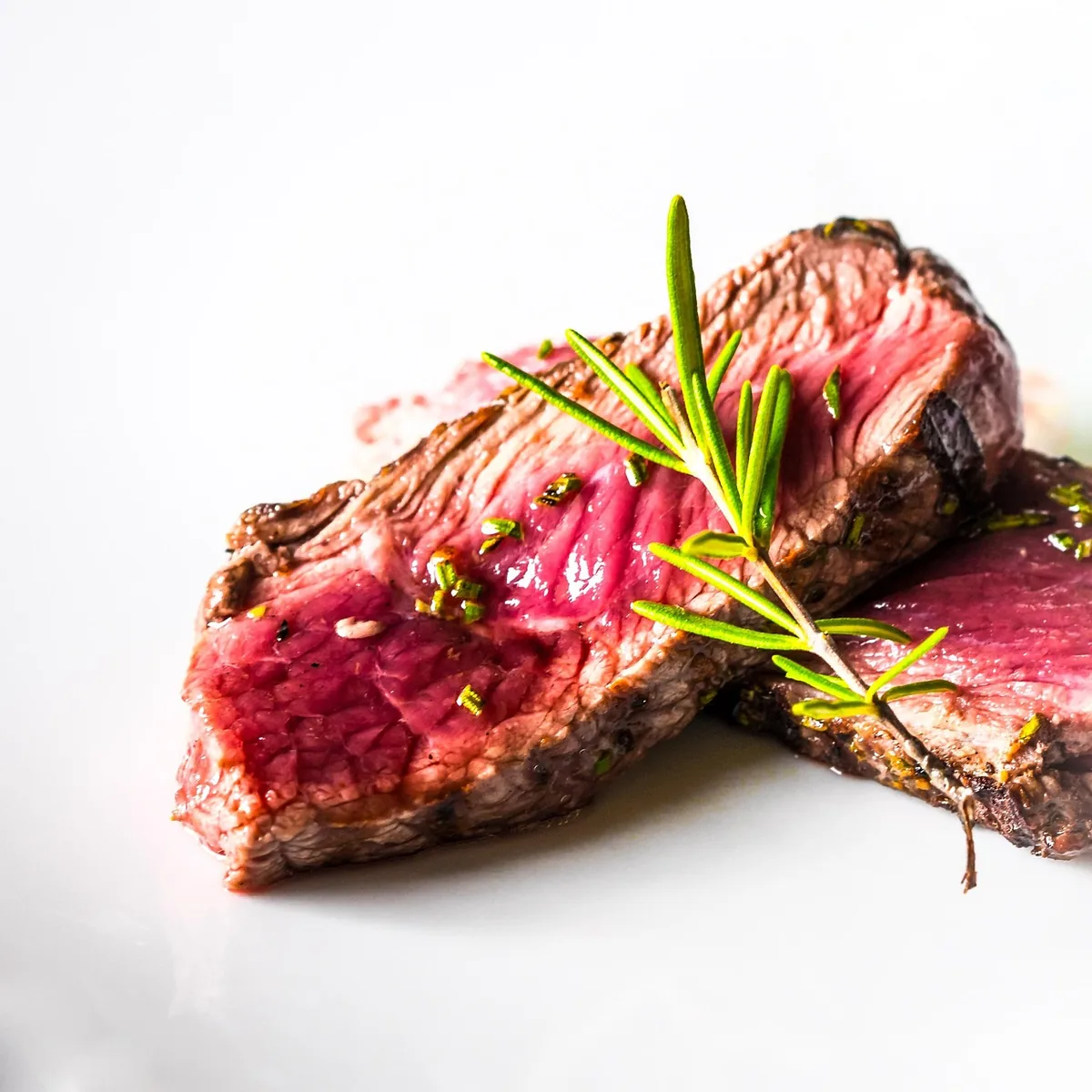
| Medium-rare | 125°F to 130°F (52°C to 54°C) | 130°F to 135°F (54°C to 57°C) | Warm red-pink |
| Medium | 135°F to 140°F (57°C to 60°C) | 140°F to 145°F (60°C to 63°C) | Pink |
| Medium-well | 145°F to 150°F (63°C to 66°C) | 150°F to 155°F (66°C to 68°C) | Hint of pink |
| Well done | 155°F (68°C) | 160°F (71°C) and up | Brown throughout |
The official food safety number: FoodSafety.gov recommends cooking whole cuts of beef, including steaks, to 145°F (63°C) with a rest of at least 3 minutes. See the safe minimum internal temperature chart. To land there, pull the steak at about 140°F and rest it.
Many cooks serve grilled steak medium-rare, pulled at 125°F to 130°F, which is below that recommendation. Pregnant women, young children, older adults and anyone with a weakened immune system should eat steak cooked to at least 145°F.
Thick Steaks: How to Reverse Sear on the Grill
For steaks 1½ to 2 inches thick, such as a thick filet, porterhouse or double-cut ribeye, searing first leaves a wide gray band and a cool center. The reverse sear lets you grill steak slowly on the cool side first, then sears hot at the end, for edge-to-edge pink.
- Set up two zones and hold the cool side at 225°F to 275°F (110°C to 135°C), lid closed.
- Put the salted steaks on the cool side, away from the flame.
- Cook with the lid closed until the center is 10°F to 15°F below your target, about 115°F (46°C) for medium-rare. This takes 25 to 45 minutes.
- Crank the hot side to high.
- Sear 1 to 2 minutes per side over direct heat until browned and at your target.
- Rest about 5 minutes. The inside is already even, so it needs less time.
For the same result hands-off, our sous vide steak cooks in a water bath first; finish it with a 1-minute-per-side sear on the hottest part of the grill.
Resting and Slicing Against the Grain
Resting a grilled steak lets the hot outer layers even out with the center, so fewer juices run onto the board. For a 1-inch grilled steak, 5 to 10 minutes is plenty. Tent loosely with foil; wrapping it tight steams and softens the crust.
- Find the grain: the long, parallel muscle fibers running across the steak.
- Cut across them at a right angle, so every slice has short, tender fibers.
- Angle the knife for wide, thin slices on lean cuts like flank and skirt.
- Slice ribeye and strip ¼ to ½ inch thick so 2 steaks serve 4 people.
- Pour the board juices back over the slices.
How to Grill Steak on the Stove With a Grill Pan
No grill, or bad weather? A ridged cast iron grill pan gives you grill marks and a nicely charred grilled steak on the stove. That’s what searches for how to grill steak on the stove usually mean. Only the ridges touch the meat, so you get less overall browning, but the flavor is close.
- Turn on the range hood. A hot grill pan smokes.
- Heat the pan over medium-high for 5 to 8 minutes, until a drop of water vanishes instantly.
- Pat the steaks dry and brush the meat, not the pan, with a little high smoke point oil.
- Cook 1-inch steaks 4 to 5 minutes per side for medium-rare, turning 90 degrees halfway through each side.
- For steaks over 1¼ inches, sear both sides, then finish in a 400°F (200°C) oven to temperature.
For an all-over crust and a garlic butter baste, a flat pan does better; see our cast iron skillet steak.
Grilled Steak Troubleshooting
Most problems when you grill steak come from a fire that’s too cool, a wet surface or a missing thermometer. Here’s how to fix each one.
| Problem | Likely cause | Fix |
|---|---|---|
| Flare-ups and soot | Fat dripping onto flames | Trim fat to ¼ inch; move the steak to the cool side until the flames die down. Never spray water on a grease fire |
| Thick gray band | Heat too low, or steak too thick for direct heat | Preheat longer; flip every minute; reverse sear steaks over 1½ inches |
| Stuck to the grates | Dirty, cold or dry grates, or flipped too early | Clean and oil hot grates; wait until the steak releases on its own |
| Pale, no grill marks | Grill not hot enough, or wet steak | Preheat 10 to 15 minutes, lid closed; dry brine or pat dry |
| Burnt outside, raw inside | Heat too high for the thickness, or a sugary rub | Finish on the cool side with the lid closed |
| Underdone | Pulled too early or thermometer off-center | Return to direct heat 1 to 2 minutes; check the thickest part |
| Overdone | No thermometer, or forgot carryover cooking | Slice thin and serve with sauce; next time pull 5°F early |
Butters, Sauces and Sides for Steak on the Grill
A well-seasoned steak on the grill doesn’t need much, but a simple finish makes it feel special. Add these after cooking so nothing burns.
- Garlic herb butter: 2 tablespoons soft butter, 1 small grated garlic clove and 1 teaspoon chopped parsley, spooned onto the resting steaks. It’s in the recipe card.
- Blue cheese butter: 2 tablespoons butter mashed with 1 tablespoon crumbled blue cheese.
- Chimichurri: parsley, oregano, garlic, red wine vinegar, olive oil and chili flakes. Great with flank or skirt.
- Flaky salt and good olive oil on sliced steak.
Easy sides: grilled corn, foil-packet potatoes or grilled asparagus. For surf and turf, grill a salmon fillet alongside with our salmon seasoning.
Leftover Grilled Steak
Leftover grilled steak makes great next-day meals, as long as you don’t overcook it a second time.
- Refrigerate within 2 hours, covered, and use within 3 to 4 days, per the FoodSafety.gov cold food storage chart.
- Freeze cooked steak, wrapped airtight, for 2 to 3 months. Thaw in the fridge.
- Reheat gently in a 250°F (120°C) oven, then sear 30 seconds per side. Leftovers should reach 165°F (74°C).
- Use it up in steak tacos, salads, fried rice or steak and eggs.
Grill Safety Basics
A few habits keep every steak on the grill night safe.
- Never leave a lit grill unattended, and keep children and pets away from it.
- Keep the lid open when lighting a gas grill. A closed lid lets propane build up and flash. If it doesn’t light, turn off the gas, wait 5 minutes and try again.
- Grill outdoors only, on a flat surface away from the house, railings and branches.
- Empty the grease tray often; buildup causes the worst flare-ups.
- Use separate plates for raw steak and grilled steak, and wash tongs that touched raw meat.
How to Grill Steak FAQ
How long do you grill a steak on each side?
For a 1-inch steak over direct high heat, about 4 to 5 minutes per side for medium-rare and 5 to 6 for medium. Thicker steaks need time on the cool side. Check every steak on the grill with a thermometer.
What temperature should the grill be for steak?
To grill steak well, aim for 450°F to 500°F (230°C to 260°C) at the grate on the hot side, with a cooler zone on the other side. For reverse searing thick steaks, start at 225°F to 275°F on the cool side.
Do you oil the steak or the grill?
Both. Clean and oil the hot grates, then brush the dry steak lightly with oil. A steak on the grill releases cleanly and marks well that way.
Is gas or charcoal better for steak?
Charcoal runs hotter and adds a little smoky flavor; gas is faster and easier to control. Both make a great grilled steak with a good preheat and two zones.
Grilled Steak Recipe Card
Calories are an estimate per serving (¼ of the recipe, half a steak plus butter) based on USDA FoodData Central values for raw boneless beef ribeye, vegetable oil, butter, garlic and seasonings.

Grilled Ribeye or Strip Steak
Ingredients
Equipment
Method
- Pat the steaks dry and salt all sides. Set them on a wire rack over a plate and refrigerate uncovered at least 45 minutes or up to 24 hours. Take them out 20 to 30 minutes before grilling.
- Set up two zones. Gas: open the lid, light all burners on high, close the lid and preheat 10 to 15 minutes, then turn one side to low or off. Charcoal: light a chimney of coals, wait 15 to 20 minutes until ashed over, pour them onto one side and heat 5 minutes with the lid closed. The hot side should be 450°F to 500°F (230°C to 260°C).
- Mix the butter, garlic and parsley in a small bowl and set aside.
- Scrape the grates clean and wipe them with an oiled paper towel held in tongs. Pat the steaks dry again, brush them with the oil and season with pepper.
- Grill over direct heat with the lid closed for 4 to 5 minutes per side for medium-rare, turning each side 90 degrees halfway for crosshatch marks. If flare-ups start, or the outside is dark before the inside is done, move the steaks to the cool side.
- Check the center with an instant-read thermometer from the side. Pull at 125°F to 130°F (52°C to 54°C) for medium-rare, or about 140°F (60°C) to reach the FoodSafety.gov 145°F (63°C) after resting.
- Rest the steaks 5 to 10 minutes topped with the garlic herb butter. Slice against the grain ¼ to ½ inch thick, spoon the board juices over and serve.


