

Blog
Salmon Seasoning (Easy Homemade Blend + 8 Salmon Rubs)

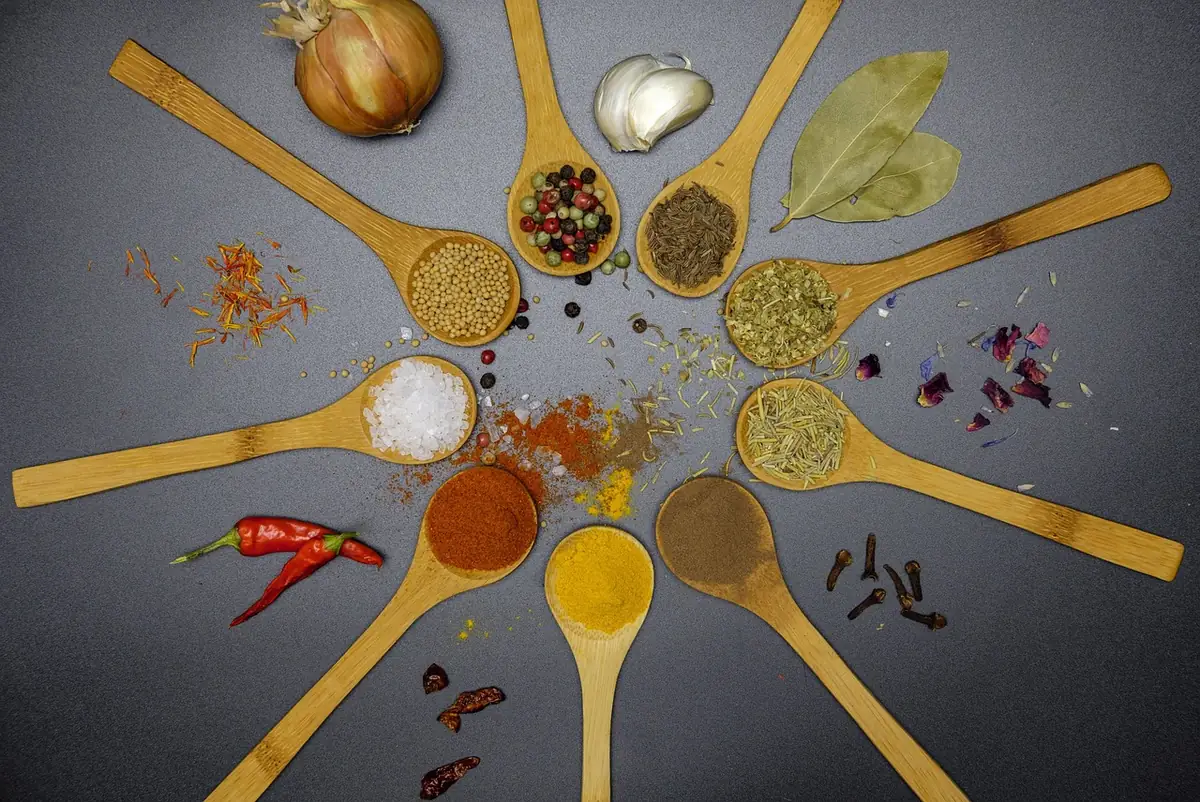
A good salmon seasoning does three jobs at once: it salts the fish, gives it color, and adds enough flavor to stand up to the rich, oily flesh without hiding it. This homemade blend of sweet and smoked paprika, garlic, onion, dill, dry mustard, thyme and black pepper takes five minutes to stir together, makes about 1/2 cup, and seasons roughly 24 fillets at 1 teaspoon each.
Below you’ll find the blend and why each spice is there, how to season salmon step by step (drying, oil, how much to use, when to salt, which side), a table of eight more salmon rubs with exact amounts, which blend suits baking, grilling, air frying, pan searing and smoking, a fix-it table and storage tips. The recipe card is at the bottom.
What Makes a Good Salmon Seasoning?
Salmon is fatty and mild, with a slightly sweet flavor. It doesn’t need a long list of spices, but it does need balance. A blend that’s all herbs tastes flat, and one that’s mostly chili or cumin overpowers the fish. The best seasoning for salmon covers these five parts:
- Salt: the most important part. It brings out the fish’s own flavor and firms the surface slightly so it browns.
- Aromatics: garlic and onion powder give a savory base that works with every cooking method.
- Color and warmth: paprika turns the top a deep red-gold in the oven or on the grill, and smoked paprika adds a light campfire note.
- Herbs: dill is the classic partner for salmon. Thyme, parsley and oregano also work well.
- A sharp note: black pepper, dry mustard or citrus zest cuts through the richness. A squeeze of lemon after cooking does the same job.
Sugar is optional. A little brown sugar helps the surface caramelize, but it also burns quickly, so it belongs in a rub for smoking or gentle baking, not in an all-purpose blend.
Homemade Salmon Seasoning Ingredients
Every salmon seasoning ingredient here is a pantry spice. Use fresh jars, since ground spices fade after about a year. This table shows the amounts for one batch, what each spice adds and what you can swap in.
| Ingredient | Amount | What it adds | Swap |
|---|---|---|---|
| Sweet paprika | 1 tbsp (7 g) | Red color, mild sweetness | More smoked paprika |
| Smoked paprika | 1 tbsp (7 g) | Light smoky flavor | Sweet paprika plus a pinch of chipotle |
| Garlic powder | 1 tbsp (9 g) | Savory base | Granulated garlic |
| Onion powder | 1 tbsp (7 g) | Roundness and sweetness | Dried minced onion, ground |
| Diamond Crystal kosher salt | 2 tbsp (17 g) | Seasons the fish | 1 tbsp Morton kosher salt |
| Black pepper | 2 tsp (4.5 g) | Gentle heat | White pepper |
| Dried dill | 2 tsp (2 g) | Fresh, grassy flavor | Dried parsley or tarragon |
| Dry mustard | 1 tsp (2 g) | Sharpness that cuts the fat | Ground coriander |
| Dried thyme | 1 tsp (1 g) | Earthy herb note | Dried oregano |
| Cayenne pepper | 1/4 tsp | Optional heat | Red pepper flakes, crushed |
The blend is lightly salted on purpose: 1 teaspoon carries about 1/4 teaspoon of Diamond Crystal kosher salt, enough for a 6-ounce fillet. If you prefer to control the salt yourself, leave it out and season each fillet with 1/4 to 1/2 teaspoon kosher salt before adding the spices.
How to Make Salmon Seasoning
This salmon seasoning comes together in one bowl. Measure carefully the first time, then adjust to taste for the next batch.
- Crush the herbs. Rub the dill and thyme between your fingers so they’re fine enough to stick to the fish.
- Measure everything into a bowl: both paprikas, the garlic and onion powder, salt, pepper, dill, mustard, thyme and cayenne, if using.
- Mix well. Whisk with a fork for 30 seconds, breaking up any lumps of garlic or onion powder, until the color is even.
- Store it. Spoon it into a clean, dry jar with a tight lid and label it with the date.
The batch makes about 1/2 cup (about 58 g). That’s 24 teaspoons, or enough for 24 fillets of 6 ounces, 6 dinners for four, or 3 whole sides of salmon.
How to Season Salmon Step by Step
Knowing how to season salmon matters more than the exact spices. Wet fish, too little salt or a salmon rub that slides off in the pan will spoil any blend. Here is how to season salmon so the flavor sticks and the top browns:
- Thaw it fully. Thaw frozen fillets overnight in the fridge, or in a sealed bag under cold running water for 30 to 60 minutes. Seasoning won’t stick to an icy surface.
- Pat it dry. Press both sides firmly with paper towels. A dry surface browns, and the rub stays put.
- Add a thin coat of oil. Brush or rub about 1/2 teaspoon olive or avocado oil over the flesh side of each fillet. The oil helps the spices cling and carries their flavor.
- Season evenly. Sprinkle about 1 teaspoon of salmon seasoning over each 6-ounce fillet from about 8 inches (20 cm) above, so it falls in an even layer, then press it lightly with your fingertips.
- Season the skin lightly. If you’ll eat the skin, give it a pinch of salt only. Paprika and garlic on the skin tend to scorch in a hot pan.
- Cook right away or chill. Cook within 15 minutes, or cover and refrigerate the seasoned fillets for up to 4 hours.
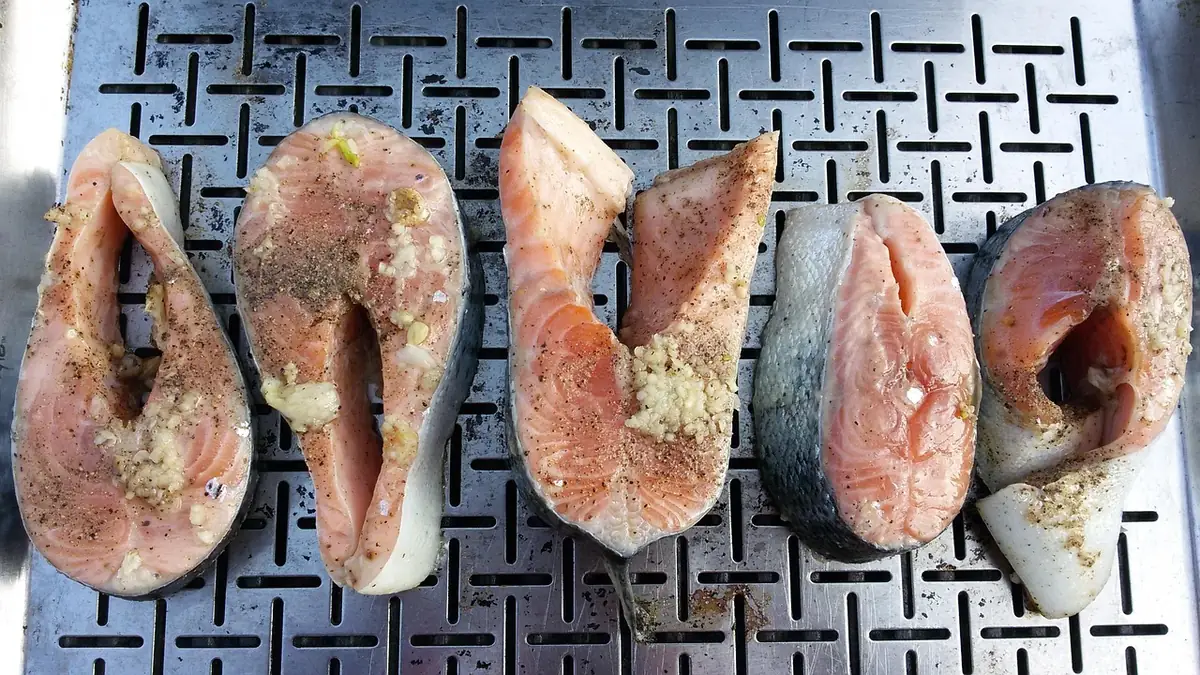
How much seasoning per fillet
Use about 1 teaspoon of salmon seasoning for every 6 ounces (170 g) of fish. Thick center-cut fillets can take a little more; thin tail pieces need a little less.
| Amount of salmon | Seasoning |
|---|---|
| 1 fillet, 4 oz (115 g) | 3/4 tsp |
| 1 fillet, 6 oz (170 g) | 1 tsp |
| 1 fillet, 8 oz (225 g) | 1 1/4 tsp |
| 4 fillets, 1 1/2 lb (680 g) | 4 tsp (1 tbsp + 1 tsp) |
| Side of salmon, 2 lb (900 g) | 5 tsp (1 tbsp + 2 tsp) |
| Side of salmon, 3 lb (1.4 kg) | 8 tsp (2 tbsp + 2 tsp) |
When to salt salmon
Salt draws moisture to the surface at first, and then the fish slowly reabsorbs the salty liquid. With salmon, either end of that process works:
- Just before cooking: the easiest choice. Season and cook within 15 minutes, before much liquid beads on the surface.
- 30 minutes to 4 hours ahead: refrigerate the seasoned fillets uncovered or loosely covered. The salt seasons deeper and the flesh firms slightly, which helps it hold together on the grill.
- Not overnight: after many hours, salt starts to cure the fish and the texture turns dense and ham-like, closer to candied salmon than a tender fillet.
Best Seasoning for Salmon: 8 More Blends
Once you know how to season salmon, changing the salmon rub is the easiest way to keep dinners interesting. There is no single best seasoning for salmon; the right one depends on the method. Each amount below seasons 4 fillets, about 1 1/2 lb (680 g). “Kosher salt” means Diamond Crystal; use half as much Morton kosher salt or fine salt.
| Blend | Amounts for 4 fillets | Best for |
|---|---|---|
| Lemon pepper | 2 tsp finely grated lemon zest (or 1 tsp dried lemon peel), 1 1/2 tsp coarse black pepper, 1 tsp kosher salt, 1/2 tsp garlic powder, 1/2 tsp onion powder | Baking, air frying |
| Cajun or blackened | 2 tsp paprika, 1 tsp garlic powder, 1/2 tsp onion powder, 1/2 tsp dried thyme, 1/2 tsp dried oregano, 1/2 tsp black pepper, 1/4 to 1/2 tsp cayenne, 1 tsp kosher salt | Cast iron, grilling |
| Brown sugar rub | 2 tbsp packed brown sugar, 1 tsp smoked paprika, 1 tsp kosher salt, 1/2 tsp garlic powder, 1/2 tsp black pepper, 1/4 tsp chili powder | Smoking, indirect grilling, baking |
| Garlic herb | 1 tsp garlic powder, 1 tsp dried parsley, 1/2 tsp dried thyme, 1/2 tsp dried basil or oregano, 1/2 tsp black pepper, 1 tsp kosher salt | Baking, pan searing |
| Asian ginger-sesame | 1 tsp ground ginger, 1 tsp garlic powder, 1 tsp brown sugar, 1 tbsp toasted sesame seeds, 1/2 tsp red pepper flakes, 1/2 tsp kosher salt; brush the fish first with 1 tbsp soy sauce and 1 tsp sesame oil | Baking, air frying |
| Everything bagel | 2 tbsp everything bagel seasoning (or 2 tsp sesame seeds, 1 tsp poppy seeds, 1 tsp dried minced garlic, 1 tsp dried minced onion, 1 tsp flaky salt); no extra salt | Baking, air frying |
| Smoky paprika | 2 tsp smoked paprika, 1 tsp garlic powder, 1/2 tsp onion powder, 1/2 tsp ground cumin, 1/2 tsp black pepper, 1 tsp kosher salt | Grilling, broiling |
| Dill | 2 tsp dried dill (or 2 tbsp chopped fresh), 1 tsp grated lemon zest, 1/2 tsp garlic powder, 1/2 tsp black pepper, 1 tsp kosher salt | Baking, poaching, pan searing |
A note on the brown sugar salmon rub
Sugar starts to scorch quickly over direct high heat. A brown sugar salmon rub is perfect in a smoker at 225°F (107°C), on the cool side of a grill, or in a 400°F (200°C) oven for 12 to 15 minutes. Under a broiler or directly over hot coals, it can turn black and bitter in a minute or two.
- Break up lumps with a fork so the rub coats evenly.
- Skip the oil when smoking; the sugar and salt draw out enough moisture to make the rub stick.
Salmon rub or marinade?
A dry salmon rub gives a better crust and needs no planning. A wet marinade with acid, such as lemon juice or vinegar, starts to turn the outside of the fish opaque and soft after about 30 minutes, so keep marinades short.
- Dry salmon rub: best for browning; season and cook right away or up to 4 hours ahead.
- Acidic marinade: 15 to 30 minutes at most.
Which Salmon Seasoning Fits Each Cooking Method
Every method puts the salmon seasoning under different heat. Moderate dry heat suits almost any blend, while very high direct heat calls for a salmon rub without sugar. This chart shows what to use and how long to cook 1-inch (2.5 cm) fillets.
| Method | Heat and time | Good blends | Avoid |
|---|---|---|---|
| Bake | 400°F (200°C), 12 to 15 minutes | All-purpose, lemon pepper, garlic herb, dill, everything bagel | Nothing; the most forgiving method |
| Grill | Medium-high, 400 to 450°F (200 to 230°C), 4 to 5 minutes skin side down, then 2 to 3 minutes | Cajun, smoky paprika, all-purpose | Brown sugar rub over direct heat |
| Air fry | 390°F (200°C), 8 to 10 minutes | All-purpose, lemon pepper, ginger-sesame | Loose dried herbs without oil, which can blow around |
| Pan sear | Medium-high, 4 to 5 minutes skin side down, then 2 to 3 minutes | All-purpose, garlic herb, blackened | Sugar and sesame seeds, which burn on contact |
| Smoke | 225°F (107°C), about 1 to 1 1/2 hours | Brown sugar rub, dill, smoky paprika | Heavy smoked paprika, which doubles the smoke flavor |
| Broil | High, 4 to 6 inches from the heat, 6 to 8 minutes | Lemon pepper, all-purpose | Sugar-based rubs |
For full recipes using these methods, try this air fryer salmon, the best grilled salmon recipes or this smoked salmon recipe for the smoker.
Grilled salmon seasoning tips
- Clean and oil the grates well so the seasoned flesh doesn’t tear.
- Start skin side down and leave the fish alone until it releases on its own.
- Choose a salmon seasoning with paprika and garlic; skip the sugar unless you cook over indirect heat.
Baked salmon seasoning tips
- Line the pan with parchment, set the fillets skin side down and season only the top.
- Finish with lemon juice and fresh herbs right out of the oven.
Salmon Seasoning Troubleshooting
Most salmon seasoning problems come from too little salt, wet fish or the wrong heat for the salmon rub. This table shows how to fix them next time.
| Problem | Likely cause | Fix |
|---|---|---|
| Bland fish | Too little seasoning or a salt-free blend | Use 1 tsp per 6 oz; add 1/4 tsp kosher salt per fillet to a salt-free blend; finish with flaky salt and lemon. |
| Too salty | Fine or Morton salt measured like Diamond Crystal, or salted blend plus extra salt | Halve the salt when you use fine or Morton salt; don’t salt again on top of a salted blend. |
| Burnt, bitter crust | Sugar, garlic or paprika over very high direct heat | Lower the heat, move to indirect heat or bake; save sugar rubs for smoking. |
| Rub falls off | Wet surface or no oil | Pat dry, add a thin coat of oil or mustard, press the spices on, and don’t move the fish until it releases. |
| Pale top, no color | Oven too cool or no paprika | Bake at 400°F, or broil for the last 1 to 2 minutes, watching closely. |
How to Store Homemade Salmon Seasoning
Dry salmon seasoning keeps for months, but heat, light and moisture make it clump and fade. Follow these rules:
- Container: a small glass jar with a tight lid. Fill it close to the top to limit air.
- Place: a cool, dark cupboard, away from the stove and dishwasher. Steam is what turns garlic and onion powder into hard lumps.
- Dry spoon only: never shake the jar over a hot pan, and never dip a wet or oily spoon into it.
- Best within 6 months: it’s still safe after that, but paprika and dill lose color and aroma. If it smells dull, make a fresh batch.
- Clumps: break them up with a fork. A brown sugar salmon rub clumps faster, so make it in small batches.
Salmon Food Safety
Salmon seasoning adds flavor, not safety. Handle and cook the fish the same way no matter which salmon rub you use.
- Cook to 145°F (63°C). FoodSafety.gov lists 145°F as the safe minimum for fish. The flesh turns opaque and separates easily with a fork. See our guide to salmon internal temp for doneness by style.
- Use a clean spoon. Measure the blend into a small bowl before you touch raw fish, so raw juices never reach the jar.
- Buy and thaw with care. The FDA’s tips on selecting and serving seafood safely cover freshness, smell and thawing.
- Chill leftovers within 2 hours and eat them within 3 to 4 days. Reheat to 165°F (74°C), or flake cold salmon into salads.
More Ways to Use Salmon Seasoning
Salmon seasoning isn’t only for fillets. Its paprika, garlic and dill suit most fish and many sides.
- Salmon cakes and patties: stir 1 to 2 teaspoons into the mix in place of separate spices.
- Other fish: trout, cod, halibut and shrimp; use less on thin fillets.
- Roast vegetables: toss potatoes, asparagus or zucchini with oil and 1 teaspoon per pound.
Find more dinners to try it on in our salmon recipes. For chicken and beef, use the matching blends: this chicken seasoning recipe and this steak seasoning recipe.
Salmon Seasoning FAQ
What is the best seasoning for salmon?
The best seasoning for salmon covers salt, garlic, paprika, black pepper and dill, which is why the all-purpose salmon seasoning above uses them. Lemon pepper, Cajun and garlic herb are the next most popular choices. Choose by method: sugar-free blends for high heat, sweeter rubs for smoking.
How much seasoning do you put on salmon?
About 1 teaspoon per 6-ounce fillet, or 4 teaspoons for 1 1/2 pounds. For a 3-pound side of salmon, use about 2 tablespoons plus 2 teaspoons.
Should you season salmon before or after cooking?
Before. Salt and a dry salmon rub need heat and a few minutes on the fish to bloom. Add lemon juice, fresh herbs and flaky salt after cooking.
How long can seasoned salmon sit before cooking?
- In the fridge: up to 4 hours.
- At room temperature: no more than 2 hours, or 1 hour above 90°F (32°C).
Is store-bought salmon seasoning better than homemade?
Not usually. Store-bought blends often list salt first and may contain sugar or anti-caking agents. A homemade salmon seasoning lets you control the salt, skip the sugar and use fresh spices.
Homemade Salmon Seasoning Recipe Card
Calories are an estimate per 1-teaspoon serving (1/24 of the batch) based on USDA FoodData Central values for the paprika, garlic and onion powder, black pepper, dried dill, dry mustard, thyme and cayenne; the salt adds about 280 mg of sodium per teaspoon and no calories.

Homemade Salmon Seasoning
Ingredients
Equipment
Method
- Rub the dried dill and thyme between your fingers to crush them finely.
- Add the sweet and smoked paprika, garlic powder, onion powder, salt, black pepper, dill, dry mustard, thyme and cayenne (if using) to a small bowl. Whisk with a fork for about 30 seconds, breaking up any lumps, until the color is even.
- Spoon into a clean, dry jar with a tight lid and label it with the date.
- To use: thaw the salmon fully and pat it very dry. Rub about 1/2 teaspoon olive or avocado oil over the flesh side of each fillet, then sprinkle on 1 teaspoon of seasoning per 6-ounce (170 g) fillet and press it on lightly. Give the skin side only a pinch of salt.
- Cook right away or refrigerate up to 4 hours. Bake at 400°F (200°C) for 12 to 15 minutes, air fry at 390°F (200°C) for 8 to 10 minutes, or grill or pan sear skin side down 4 to 5 minutes, then 2 to 3 minutes more, until the salmon reaches 145°F (63°C).


