

Blog
Steak Marinade (Easy Olive Oil Steak Marinade for Any Cut)

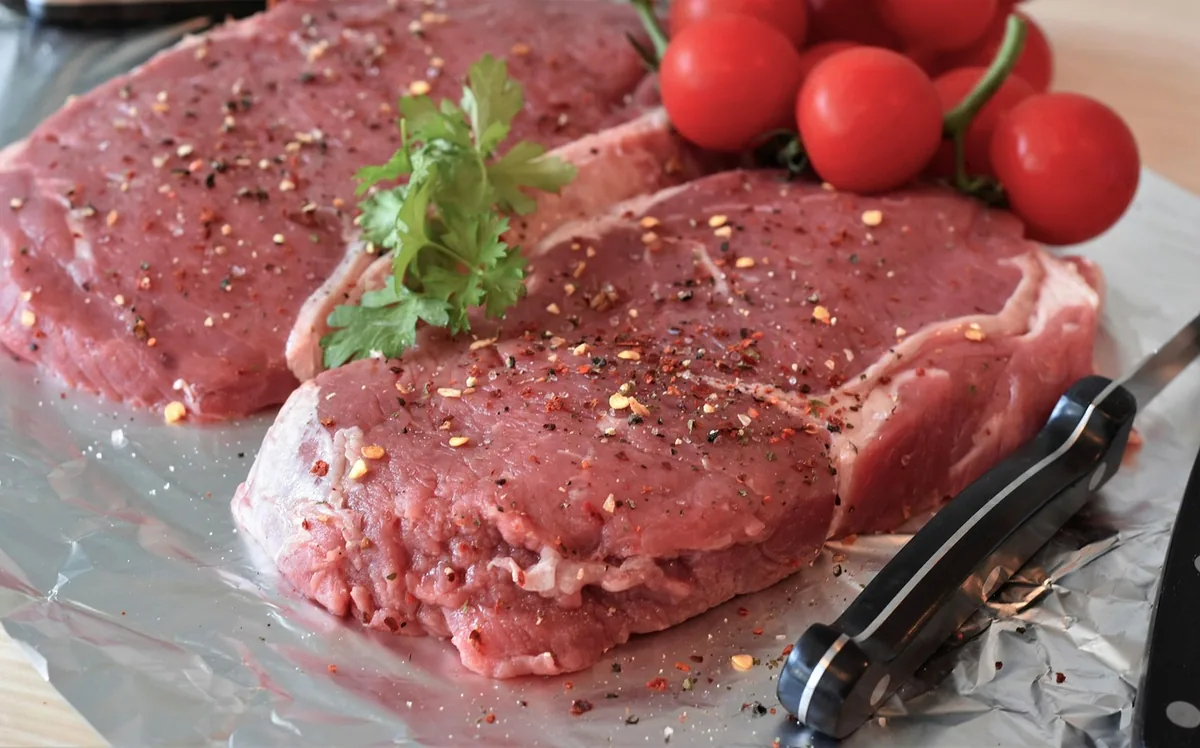
This steak marinade is the one to keep in your back pocket: extra-virgin olive oil, soy sauce, Worcestershire, balsamic vinegar, Dijon, garlic, a little brown sugar and herbs, whisked together in 5 minutes. It seasons the steak deeply, helps it brown on the grill or in a skillet, and works on everything from sirloin and flank to ribeye and kebabs.
Below you’ll find why each ingredient is there (including what olive oil actually does in a marinade), how to marinate steak and for how long by cut, a 3-ingredient steak marinade for busy nights, four flavor variations, how to cook marinated steak so it sears instead of steams, food safety for raw marinades, a fix-it table and answers to common questions. The recipe card makes enough marinade for 2 pounds of steak, 4 servings.
What a Steak Marinade Really Does
A marinade won’t turn a tough cut into tenderloin, but it does three useful things, and knowing which ingredient does what helps you build a better one.
- Salt seasons the meat. Salt from soy sauce and Worcestershire is the only part of a marinade that travels more than a few millimeters into the steak. Over a few hours it seasons the meat below the surface and helps it hold on to its juices as it cooks.
- Oil carries flavor and helps browning. Many flavor compounds in garlic, herbs and pepper dissolve in fat, not water. The oil picks them up and coats the surface evenly, and a thin film of oil helps the steak make full contact with a hot grate or pan.
- Acid and sugar work on the surface. Vinegar or citrus adds brightness and lightly tenderizes the outer layer. A little sugar helps the crust brown and caramelize. Too much acid for too long makes the surface mushy or chalky, so this recipe uses only a modest amount.
Apart from salt, marinades move into meat very slowly, so most of the flavor stays in the outer few millimeters, so thinner, flatter cuts like flank, skirt and sirloin flap get the most out of a marinade. A thick ribeye benefits more from the salt and the crust than from a long soak.
Olive Oil Steak Marinade Ingredients
This olive oil steak marinade balances salt, fat, acid, sweetness and aromatics. Here’s what each ingredient does and what you can swap.
| Ingredient | Amount | Job | Swap |
|---|---|---|---|
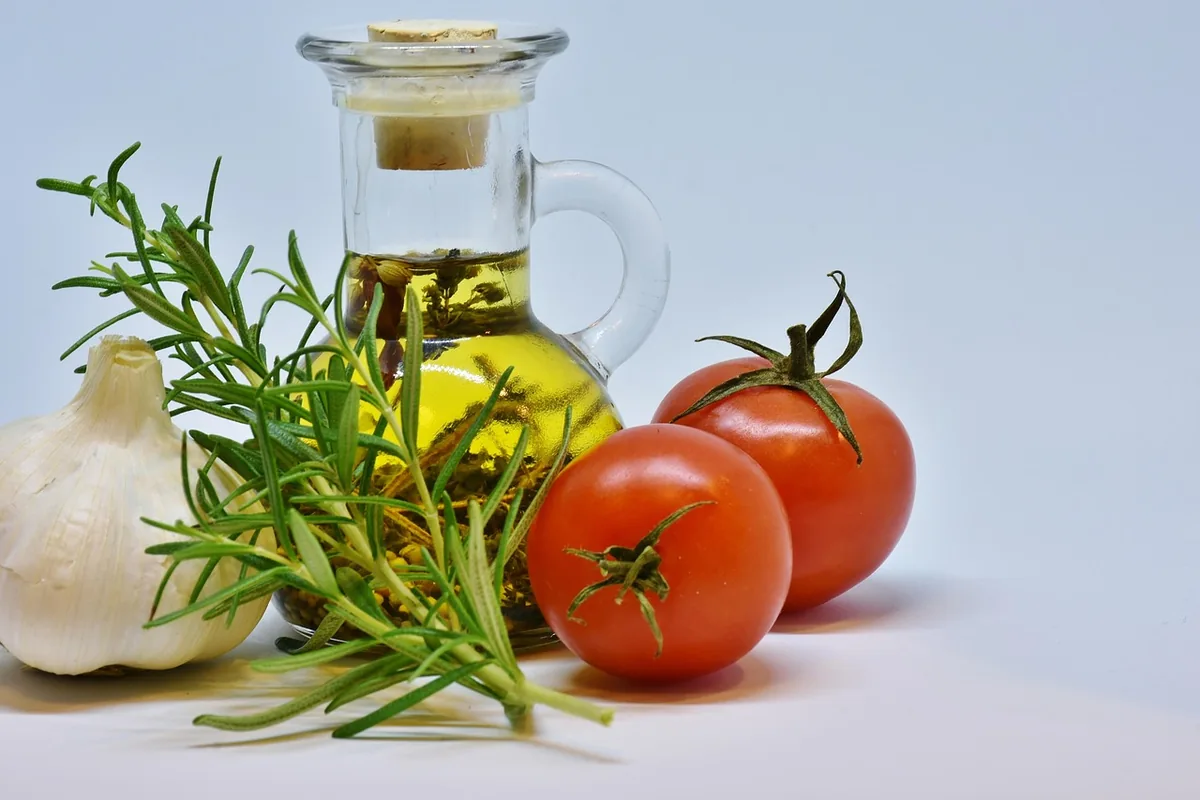
| Extra-virgin olive oil | ⅓ cup (80 ml) | Carries the garlic and herb flavor; helps browning | Avocado or canola oil for very high-heat cooking |
| Soy sauce | ¼ cup (60 ml) | Salt and savory umami that seasons inside the meat | Tamari (gluten-free) or coconut aminos (less salty) |
| Worcestershire sauce | 2 tbsp | Tangy, savory depth | 1 more tbsp soy sauce plus 1 tsp vinegar |
| Balsamic vinegar | 2 tbsp | Gentle acid with a little sweetness | Red wine vinegar or fresh lemon juice |
| Dijon mustard | 1 tbsp | Emulsifies the oil and liquids so the marinade clings | Whole-grain or yellow mustard |
| Light brown sugar | 1 tbsp | Balance and browning | Honey or maple syrup |
| Garlic | 4 cloves, grated | Aromatic backbone | 1 tsp garlic powder |
| Black pepper | 1 tsp, coarse | Gentle heat | Add ½ tsp red pepper flakes for more |
| Rosemary or thyme | 1 tbsp fresh, chopped | Herbal, piney aroma | 1 tsp dried, or Italian seasoning |
Does olive oil work for a steak marinade?
Yes. Olive oil is one of the most popular oils for steak marinades because its fruity flavor suits garlic and herbs. Two small cautions: extra-virgin olive oil can firm up in the refrigerator (it melts again at room temperature in about 20 minutes), and it begins to smoke at a lower temperature than refined oils. That’s why you wipe off the excess marinade before cooking; only a thin film goes into the hot pan. Light or refined olive oil is fine too, with a milder flavor.
How to Marinate Steak
- Whisk the marinade. In a bowl or measuring cup, whisk the olive oil, soy sauce, Worcestershire, balsamic vinegar, Dijon, brown sugar, garlic, pepper and herbs until the mustard has blended everything into a slightly thick mixture.
- Save some for later (optional). If you’d like a sauce for serving, pour off ¼ cup into a separate jar before it touches raw meat and refrigerate it.
- Prep the steak. Pat the steaks dry. For thin, fibrous cuts like flank or skirt, score the surface lightly in a crosshatch, about ⅛ inch deep, so the marinade grabs more surface.
- Combine. Put the steak in a zip-top bag or a shallow glass dish, pour in the marinade and turn to coat. Press the air out of the bag and seal it.
- Refrigerate. Marinate in the refrigerator, never on the counter, for the time in the table below. Turn the bag once or twice.
- Take it out early. Remove the steak from the fridge 20 to 30 minutes before cooking so it cooks more evenly, and so the olive oil loosens.
- Dry the surface. Lift the steak out, let the excess drip off and pat the surface lightly with paper towels. A wet steak steams; a dry one sears.
- Cook and rest. Grill, pan-sear or broil to your preferred doneness, then rest 5 to 10 minutes before slicing across the grain.
Best Steak Cuts for a Marinade
The cuts that benefit most from a steak marinade are lean, flat and full of long muscle fibers. They have plenty of beefy flavor but little marbling, so the salt, oil and aromatics make a big difference. They’re also some of the best-value steaks at the meat counter.
- Flank steak. The classic marinating steak: lean, wide and thin, with obvious grain. It soaks up flavor well and grills in under 15 minutes.
- Skirt steak. Thinner and richer than flank, with a loose texture that holds marinade in every crevice. It cooks in minutes and is the traditional choice for fajitas and carne asada.
- Top sirloin. A good all-rounder: tender enough for a quick sear, lean enough to welcome a marinade, and easy to find. Our top sirloin steak recipe shows a simple pan method.
- Sirloin flap (bavette) and flat iron. Well-flavored, reasonably priced cuts that turn out juicy with a 2- to 8-hour soak.
- Round steaks and sirloin tip. The leanest and toughest of the group. A longer marinade, careful cooking to no more than medium and very thin slicing are what make them work. See our thin-sliced top round steak recipes for ideas.
Well-marbled steaks like ribeye, New York strip and T-bone don’t need a marinade to be tender or juicy, but a short one adds a savory, garlicky edge that many people love. Keep it to 4 hours or less so the beef flavor still leads. For a guide to buying and cooking strip steak on its own terms, see our New York strip steak recipe.
How Long to Marinate Steak by Cut
How long to marinate steak depends on how thick and how tough the cut is. With this moderate-acid marinade, these times give the best flavor without a mushy surface.
| Cut | Thickness | Marinate | Best way to cook |
|---|---|---|---|
| Flank steak | ¾ to 1 inch | 4 to 12 hours | Grill hot and fast; slice thin across the grain |
| Skirt steak | ½ inch | 2 to 8 hours | Very hot grill or cast iron, 2 to 4 minutes per side |
| Top sirloin | 1 to 1½ inches | 2 to 8 hours | Grill or skillet |
| Sirloin tip, eye of round, top round | 1 inch | 6 to 12 hours | Cook no further than medium; slice very thin |
| Flat iron, bavette (flap) | 1 inch | 2 to 8 hours | Grill or skillet |
| New York strip, ribeye | 1 to 1½ inches | 30 minutes to 4 hours | Mostly for flavor; these cuts are already tender |
| Filet mignon | 1½ to 2 inches | 30 minutes to 2 hours, or skip | A simple salt and pepper crust usually suits it better |
| Steak tips and kebab cubes | 1 to 1½-inch pieces | 2 to 6 hours | Skewer and grill, turning often |
Don’t marinate longer than 24 hours with this recipe. With lemon or lime juice as the acid, keep it under 8 hours, because citrus breaks down the surface faster than vinegar.
For cut-by-cut cooking guides, see our flat iron steak, bavette steak, sirloin tip steak and eye of round steak recipes.
3-Ingredient Steak Marinade
When the pantry is bare or dinner is in an hour, this 3 ingredient steak marinade gets you most of the way there:
- ¼ cup (60 ml) olive oil
- 3 tablespoons soy sauce
- 3 cloves garlic, grated (or 1 teaspoon garlic powder)
Whisk and use for up to 1 pound of steak, for 30 minutes to 8 hours. It has salt, fat and aromatics, which are the essentials. If you have a fourth ingredient, add 1 tablespoon of Worcestershire sauce or a squeeze of lemon, plus plenty of black pepper.
Other quick 3-ingredient combinations that work: olive oil, balsamic vinegar and Italian seasoning plus salt; or Italian dressing, Worcestershire and garlic.
Steak Marinade Variations
Garlic herb marinade
Skip the soy and brown sugar, use 1 teaspoon of kosher salt, the juice and zest of 1 lemon in place of the balsamic, and 2 tablespoons of mixed fresh herbs (rosemary, thyme, parsley). Bright and Mediterranean; marinate no more than 6 hours.
Asian-style soy ginger marinade
Replace the olive oil with 3 tablespoons of neutral oil plus 1 tablespoon of toasted sesame oil, use rice vinegar for the balsamic, and add 1 tablespoon of grated ginger and 2 sliced green onions. Excellent on flank steak and for shaved steak stir-fries.
Chili lime marinade
Use lime juice and zest for the acid, swap the herbs for 1 teaspoon each of cumin and chili powder, and add a chopped chipotle or jalapeño and a handful of cilantro. Great for tacos and fajitas; for skirt steak specifically, our skirt steak marinade goes deeper on that style.
Red wine and rosemary marinade
Swap the balsamic for ⅓ cup of dry red wine, keep the soy and Worcestershire, and double the rosemary. Rich and steakhouse-style; best on sirloin and strip steaks.
How to Cook Marinated Steak
Marinated steak browns faster than plain steak because of the sugar and soy, so watch the heat.
- Grill. Heat one side of the grill to high and leave the other cooler. Sear the steak over high heat 2 to 4 minutes per side, then move it to the cooler side if it’s browning too fast before it reaches temperature. Our guide on how to grill steak has full times by thickness.
- Cast iron skillet. Heat the pan over medium-high (not maximum) heat with a teaspoon of oil, sear 3 to 4 minutes per side, and finish with butter if you like. See our cast iron skillet steak for the method.
- Broiler. Set the rack 4 inches from the heat and broil 4 to 6 minutes per side for 1-inch steaks.
- Thick steaks. For steaks over 1½ inches, the reverse sear method gives an even pink center without burning the sugary crust.
Steak doneness temperatures
| Doneness | Pull from heat | After resting |
|---|---|---|
| Rare | 120°F (49°C) | 125°F (52°C) |
| Medium-rare | 130°F (54°C) | 135°F (57°C) |
| Medium | 140°F (60°C) | 145°F (63°C) |
| Medium-well | 145°F (63°C) | 150°F (66°C) |
| Well-done | 155°F (68°C) | 160°F (71°C) |
The USDA-recommended safe minimum for whole beef steaks is 145°F (63°C) with a 3-minute rest, per the FoodSafety.gov temperature chart. Rare and medium-rare are a common personal choice for whole steaks, but they’re below that guideline. Scored or tenderized steaks should be cooked to at least 145°F, since scoring can push surface bacteria inside.
Steak Marinade Food Safety
- Always marinate in the refrigerator, at 40°F (4°C) or below, in a covered dish or sealed bag.
- Don’t reuse raw marinade as a sauce unless you bring it to a full rolling boil for at least 1 minute first. Better: set aside a portion before it touches the meat.
- Use non-reactive containers such as glass, food-safe plastic or stainless steel. Acid can react with aluminum and cast iron and give the meat a metallic taste.
- Throw out the bag and wash anything that touched raw meat in hot, soapy water.
- Freeze-ahead packs: put raw steak and marinade in a freezer bag and freeze up to 3 months. It marinates as it thaws in the refrigerator overnight. Cook leftovers within 3 to 4 days, following the FoodSafety.gov cold storage chart.
What to Serve With Marinated Steak
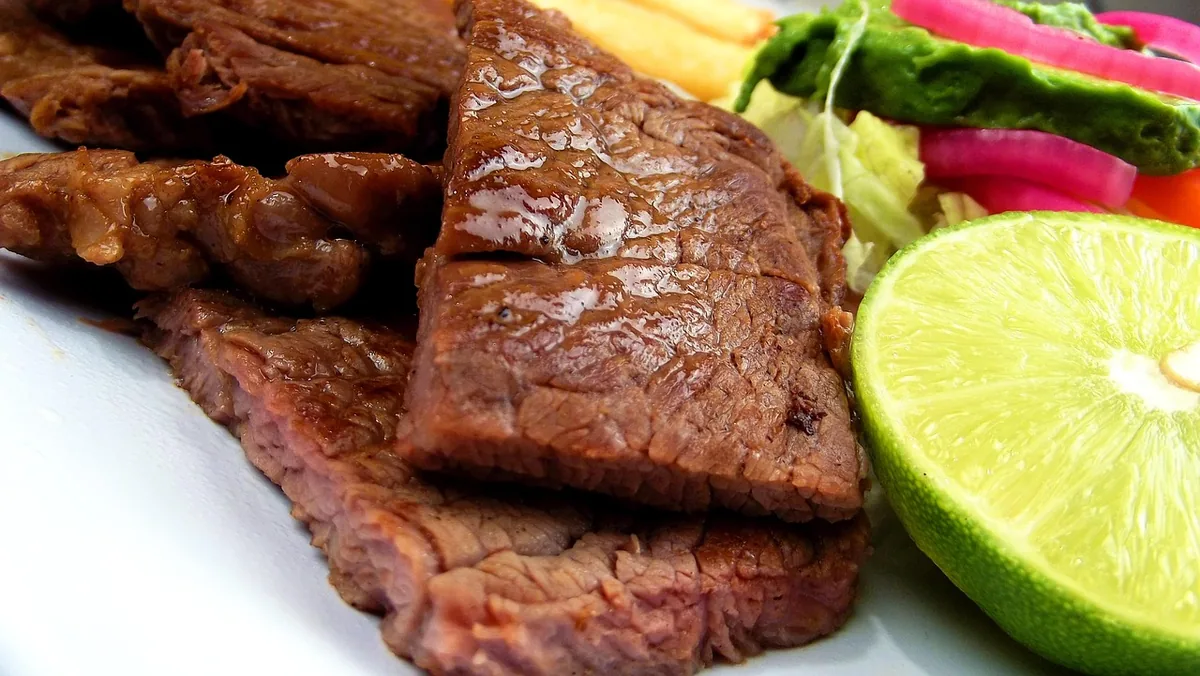
- Sides: baked or mashed potatoes, grilled corn, a big green salad, roasted asparagus or garlic green beans.
- Sauces: chimichurri, garlic butter, or the reserved, untouched portion of marinade, simmered for 2 minutes.
- Tacos and bowls: slice marinated flank or skirt thin for tacos, rice bowls or salads.
- Sandwiches: leftover sliced steak makes a great steak sandwich, and our leftover steak recipes have more ideas.
Troubleshooting Steak Marinade
| Problem | Likely cause | Fix |
|---|---|---|
| Steak won’t brown, looks gray | Surface too wet or pan not hot enough | Pat dry after marinating; preheat the grill or pan fully |
| Crust burned before the center cooked | Sugar and soy over very high heat | Use medium-high heat, a two-zone grill, or reverse sear thick steaks |
| Mushy or chalky surface | Marinated too long, especially with citrus | Stick to the time table; under 8 hours with lemon or lime |
| Too salty | Long marinating with full-sodium soy | Use low-sodium soy sauce and don’t add extra salt |
| No flavor inside | Very thick steak or short marinating time | Choose thinner cuts, score the surface, or serve with the reserved sauce |
| Marinade solid in the fridge | Extra-virgin olive oil firms when cold | Normal; let the bag sit out 20 minutes and massage it |
| Still chewy | Tough cut overcooked or sliced with the grain | Cook to medium-rare or medium and slice thin across the grain |
Steak Marinade FAQs
How long should you marinate steak?
For most cuts, 2 to 8 hours is the sweet spot with this recipe. Tender steaks like ribeye and strip need only 30 minutes to 4 hours, and tougher cuts like flank and sirloin tip do well up to 12 hours. Don’t go past 24 hours.
Can you marinate steak overnight?
Yes, for flank, sirloin, round and sirloin tip steaks with this moderate-acid marinade. Skip overnight marinating with citrus-based marinades and with tender cuts, where the surface can turn soft.
Should you salt a steak if it’s marinated?
Not if the marinade contains soy sauce or Worcestershire, as this one does. Those already season the meat. If you use a salt-free marinade, such as oil, vinegar and herbs, add ¾ to 1 teaspoon of kosher salt per pound.
Is it better to marinate steak or use a dry rub?
Both work. A marinade is best for thin, lean, fibrous cuts and for strong flavors like soy-ginger or chili-lime. A dry rub or simple seasoning is better for thick, well-marbled steaks where you want the deepest crust. Our steak seasoning recipe covers the dry-rub route.
Can I use this marinade on other meats?
Yes. It’s excellent on beef kebabs, pork chops, portobello mushrooms and chicken thighs (cook chicken to 165°F / 74°C). For more beef ideas, browse our steak recipes.
Olive Oil Steak Marinade Recipe Card
Calories are an estimate per serving (8 ounces of raw top sirloin, cooked) based on USDA FoodData Central values for top sirloin steak, olive oil, soy sauce, Worcestershire, balsamic vinegar, Dijon mustard and brown sugar, assuming about a quarter of the marinade stays on the steak after draining.

Olive Oil Steak Marinade
Ingredients
Equipment
Method
- Whisk the olive oil, soy sauce, Worcestershire, balsamic vinegar, Dijon, brown sugar, garlic, pepper and herbs. Set aside ¼ cup for serving before it touches raw meat, if you like.
- Pat the steak dry; lightly score thin cuts like flank in a crosshatch. Put it in a zip-top bag or glass dish with the marinade, turn to coat and seal.
- Refrigerate 2 to 8 hours (30 minutes to 4 hours for ribeye or strip, up to 12 hours for flank or sirloin tip), turning once or twice. Don’t go past 24 hours.
- Take the steak out 20 to 30 minutes before cooking. Let the excess drip off, pat the surface lightly dry and discard the used marinade.
- Grill or sear over medium-high heat, 3 to 5 minutes per side for 1-inch steaks, to 130°F (54°C) for medium-rare or 145°F (63°C), the USDA minimum.
- Rest 5 to 10 minutes, then slice thinly across the grain.


