

Blog
Salmon Internal Temp: When Is Salmon Done?

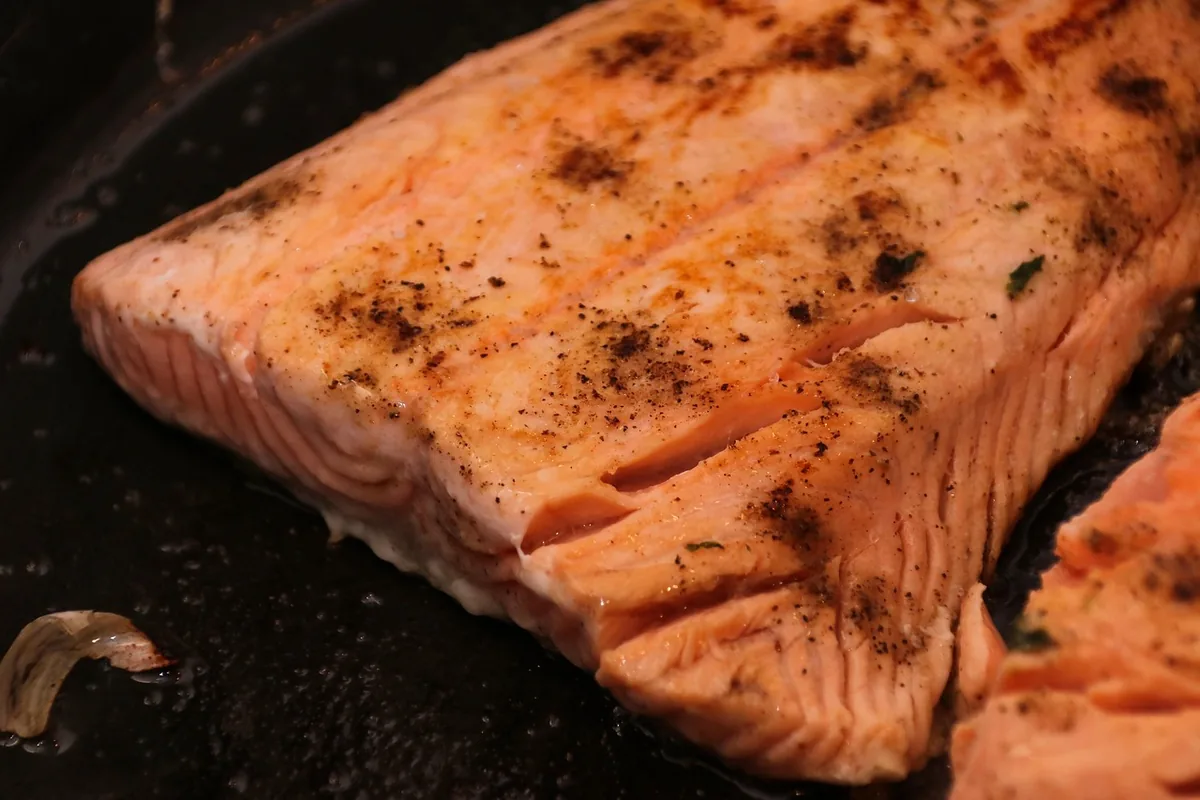
What’s the right salmon internal temp? The official safe minimum for fish is 145°F (63°C), measured in the thickest part. Many cooks take salmon off the heat earlier, at 120°F to 130°F, for a moister, medium center. This guide gives you a simple doneness chart, shows how to take salmon’s temperature correctly, lists cooking times for baking, pan-searing, air frying and grilling, and explains who should always cook salmon to 145°F.
Quick Answer: Salmon Internal Temp
- Food safety guideline: 145°F (63°C), when the flesh is opaque and separates easily with a fork. This is the temperature the USDA and FDA recommend for fish.
- Medium (moist and flaky): take it off the heat at 125°F to 130°F (52°C to 54°C). This is below the guideline and is a common restaurant and home-cook preference.
- Carryover: salmon keeps cooking off the heat and usually rises another 3°F to 5°F as it rests.
- Always cook to 145°F for anyone pregnant, young children, older adults, and people with a weakened immune system.
Salmon Doneness: The Simple Chart
| Doneness | Take off the heat at | What it looks like |
|---|---|---|
| Medium-rare | 120°F (49°C) | Center is deep pink and slightly translucent; very silky |
| Medium | 125°F to 130°F (52°C to 54°C) | Center is just turning opaque, flakes in large, moist pieces |
| Medium-well | 135°F to 140°F (57°C to 60°C) | Opaque almost all the way through, firmer flakes |
| Well done (USDA/FDA) | 145°F (63°C) | Fully opaque, separates easily with a fork; firm |
The 145°F figure comes from the FoodSafety.gov safe minimum temperature chart. Cooking salmon to a lower temperature is a choice about texture, not a food safety standard.
Wild vs Farmed Salmon: Which Temperature Is Best?
Wild salmon (sockeye, coho, king, pink) is leaner, so it dries out quickly. Most cooks prefer it at 120°F to 125°F. Farmed Atlantic salmon has more fat between the layers, so it stays moist at 130°F to 140°F and is still tender at 145°F, which makes it more forgiving for beginners and for cooking to the full safe temperature. Read more in our guide to wild caught vs farmed salmon.
Step-by-Step Method: How to Check Salmon’s Temperature
1. Use an instant-read thermometer
A fast digital thermometer is the only reliable way to hit an exact temperature. Dial thermometers are too slow for thin fillets.
2. Find the thickest part
Salmon fillets are thicker in the middle and thin at the tail end. Always measure the thickest point, because it’s the last part to cook.
3. Insert from the side
Slide the probe in horizontally through the side of the fillet until the tip sits in the center. Going in from the top often pushes the tip out the bottom, where it reads the hot pan instead of the fish.
4. Pull it a little early
Take the salmon off the heat about 3°F to 5°F before your target, because it keeps cooking as it rests.
5. Rest for 3 to 5 minutes
Let it sit on a plate, loosely tented with foil. Then check again. For a 145°F finish, make sure it has reached 145°F before serving.
No thermometer? Use the fork test
Push a fork into the thickest part and twist gently. Fully cooked fish is opaque and separates easily into flakes. If the center is still glossy and translucent, cook it a little longer.
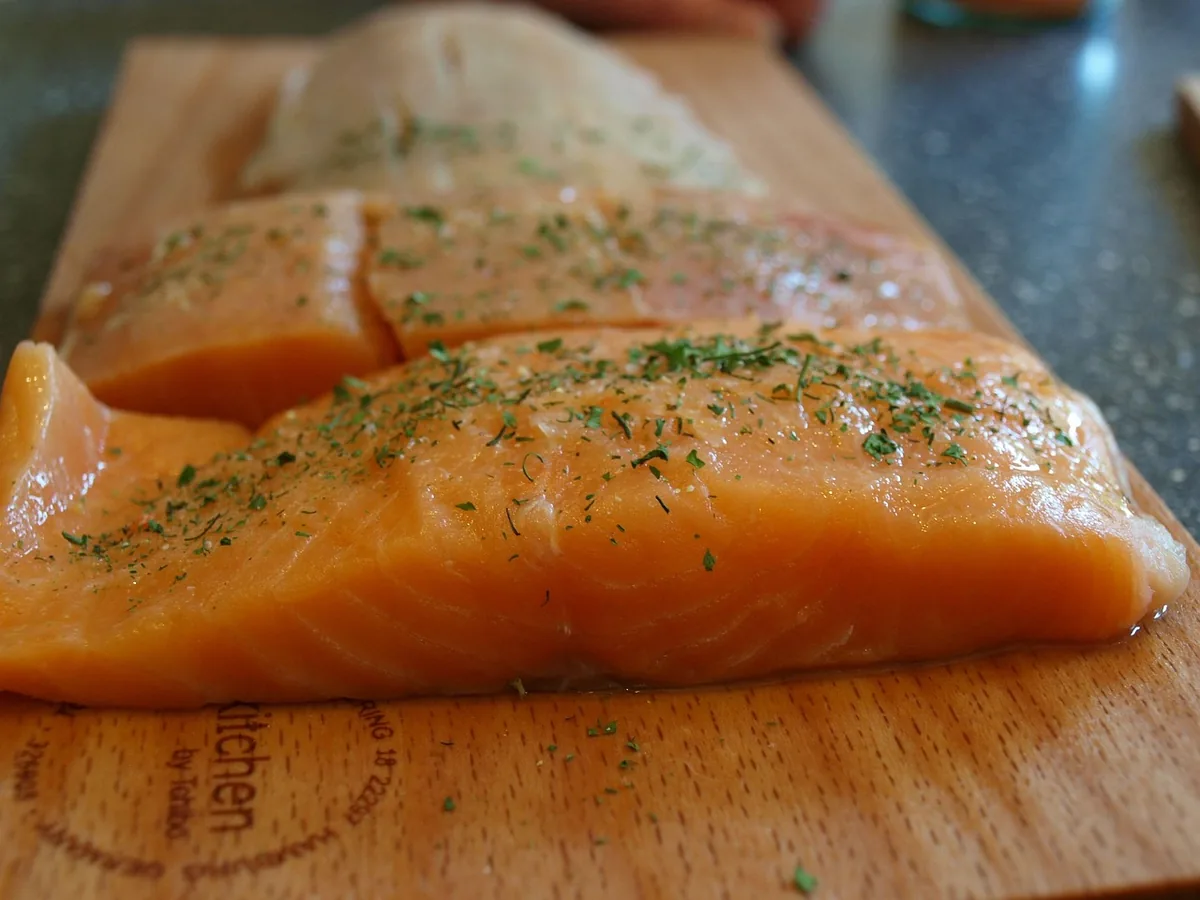
Salmon Cooking Times by Method (1-Inch-Thick Fillets)
| Method | Heat | Time to about 125°F | Time to 145°F |
|---|---|---|---|
| Baked | 400°F (200°C) oven | 9 to 11 minutes | 12 to 15 minutes |
| Pan-seared | Medium-high, skin side down first | 4 minutes skin side + 1 to 2 minutes flesh side | 5 minutes skin side + 3 minutes flesh side |
| Air fryer | 390°F (200°C) | 6 to 7 minutes | 8 to 10 minutes |
| Grilled | Medium-high, about 450°F | 3 to 4 minutes per side | 4 to 5 minutes per side |
| Broiled | High, rack 6 inches from heat | 5 to 7 minutes | 8 to 10 minutes |
Times are a starting point. Fillet thickness, starting temperature and your oven or grill change them a lot, so check the temperature a few minutes early. Thinner tail pieces cook faster; fold the thin tail under so the fillet is an even thickness.
Salmon Internal Temp for Other Salmon Dishes
| Dish | Target temperature | Notes |
|---|---|---|
| Fillets and steaks | 145°F (63°C), or 125°F to 130°F if you prefer medium | Measure the thickest part from the side |
| Whole side of salmon | Same as fillets | Check in 2 or 3 places; the thick shoulder finishes last |
| Salmon burgers made from raw salmon | 145°F (63°C) | Chopped raw fish should be cooked through |
| Hot-smoked salmon | 145°F (63°C) | Cold-smoked salmon (lox) is a cured product and is not cooked |
| Patties or croquettes made with canned salmon | 160°F (71°C) | Canned salmon is already cooked, but the raw egg in the mix needs to reach 160°F, like other egg dishes |
| Reheated leftover salmon | 165°F (74°C) | Reheat gently, covered, in a 275°F oven |
How to Make Sure Your Thermometer Is Accurate
A thermometer that reads 5°F off can be the difference between silky and chalky salmon. To test it, fill a glass with ice and a little cold water, stir, and wait a minute. Put the probe in the middle of the glass without touching the sides: it should read 32°F (0°C). If it doesn’t, follow the maker’s instructions to recalibrate it, or remember the difference when you cook. Check it every few months, and after it’s been dropped.
Clean the probe with hot, soapy water between checks of raw and cooked food, so you don’t carry bacteria from a raw center back into finished fish.
Why Salmon Internal Temp Matters More Than Time
Recipes give times as a guide, but the same recipe can take 8 minutes or 18 depending on the fillet. Thickness is the biggest factor: a 1½-inch center-cut piece of farmed salmon needs nearly twice as long as a ¾-inch wild sockeye fillet. Cold fish straight from the fridge, a crowded pan, an oven that runs hot or cool, and whether the skin is on all change the time too. Checking the salmon internal temp takes 3 seconds and removes the guesswork, so you can cook any fillet exactly the way you like it, every time.
Common Mistakes to Avoid
- Going by time alone. A 1-inch fillet and a 1½-inch fillet need very different times. Measure.
- Measuring from the top. The probe goes too deep and reads the pan. Go in from the side.
- Forgetting carryover. Salmon pulled at 145°F will finish closer to 150°F and taste dry. Pull a few degrees early, then let it rest up to temperature.
- Cooking straight from the fridge at very high heat. The outside overcooks before the center is done. Let fillets sit out for 10 to 15 minutes while the oven or pan heats (no longer).
- Too much white “goo.” That white substance is albumin, a protein squeezed out as the muscle tightens. A little is normal; a lot means the salmon was cooked too hot or too long. Gentler heat and a brine of 1 tablespoon salt in 4 cups water for 10 minutes both reduce it.
Food Safety Tips (USDA Guidelines)
- Who should cook to 145°F: undercooked fish carries a higher risk for people who are pregnant, young children, older adults and anyone with a weakened immune system. Cook their portions to 145°F.
- Raw and rare salmon: fish meant to be eaten raw or very rare should be bought from a trusted source and frozen first to kill parasites. See our sushi grade salmon guide.
- Buy and store it cold: fresh fish should smell mild and clean, not sour or strongly fishy, per the FDA’s guide to selecting and serving seafood safely. Keep raw salmon in the fridge and cook it within 1 to 2 days, or freeze it.
- Thaw in the fridge overnight or in a sealed bag in cold water, never on the counter.
- Leftovers: refrigerate cooked salmon within 2 hours and eat it within 3 to 4 days. Reheat gently to 165°F (74°C), or enjoy it cold in salads.
Easy Recipe to Try Next
Put your thermometer to work with our pan-seared salmon piccata with lemon-caper sauce, the quick baked sockeye salmon, or crispy salmon patties made with leftover or canned salmon. If you like a good doneness chart, our cast iron skillet steak uses the same thermometer method. Browse all our salmon recipes.
Salmon Temperature FAQs
What temperature is salmon done?
Salmon is fully cooked to the USDA and FDA guideline at 145°F (63°C). Many cooks prefer it at 125°F to 130°F for a moist, medium center, which is below the guideline.
Is salmon safe at 125°F?
Many people eat salmon cooked to 125°F, especially high-quality fish handled well, but it’s below the official 145°F guideline. People in higher-risk groups should eat salmon cooked to 145°F.
Can salmon be a little pink in the middle?
Salmon flesh is naturally pink-orange even when fully cooked, so look for opaque versus translucent rather than pink. A slightly translucent center means it’s below 145°F.
How do you know when salmon is done without a thermometer?
Press a fork into the thickest part and twist. Done salmon is opaque and flakes apart easily. If it resists or looks glossy and see-through, keep cooking.
What is the white stuff that comes out of salmon?
It’s albumin, a harmless protein that’s pushed to the surface as the fish cooks. Lots of it means the salmon was cooked too hot or too long.
What temperature should I bake salmon at?
400°F (200°C) works well for most fillets: a 1-inch fillet takes about 12 to 15 minutes to reach 145°F.


