

Blog
How Long to Bake Salmon at 350°F (Chart and Recipe)

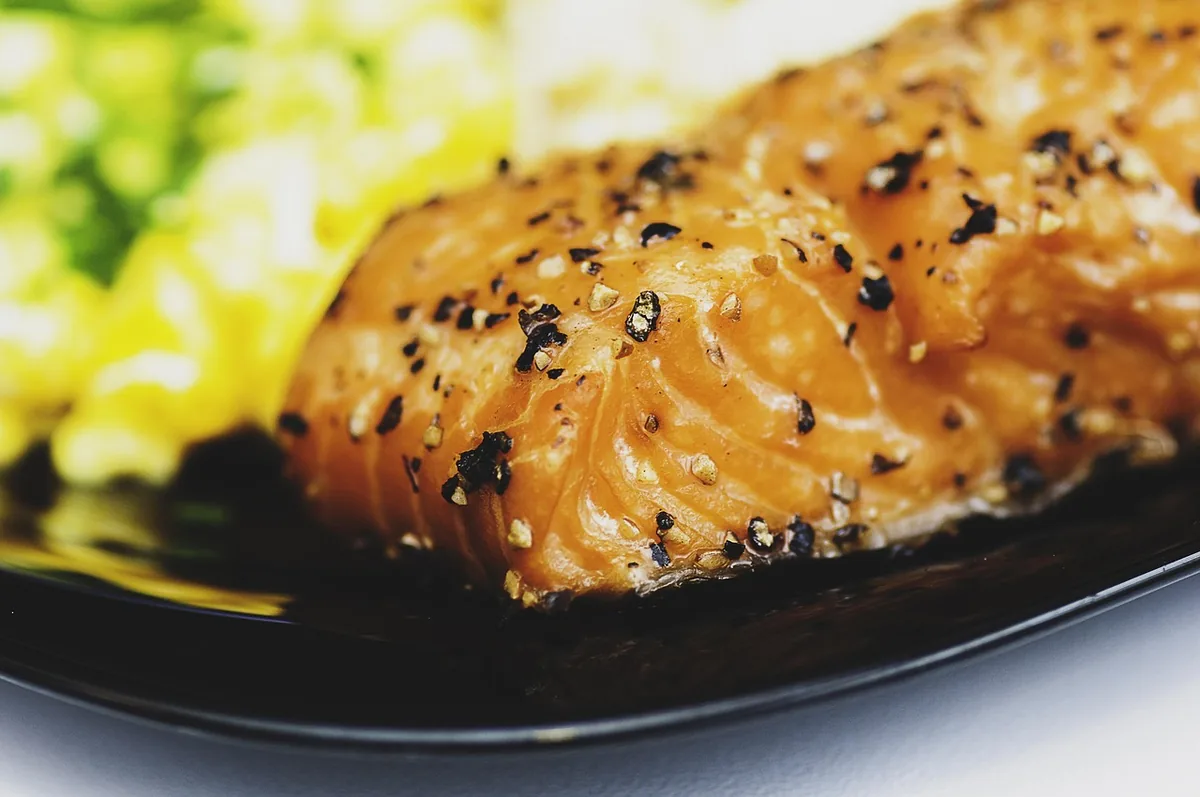
If you’re wondering how long to bake salmon at 350°F (175°C), the short answer is 18 to 22 minutes for a 1-inch-thick fillet, or until the thickest part reaches 145°F (63°C). Thinner tail pieces need closer to 10 to 12 minutes, while a thick center cut can take 25 to 30. A moderate oven cooks the fish gently and evenly, so the edges stay moist while the middle catches up.
Below you’ll find a full time chart at 350°F by thickness, a second chart for 375°F, 400°F and 425°F, a simple lemon garlic butter oven baked salmon recipe for 4, how to tell when the fish is done, how to bake frozen fillets, and storage tips. The printable recipe card is at the bottom.
How Long to Bake Salmon at 350°F: Time Chart
Thickness matters far more than weight. A 6-ounce fillet cut from the thin tail end can be ½ inch thick, while a 6-ounce piece from the center may be 1½ inches. Measure the thickest point with a ruler before you start, then use the chart below as your guide.
| Cut and thickness | Time at 350°F (175°C) | Start checking at |
|---|---|---|
| ½-inch (1.3 cm) fillet or tail piece | 10 to 12 minutes | 9 minutes |
| ¾-inch (2 cm) fillet | 14 to 16 minutes | 12 minutes |
| 1-inch (2.5 cm) fillet | 18 to 22 minutes | 16 minutes |
| 1½-inch (4 cm) center-cut fillet | 25 to 30 minutes | 22 minutes |
| Whole side, 2 to 3 lb (0.9 to 1.4 kg) | 25 to 35 minutes | 22 minutes |
| Foil packet, 1-inch fillet | 22 to 25 minutes | 20 minutes |
These times assume thawed fish that has rested at room temperature for about 10 minutes, placed on a parchment-lined sheet pan in the center of the oven. Add 2 to 3 minutes in a glass or ceramic dish.
A whole side of baked salmon rarely gets thicker than 1½ inches, which is why it doesn’t take much longer than one thick fillet. Fold the thin belly flap under so it doesn’t dry out.
When you’re deciding how long to bake salmon at 350, treat the chart as a window, not a promise. Ovens drift by 15 to 25 degrees, and a fillet straight from a very cold fridge can add a few minutes. Check early and let the thermometer make the final call.
How Long to Bake Salmon at 400°F (and at 375°F or 425°F)
A 350°F oven is gentle and forgiving, but a hotter oven is faster and adds a little color. If you’d rather bake salmon at 400°F, a 1-inch fillet is usually done in 12 to 15 minutes. The chart compares all four common temperatures for thawed fillets.
| Thickness | 375°F (190°C) | 400°F (200°C) | 425°F (220°C) |
|---|---|---|---|
| ½ inch | 8 to 10 minutes | 7 to 9 minutes | 6 to 8 minutes |
| ¾ inch | 12 to 14 minutes | 10 to 12 minutes | 8 to 10 minutes |
| 1 inch | 15 to 18 minutes | 12 to 15 minutes | 10 to 13 minutes |
| 1½ inches | 20 to 25 minutes | 18 to 22 minutes | 15 to 18 minutes |
| Whole side (2 to 3 lb) | 20 to 30 minutes | 18 to 25 minutes | 15 to 20 minutes |
Which temperature should you pick? Each one has a job:
- 350°F: the most forgiving. A minute or two too long barely changes the texture, so it suits beginners, whole sides and fish baked under a sauce or topping.
- 375°F: a middle ground that works well for foil packets and fillets baked with sliced vegetables.
- 400°F: the everyday weeknight setting. When you bake salmon at 400, the edges get a bit of color and dinner is on the table faster.
- 425°F: best for thick, fatty farmed fillets and sugar glazes you want to caramelize. Watch closely, because thin pieces overcook fast.
Our guide to how to cook salmon compares baking with pan-searing, broiling, grilling and poaching if you want to try another method.
Why You’ll Love This Oven Baked Salmon
This is the plain, dependable oven baked salmon recipe you can come back to every week. It has a short ingredient list, a single pan and very little hands-on time.
- About 30 minutes total: 10 minutes of prep and about 20 minutes in the oven for 1-inch fillets.
- Gentle heat: baking at 350°F keeps the flakes moist and leaves less white albumin on the surface.
- Big flavor from basics: butter, garlic, lemon zest and parsley do all the work.
- Easy to scale: bake 2 fillets or a whole side with the same method and the same baked salmon time chart.
- Little cleanup: parchment on the sheet pan means nothing sticks.
- Flexible: wild or farmed, skin on or off, fresh or frozen all work with small timing changes.
Ingredients for Oven Baked Salmon
These amounts serve 4. Exact quantities are also in the recipe card.
- Salmon fillets, 4 pieces about 6 oz (170 g) each, 1½ lb (680 g) total, about 1 inch thick. Skin on or skinless.
- Unsalted butter, 3 tablespoons (42 g), melted.
- Olive oil, 1 tablespoon (15 ml). It keeps the butter from browning too quickly and helps the seasoning stick.
- Garlic, 3 cloves, finely minced or grated.
- Lemon, 1 large: 1 teaspoon finely grated zest, 2 tablespoons (30 ml) juice, plus a few thin slices for the pan.
- Diamond Crystal kosher salt, 1 teaspoon (or ½ teaspoon table salt).
- Black pepper, ½ teaspoon, freshly ground.
- Fresh parsley, 2 tablespoons, chopped, or 1 tablespoon fresh dill.
Buying tip: ask for center-cut pieces of even thickness so all four fillets finish at the same time. Fatty farmed Atlantic salmon is the most forgiving in the oven. Leaner wild sockeye or coho bakes faster and dries out sooner, so check it a few minutes early. Our wild caught vs farmed salmon guide explains the differences in fat, flavor and price.
Equipment You Need
You don’t need anything special to make baked salmon, but a few tools make the timing much easier.
- Rimmed baking sheet (a half sheet, 18×13 inches) or a 9×13-inch baking dish
- Parchment paper or foil, lightly oiled
- Instant-read thermometer, the single best tool for perfect fish
- Small bowl and fork for the garlic butter
- Pastry brush or a spoon
How to Make Baked Salmon at 350°F (Step by Step)
Here’s the full method for 1-inch fillets. If yours are thinner or thicker, check the chart for how long to bake salmon at 350 and adjust.
- Heat the oven. Set it to 350°F (175°C) with a rack in the center. Line a rimmed baking sheet with parchment.
- Take the chill off. Set the fillets on a plate for 10 minutes while the oven heats, then pat them very dry with paper towels.
- Make the garlic butter. Stir together the melted butter, olive oil, garlic, lemon zest, lemon juice, salt and pepper.
- Arrange the fish. Place the fillets skin side down, at least 1 inch apart, with a few lemon slices tucked around them.
- Season. Brush or spoon about two-thirds of the garlic butter over the tops and sides. Save the rest for serving.
- Bake. Bake for 18 to 22 minutes, starting to check at 16 minutes.
- Check the temperature. Slide a thermometer into the thickest part from the side. Pull the fish when it reads 145°F (63°C), or a little earlier if you like it medium (see the doneness section below).
- Rest and finish. Rest for 3 to 5 minutes, spoon over the reserved garlic butter and pan juices, and sprinkle with parsley.
For a golden top: after the fish is nearly done, switch the oven to broil for 1 to 2 minutes, with the pan 6 inches from the element. Stay right by the oven, because garlic and butter go from golden to burned within seconds.
How to Tell When Baked Salmon Is Done
The official safe minimum for baked salmon and all fish is 145°F (63°C). That’s the number on the FoodSafety.gov safe minimum internal temperature chart, and it’s the one to follow for pregnant women, young children, older adults and anyone with a weakened immune system.
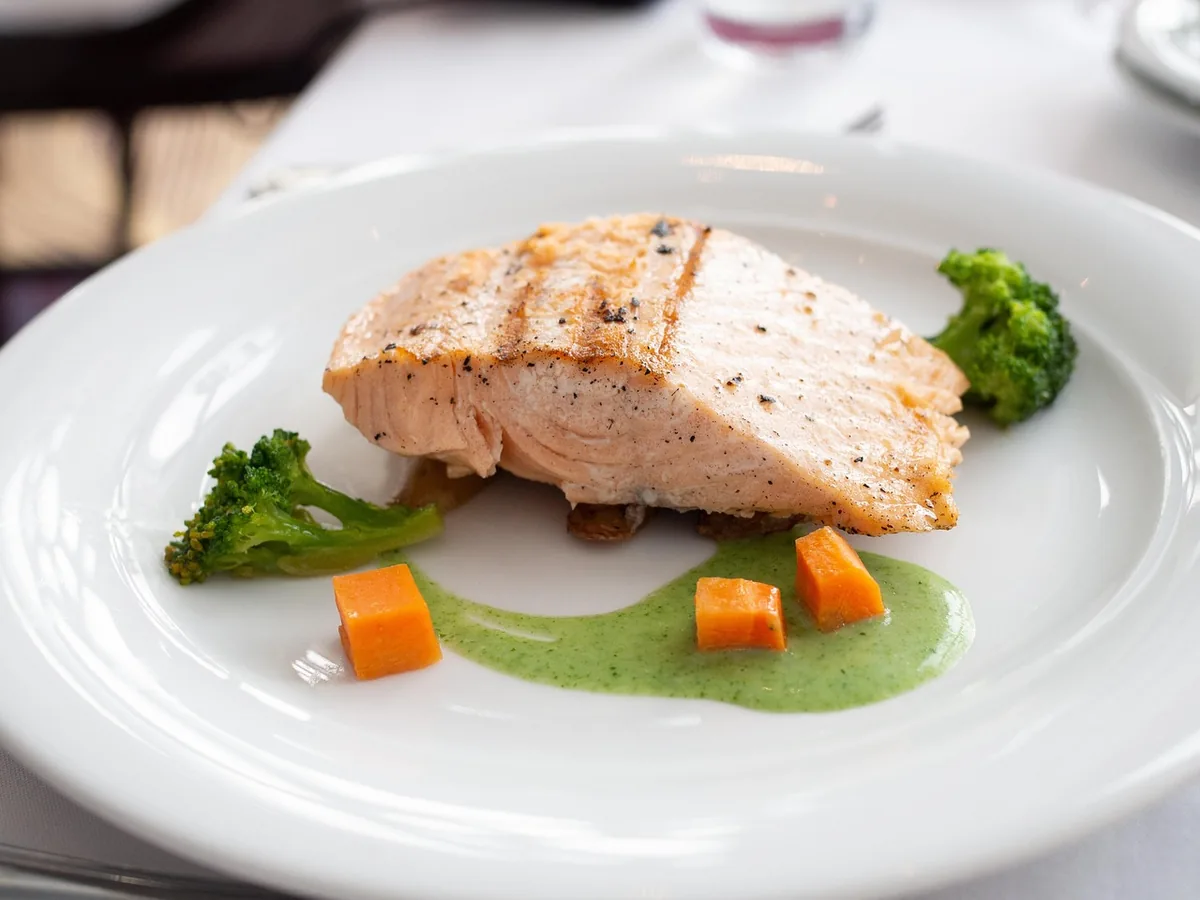
Many cooks take salmon out earlier, at 125°F to 135°F (52°C to 57°C), for a medium, silky center. That’s a personal choice, and it’s below the official recommendation. If you go that way, buy very fresh, well-handled fish from a source you trust. The table shows what each stage looks like.
| Internal temperature | Doneness | What you see |
|---|---|---|
| 125°F (52°C) | Medium | Center still slightly translucent and deep pink; very moist |
| 135°F (57°C) | Medium-well | Mostly opaque, large moist flakes |
| 145°F (63°C) | Well done (USDA safe minimum) | Fully opaque, flakes easily with a fork |
| 155°F (68°C) and above | Overcooked | Dry, chalky, lots of white albumin on top |
No thermometer? Use these signs that baked salmon is ready:
- Fork test: press a fork into the thickest part and twist gently. Done salmon separates into flakes along its natural lines.
- Color: the flesh turns from glossy and translucent to matte and opaque. At 145°F it’s opaque all the way through.
- Albumin: a little white protein on the surface is normal. A lot means the fish is cooking too fast or too long.
The temperature keeps rising about 3 to 5 degrees while the fish rests, so you can pull it at 140°F (60°C) and let it reach 145°F on the pan. Our full salmon internal temp guide explains how to place the probe and check your thermometer. For advice on how much fish to eat each week, see the FDA’s advice about eating fish.
Baking Frozen vs. Thawed Salmon
Thawed salmon cooks more evenly and takes seasoning better, but you can make oven baked salmon straight from the freezer when dinner sneaks up on you.
| Starting point | Time at 350°F (175°C), 1-inch fillet | Notes |
|---|---|---|
| Thawed, rested 10 minutes | 18 to 22 minutes | Most even result |
| Thawed, straight from the fridge | 20 to 24 minutes | Add 2 minutes |
| Frozen, individually wrapped | 28 to 35 minutes | About 50% longer; season after 10 minutes |
How to bake salmon from frozen
- Rinse off any ice glaze under cold water and pat the fillets dry.
- Brush lightly with oil and bake for 10 minutes on a lined sheet.
- Take the pan out, brush on the garlic butter and season. It sticks now that the surface has thawed.
- Return to the oven and bake 18 to 25 minutes more, until 145°F (63°C) in the center.
The best way to thaw: move the sealed fillets to the fridge the night before, about 12 hours for 1-inch pieces. For a faster thaw, keep them in their sealed bag and set it in a bowl of cold water for 30 to 60 minutes, changing the water every 30 minutes. Never thaw fish on the counter. The FDA’s guide to selecting and serving fresh and frozen seafood safely has more detail.
Cut open vacuum-sealed packaging before thawing fish in the fridge, since reduced-oxygen packs carry a small botulism risk.
Tips for the Best Baked Salmon at 350°F
A few small habits make a big difference in how your oven baked salmon turns out:
- Buy even pieces. Fillets of the same thickness finish together. If you have a tail piece, fold the thin end under or take it out of the oven a few minutes early.
- Dry the surface. Moisture on the fish dilutes the butter and makes the top look steamed.
- Give them space. Leave at least an inch between fillets so hot air reaches every side.
- Use the thermometer, not the clock. The time chart is a guide; the temperature tells you when it’s done.
- Rest briefly. Three to five minutes lets the juices settle and the carryover heat finish the center.
Common problems and fixes
| Problem | Likely cause | Fix next time |
|---|---|---|
| Dry, chalky salmon | Baked past 150°F, or lean wild fish | Check 4 minutes early; pull wild salmon sooner |
| Lots of white albumin | Fish went in ice cold or baked too long | Rest it 10 minutes first; stick to 350°F |
| Raw center, dry edges | Uneven thickness | Fold the tail under; buy center cuts |
| Skin stuck to the pan | No parchment or oil | Line the pan; serve the fish off the skin |
| Burned garlic | Broiled too long | Broil 1 minute only, or skip it |
Easy Variations and Substitutions
Once you know how long to bake salmon at 350, you can change the flavors almost endlessly. Keep the same time and temperature for all of these:
- Honey mustard: swap the lemon juice for 1 tablespoon honey and 1 tablespoon Dijon mustard.
- Brown sugar glaze: brush with 2 tablespoons brown sugar mixed into the butter, then broil for 1 minute. Our brown sugar salmon has the full recipe.
- Miso: whisk 2 tablespoons white miso into the butter instead of salt. See our miso salmon recipe for a sweeter glaze.
- Herb crust: press ½ cup panko mixed with parsley, Parmesan and a little butter onto the tops.
- Cajun: rub with 2 teaspoons Cajun seasoning and skip the extra salt.
- Foil packets: seal each fillet in foil with the garlic butter and lemon slices and add 3 to 4 minutes.
Sockeye works too. Our baked sockeye salmon shows how to adjust for its leaner, thinner fillets. For a whole meal on one pan, the one pan salmon with vegetables roasts the sides alongside the fish.
What to Serve With Baked Salmon
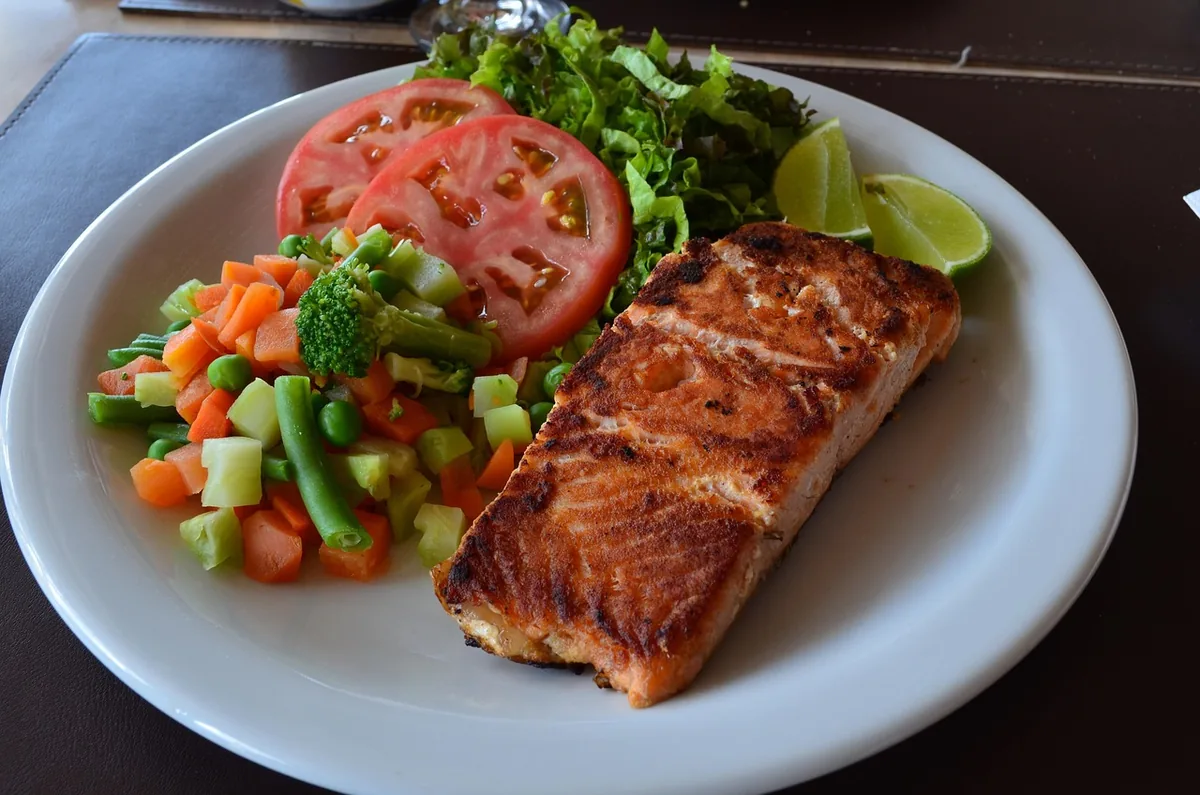
Lemon garlic baked salmon goes with almost anything. A few easy pairings for oven baked salmon:
- Vegetables: roasted asparagus, green beans, broccoli or Brussels sprouts. Most roast at 400°F to 425°F, so start them first, then lower the oven for the fish.
- Starches: rice pilaf, lemon orzo, garlic mashed potatoes or roasted baby potatoes.
- Salads: a crisp Caesar, cucumber and dill salad, or arugula with shaved Parmesan.
For more weeknight ideas, browse our salmon dinner ideas or the full salmon recipes collection. Cooking for someone who doesn’t eat fish? Our oven baked chicken breast uses a similar seasoning and can bake on a second rack.
How to Store, Freeze and Reheat
Leftover baked salmon is useful for salads, grain bowls, pasta and salmon cakes. Follow these guidelines from the cold food storage chart:
- Refrigerate: within 2 hours of baking, in an airtight container. Eat within 3 to 4 days.
- Freeze: wrap cooled portions tightly and freeze for up to 2 to 3 months. Thaw in the fridge overnight.
- Reheat gently: cover with foil and warm in a 275°F (135°C) oven for 10 to 15 minutes, until it reaches 165°F (74°C).
- Microwave: use 50% power in 30-second bursts, covered, to avoid rubbery edges.
- Eat it cold: flake chilled baked salmon into a salad or onto toast.
Reheating overcooks fish easily, so cold leftover baked salmon often tastes better than warmed. Leftover flakes also make good patties; try them in our salmon patty recipe.
How Long to Bake Salmon at 350°F: FAQs
How long to bake salmon at 350°F per inch?
About 18 to 22 minutes for a 1-inch-thick fillet, 10 to 12 minutes for a ½-inch piece, and 25 to 30 minutes for a 1½-inch center cut. Bake until the thickest part reaches 145°F (63°C).
Is it better to bake salmon at 350 or 400?
Both make good baked salmon. 350°F is gentler and more forgiving, especially for thick fillets, whole sides and toppings. When you bake salmon at 400°F, it cooks faster (12 to 15 minutes per inch) and the top browns a bit more, but there’s less room for error.
Should I cover salmon with foil when baking?
Not usually. Uncovered baked salmon cooks evenly and the butter coats the top. Wrap them in foil packets if you want a steamed, extra-moist texture, and add 3 to 4 minutes to the time.
What temperature should baked salmon be?
The USDA and FoodSafety.gov safe minimum for fish is 145°F (63°C). Many cooks prefer to pull salmon at 125°F to 135°F for a medium center, which is below the official recommendation.
How long to bake a whole side of salmon at 350?
A 2- to 3-pound side usually takes 25 to 35 minutes, depending on how thick it is at the center. Start checking at 22 minutes.
Do you flip salmon when baking?
No. Bake it skin side down the whole time. Flipping breaks the fillet and isn’t needed for even cooking in the oven.
Baked Salmon at 350°F Recipe Card
Calories are an estimate per serving (one 6-oz fillet with its share of the garlic butter) based on USDA FoodData Central values for raw farmed Atlantic salmon, butter, olive oil, garlic, lemon juice and parsley.

Oven Baked Salmon at 350°F (Lemon Garlic Butter)
Ingredients
Equipment
Method
- Heat the oven to 350°F (175°C) with a rack in the center. Line a rimmed baking sheet with parchment.
- Let the salmon sit out for 10 minutes while the oven heats, then pat it very dry with paper towels.
- Stir together the melted butter, olive oil, garlic, lemon zest, lemon juice, salt and pepper.
- Place the fillets skin side down at least 1 inch apart, tuck lemon slices around them, and brush with about two-thirds of the garlic butter.
- Bake 18 to 22 minutes for 1-inch fillets (10 to 12 for 1/2 inch, 25 to 30 for 1 1/2 inches), starting to check at 16 minutes.
- Bake until the thickest part reaches 145°F (63°C), the USDA safe minimum for fish. Rest 3 to 5 minutes.
- Spoon over the reserved garlic butter and pan juices, sprinkle with parsley and serve.


