

Blog
Tenderloin Steak (Pan-Seared Filet Mignon with Garlic Butter)

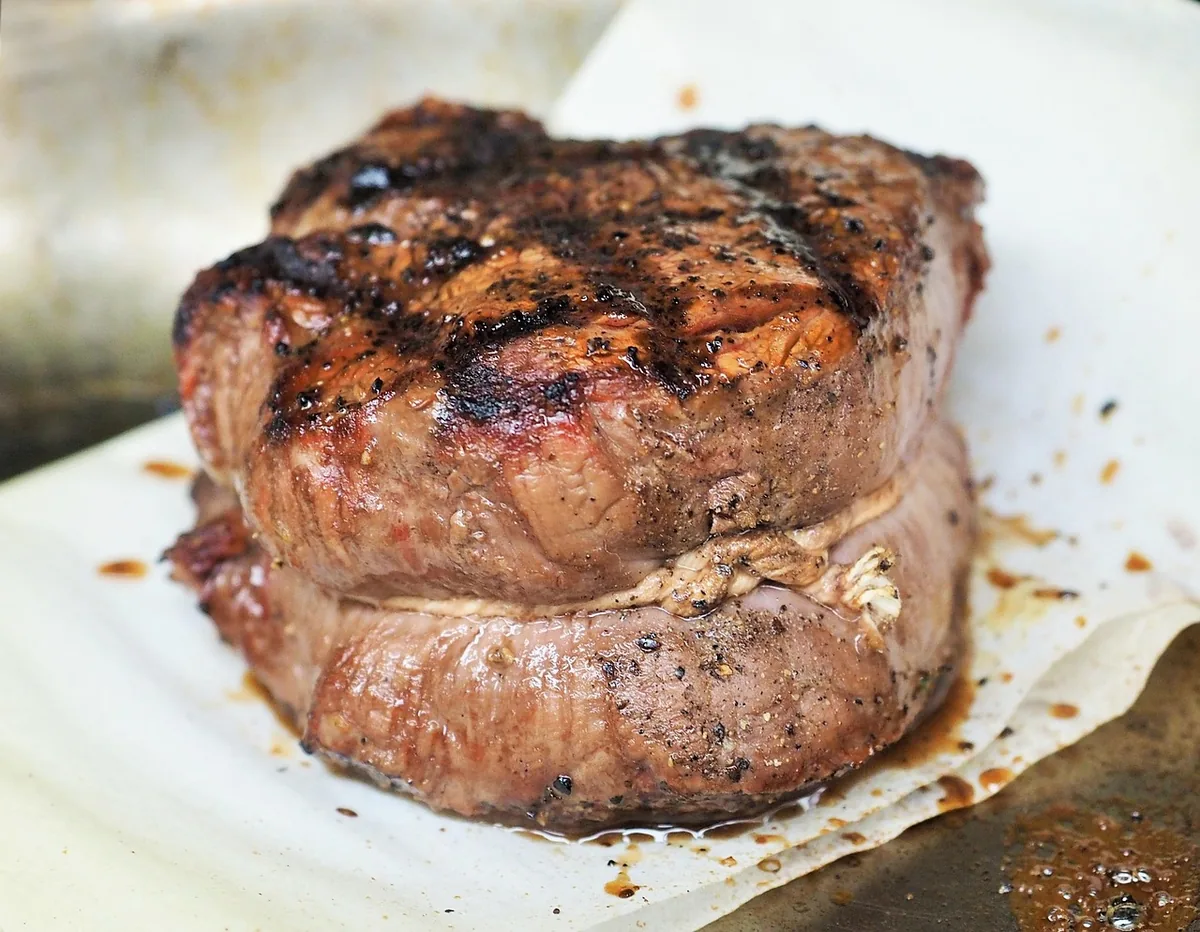
A tenderloin steak is the most tender steak on the steer: a thick, round, lean cut that you’ll usually see sold as filet mignon. It has a mild, buttery flavor and almost no chew, so the job at home is simple. Give it a deep crust, keep the center rosy, and don’t let a pricey steak overcook in the last two minutes.
Below: what the cut and its French names mean, how to buy filet mignon or cut your own, how to season and tie it, and a pan-to-oven method with a time chart. You’ll also find doneness temperatures, grilled and sous vide options, two sauces, a fix-it table and a recipe card for 4 steaks.
What Is a Tenderloin Steak?
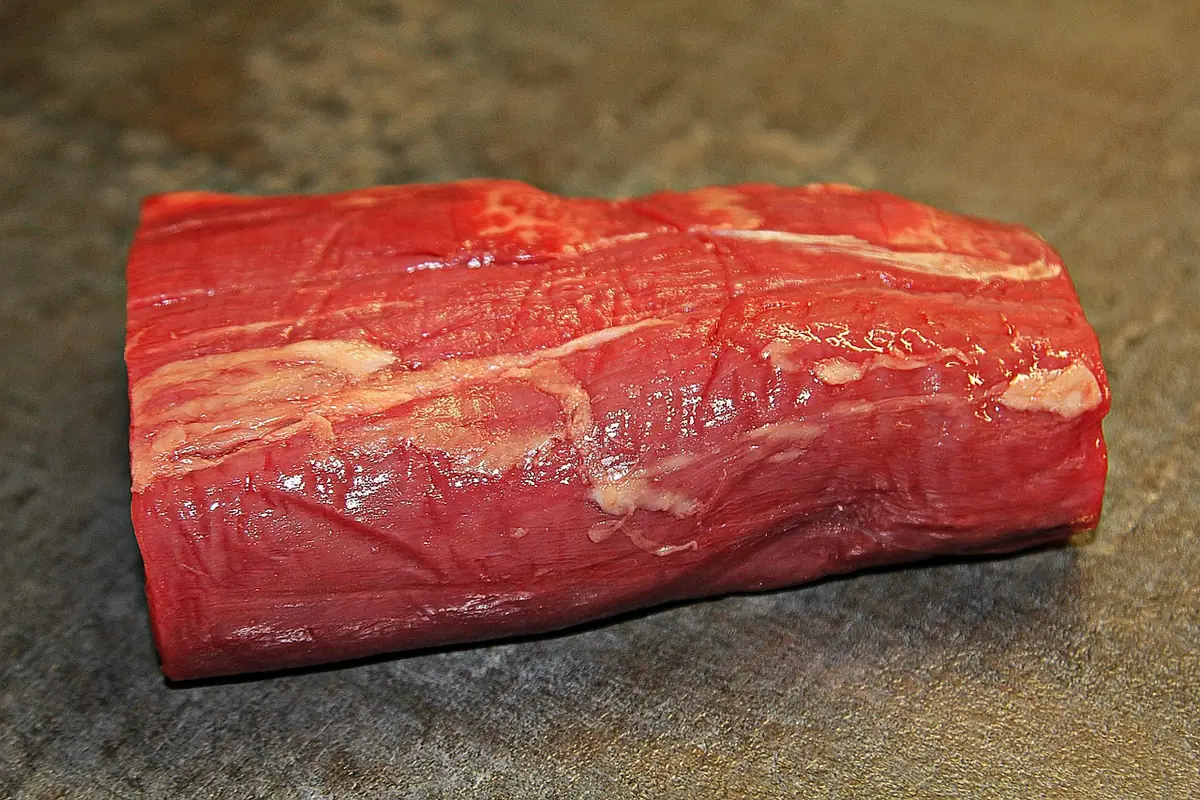
The tenderloin is a long, tapered muscle that runs along the inside of the spine, under the short loin and sirloin. It’s lean, so a tenderloin steak tastes milder than a ribeye or strip. A whole beef tenderloin is thick at one end (the butt or head), even through the middle (the center cut) and thin at the other end (the tail).
Here’s what the names mean in a US butcher case:
| Name | Where it comes from | Typical size | Best way to cook |
|---|---|---|---|
| Filet mignon | Steaks cut across the tenderloin, usually from the center | 6 to 8 oz (170 to 225 g), 1½ to 2 inches thick | Pan-sear and oven finish, grill, reverse sear |
| Tournedos | Smaller rounds from the narrower part toward the tail | 3 to 4 oz (85 to 115 g), about 1 inch thick | Quick pan-sear, 2 per person |
| Châteaubriand | A thick roast-style piece from the center cut | 1 to 2 lb (450 to 900 g), serves 2 to 4 | Sear, then roast and slice at the table |
| Tenderloin tips | Head and tail trim | Irregular pieces | Kebabs, stir-fry, beef stroganoff |
So beef filet mignon and tenderloin steak are, in practice, the same thing. In France “filet mignon” can mean the thin tail, and British cooks say “fillet steak,” but in the US the names are interchangeable.
How to Buy Beef Filet Mignon
Filet mignon is one of the priciest cuts in the store, so a little care at the counter pays off:
- Thickness first. Aim for 1½ to 2 inches (4 to 5 cm). A thin filet overcooks before it browns; a thick one gives you time to build a crust while the center stays pink.
- Even shape. Center-cut steaks are round and the same height all over. Pieces from the head end are often lopsided and benefit from tying.
- Color. Bright cherry red on the surface, firm to the touch, with no gray patches or sour smell. Vacuum-packed beef looks purple and brightens after opening.
- Labels to skip. Avoid “mechanically tenderized,” “blade tenderized” or “enhanced with a solution.” A tenderloin steak doesn’t need it, and those should be cooked to 145°F (63°C).
Grades and price per pound
USDA Prime has the most marbling, Choice is the supermarket standard, and Select is leaner. Because tenderloin is naturally lean, the gap between grades is smaller than for a ribeye, so Choice filet mignon is the sweet spot.
- Individually cut filets cost the most per pound. Prices change by region and season, so compare the per-pound number, not the tray price.
- A whole, untrimmed tenderloin (often labeled PSMO, “peeled, side muscle on”) is usually much cheaper per pound, even after you account for trim loss.
- Warehouse clubs and holiday sales are the best times to buy a whole one.
Cutting Your Own Steaks from a Whole Tenderloin
Trimming a whole tenderloin takes about 20 minutes and a sharp, flexible knife, and it’s the cheapest way to get thick beef filet mignon. Expect to lose about 25 to 35% of an untrimmed tenderloin’s weight to fat, the side “chain” muscle and silver skin.
- Pull off the fat. Most of it comes away by hand; trim thick patches with the knife.
- Remove the chain. This is the thin, fatty strip running along one side. Cut it off and save it for stir-fry.
- Take off the silver skin. Slide the knife tip under the shiny membrane, grip the loose end and run the blade along it with the edge angled slightly up, so you remove the skin and not the meat. Silver skin doesn’t melt and shrinks in the heat, which curls the steak.
- Cut the steaks. Fold the thin tail under or set it aside. Slice the center into 1½- to 2-inch steaks. Tie the head end and cut steaks from it, or roast it whole.
| Starting point | Typical weight | Trimmed yield | What you get |
|---|---|---|---|
| Untrimmed (PSMO) tenderloin | 5 to 7 lb (2.3 to 3.2 kg) | 3½ to 4½ lb (1.6 to 2 kg) | 8 to 10 steaks of 7 to 8 oz, plus tips |
| Trimmed whole tenderloin | 4 to 5 lb (1.8 to 2.3 kg) | Nearly all of it | 8 to 10 steaks, or 1 châteaubriand plus 6 steaks |
| Center-cut roast | 2 lb (900 g) | All of it | 4 steaks about 1¾ inches thick |
A rule of thumb: each pound of trimmed center cut gives two 8-ounce steaks. Wrap extras tightly, label them and freeze flat.
Ingredients for Pan-Seared Filet Mignon
The list is short because the tenderloin steak is the star. These amounts make 4:
- 4 beef tenderloin steaks, 7 to 8 oz (200 to 225 g) each, 1½ to 2 inches thick.
- Kosher salt, 1½ teaspoons (Diamond Crystal; use ¾ teaspoon if your salt is Morton or table salt).
- Coarsely ground black pepper, 1 teaspoon.
- Neutral oil, 1 tablespoon, such as avocado, canola or grapeseed, for a high-heat sear.
- Unsalted butter, 3 tablespoons (42 g).
- Garlic, 3 cloves, lightly smashed in their skins.
- Fresh thyme, 4 sprigs, or 2 small rosemary sprigs.
- Flaky salt, to finish (optional).
You’ll also want a 10- or 12-inch cast iron or heavy stainless skillet that can go in the oven, tongs, a spoon for basting, and an instant-read thermometer. For more on using cast iron with steak, see our cast iron skillet steak guide.
Seasoning and Tying for an Even Shape
Filet mignon is mild, so salt matters more than a long spice list. Salt 45 minutes to 24 hours ahead, uncovered on a rack in the fridge: the salt draws out moisture, dissolves and moves back in, and the dry surface browns faster. Otherwise salt right before cooking. Salting 10 to 20 minutes ahead leaves the surface wet.
- Classic: salt and coarse black pepper, then garlic, thyme and butter in the pan.
- Rub: a light coat of our steak seasoning works well; skip extra salt if your blend has some.
- Crust: press cracked peppercorns into both sides for a steak au poivre finish.
Why and how to tie a filet
A tenderloin steak tends to slump as it warms, and an uneven steak cooks unevenly. A loop of butcher’s twine keeps it tall and round so the middle and edges finish together. It also tidies head-end steaks with a loose flap.
- Cut a 14-inch (35 cm) piece of cotton kitchen twine for each steak.
- Wrap it around the side of the steak, about halfway up.
- Snug it gently into a round shape and tie a double knot. Don’t squeeze so hard the steak bulges.
- Snip the ends; remove the twine before serving.
How to Cook Tenderloin Steak in a Pan and Oven
A hot pan builds the crust and a short spell in the oven brings the thick center up gently. Most steakhouses cook filet mignon this way.
- Prep. Take the steaks out of the fridge 20 to 30 minutes ahead. Heat the oven to 400°F (205°C) with a rack in the middle. Pat the steaks very dry.
- Season. Salt them now if you didn’t salt ahead, then add the pepper.
- Heat the pan. Set the skillet over medium-high heat for 3 to 4 minutes, add the oil, and wait until it shimmers and gives off the first wisp of smoke.
- Sear. Lay the steaks in, leaving space between them, and don’t move them for 2½ to 3 minutes. Flip and sear the other side 2 minutes. Use tongs to hold each one on its edge for 20 to 30 seconds to brown the sides.
- Baste. Lower the heat to medium, add the butter, garlic and thyme, and tilt the pan. Spoon the foaming butter over the steaks for 30 to 45 seconds.
- Finish in the oven. Move the skillet to the oven. Start checking after 4 minutes. For 1½- to 2-inch steaks, expect 5 to 10 minutes depending on doneness (see the chart below).
- Rest. Move the steaks to a warm plate, spoon the pan butter over, and rest them 5 minutes. Snip the twine and serve whole or sliced.
No oven-safe pan? Sear, then move the steaks to a sheet pan. The New York strip steak uses the same sear-and-baste technique for a beefier, fattier cut.
Tenderloin Steak Time Chart by Thickness
These times assume the tenderloin steak sat out 20 to 30 minutes, was seared as shown, then finished at 400°F (205°C). Ovens and pans vary, so start checking early and let the thermometer decide.
| Thickness | Sear per side | Oven, pull at 120°F (rare) | Oven, pull at 125°F (medium-rare) | Oven, pull at 135°F (medium) | Oven, to 145°F (USDA) |
|---|---|---|---|---|---|
| 1 inch (2.5 cm) | 2 min | Skip the oven | 1 to 2 min | 3 to 4 min | 5 to 6 min |
| 1½ inches (4 cm) | 2½ min | 3 to 4 min | 5 to 6 min | 7 to 8 min | 9 to 11 min |
| 2 inches (5 cm) | 3 min | 5 to 6 min | 7 to 9 min | 10 to 12 min | 13 to 15 min |
| 2½ inches (6 cm) | 3 min | 7 to 8 min | 10 to 12 min | 13 to 15 min | 16 to 19 min |
A 1½- to 2-pound châteaubriand needs 20 to 30 minutes at 400°F after searing, then a 10-minute rest.
Doneness Temperatures and Food Safety
Insert an instant-read thermometer from the side into the very center. The temperature rises 3 to 5°F (2 to 3°C) while the steak rests, so pull it a little early.
| Doneness | Pull from heat | After resting | What it looks like |
|---|---|---|---|
| Rare | 115 to 120°F (46 to 49°C) | 120 to 125°F (49 to 52°C) | Deep red, cool-looking center |
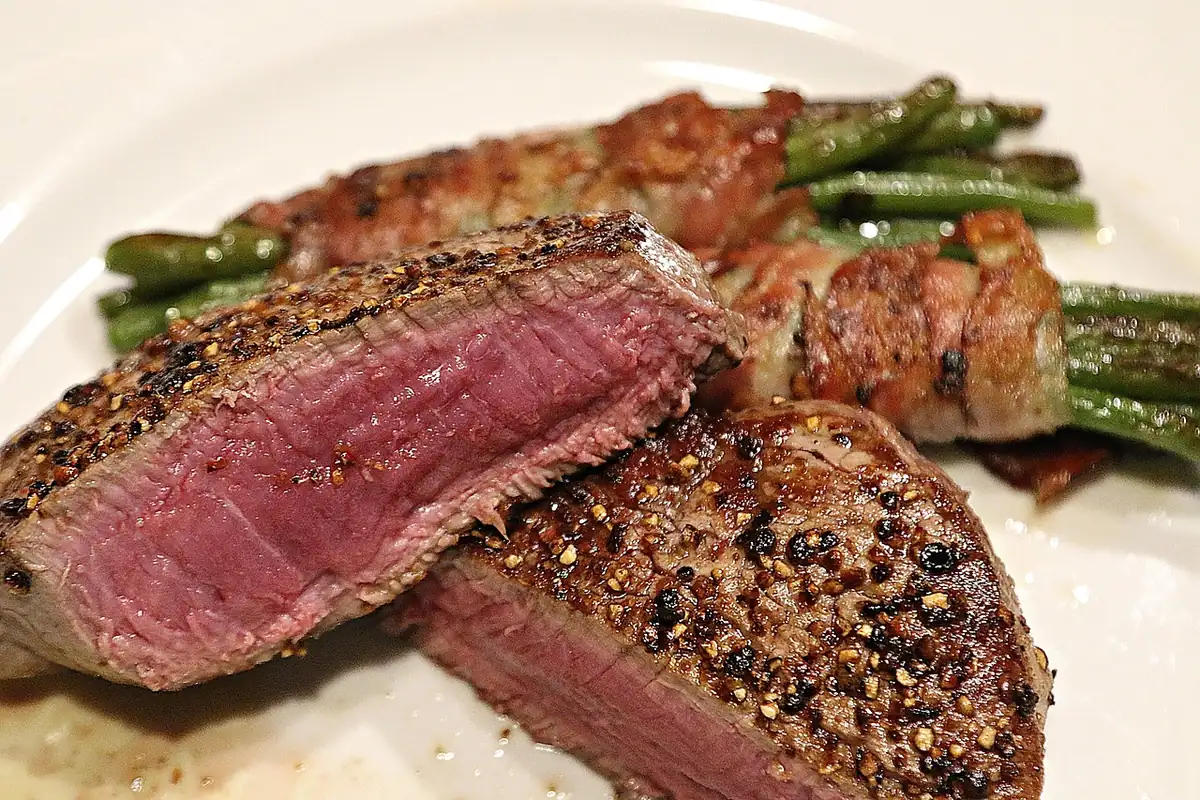
| Medium-rare | 125°F (52°C) | 130°F (54°C) | Rosy red to pink, very juicy |
| Medium | 135°F (57°C) | 140°F (60°C) | Pink center, firmer |
| Medium-well | 140 to 145°F (60 to 63°C) | 145 to 150°F (63 to 66°C) | Faint pink, meets USDA guidance |
| Well done | 155°F (68°C) | 160°F (71°C) | No pink, noticeably drier |
The USDA guidance on FoodSafety.gov for whole cuts of beef, steaks included, is 145°F (63°C) with a 3-minute rest. To be clear, rare, medium-rare and medium are all below that number.
Many cooks and most steakhouses still pull filet mignon at 125 to 130°F because a lean cut turns dry and mealy as it climbs past medium. That’s a personal choice based on the fact that bacteria sit mainly on the outside of a whole, intact steak, which the sear heats well past 145°F. It isn’t recommended for:
- pregnant people, young children and older adults;
- anyone with a weakened immune system;
- mechanically tenderized or injected steaks, which should always reach 145°F.
Other Methods: Grilled Beef Tenderloin, Reverse Sear and Sous Vide
The pan-oven method is the most reliable indoors, but a tenderloin steak works well other ways too:
| Method | Total time | Best for | Main tip |
|---|---|---|---|
| Pan sear + oven | 15 to 20 min | Weeknights, 2 to 4 steaks | Oven-safe skillet, start checking at 4 min |
| Two-zone grill | 15 to 25 min | Smoky flavor, cookouts | Sear over direct heat, finish on the cool side |
| Reverse sear | 45 to 60 min | Very thick steaks, edge-to-edge pink | Low oven first, very hot pan last |
| Sous vide | 1½ to 3 hours | Exact doneness, dinner parties | Pat bone-dry before the final sear |
Grilled beef tenderloin steaks
Set up a two-zone fire: coals or burners on high on one side, nothing on the other. Oil the grates, sear the filets over direct heat for 2 to 3 minutes per side with the lid open, then move them to the cool side, close the lid and cook to your pull temperature, usually 5 to 10 more minutes. Our guide to how to grill steak covers fire setup and grill marks in detail. Grilled beef tenderloin is lean, so brush it with garlic butter as it comes off.
Reverse sear
Bake the seasoned steaks on a rack at 250°F (120°C) until they’re 10 to 15°F below your target, about 35 to 50 minutes for 2-inch filets. Then sear them in a smoking-hot pan for about 1 minute per side. Full steps are in how to reverse sear a steak.
Sous vide
Seal the steaks in bags and cook them in a water bath at your exact doneness, such as 130°F (54°C) for medium-rare, for 1½ to 3 hours. Then sear 45 to 60 seconds per side. The sous vide steak post has a full temperature chart.
Sauces for Filet Mignon
Lean filet mignon welcomes a sauce, and the browned bits in your skillet make a fast one. Each takes about 5 minutes while the steaks rest.
Red wine pan sauce
- Pour off all but 1 tablespoon of fat. Over medium heat, add 1 minced shallot and cook 1 minute.
- Add ½ cup (120 ml) dry red wine and scrape up the browned bits. Simmer until reduced by half, about 2 minutes.
- Add ½ cup (120 ml) low-sodium beef broth and simmer 2 to 3 minutes more, until it lightly coats a spoon.
- Off the heat, swirl in 1 tablespoon cold butter and any juices from the resting plate. Season with salt and pepper.
Peppercorn cream sauce
Coat the steaks with 1 tablespoon cracked black peppercorns before searing. After cooking, add 2 tablespoons brandy to the pan (off the heat, then return carefully), ½ cup beef broth and ⅓ cup (80 ml) heavy cream, and simmer until thick. The method is the same as our steak au poivre recipe.
- Other easy toppings: a slice of blue cheese or herb butter, chimichurri, horseradish cream, or sautéed mushrooms.
- Surf and turf: add a seared salmon fillet with our lemon dill sauce for salmon on the side.
What to Serve with Filet Mignon
Classic steakhouse sides suit a rich, simple steak:
- Mashed potatoes, baked potatoes or crispy roasted potatoes
- Roasted asparagus, green beans or broccolini
- A wedge salad or Caesar salad
- Creamed spinach or sautéed mushrooms
Plan one 7- to 8-ounce tenderloin steak per person, or a 6-ounce filet mignon for lighter appetites.
Troubleshooting
| Problem | Likely cause | Fix next time |
|---|---|---|
| Gray, pale crust | Wet surface or pan not hot enough | Pat very dry, preheat 3 to 4 minutes, don’t crowd the pan |
| Thick gray band under the crust | Seared too long on lower heat | Use a hotter pan and a shorter sear, or reverse sear |
| Overcooked center | No thermometer, or carryover not counted | Pull 5°F early and check from 4 minutes in the oven |
| Raw, cold middle | Steak straight from the fridge, very thick | Let it sit out 20 to 30 minutes; add oven time |
| Steak curled or bulged | Silver skin left on, or untied | Trim the membrane and tie with twine |
| Bland flavor | Under-salted lean meat | Salt ahead, baste with butter, add a pan sauce |
| Smoky kitchen, burnt butter | Butter added during the high-heat sear | Add butter only after lowering the heat |
| Juices pour out on the board | Cut immediately | Rest 5 minutes on a warm plate |
Storing and Reheating Leftovers
Refrigerate cooked steak within 2 hours, wrapped or in a sealed container, and eat it within 3 to 4 days, as the cold food storage chart advises. Raw filet mignon keeps 3 to 5 days in the fridge, or 4 to 12 months frozen.
- To reheat: warm on a rack at 250°F (120°C) for 15 to 20 minutes, then sear 30 seconds per side. USDA guidance for leftovers is 165°F (74°C), which will leave the steak well done.
- Cold: slice thin for salads or a steak sandwich.
- More ideas: browse the rest of our steak recipes.
Pan-Seared Tenderloin Steak Recipe Card
Calories are an estimate per serving (1 steak, with all of the butter and oil counted and no sauce or sides) based on USDA FoodData Central values for raw beef tenderloin trimmed of fat, vegetable oil, butter, garlic and thyme.

Pan-Seared Tenderloin Steak with Garlic-Thyme Butter
Ingredients
Equipment
Method
- If you have time, salt the steaks 45 minutes to 24 hours ahead and refrigerate them uncovered on a rack. Take them out 20 to 30 minutes before cooking. Tie each steak around the middle with twine if it is uneven.
- Heat the oven to 400°F (205°C) with a rack in the middle. Pat the steaks very dry, salt them now if you did not salt ahead, and season with the pepper.
- Heat the skillet over medium-high heat for 3 to 4 minutes, add the oil and heat until it shimmers and just begins to smoke.
- Add the steaks with space between them and sear without moving for 2½ to 3 minutes, until deeply browned. Flip and sear 2 minutes more, then hold each steak on its edge with tongs for 20 to 30 seconds to brown the sides.
- Lower the heat to medium, add the butter, garlic and thyme, tilt the pan and spoon the foaming butter over the steaks for 30 to 45 seconds.
- Move the skillet to the oven and cook 5 to 10 minutes, checking from 4 minutes, until the center reads 125°F (52°C) for medium-rare or 135°F (57°C) for medium. For the USDA guidance, cook to 145°F (63°C).
- Transfer the steaks to a warm plate, spoon the pan butter over and rest 5 minutes (at least 3). Remove the twine, sprinkle with flaky salt and serve.


