

Blog
How to Reverse Sear a Steak (Thick Steak Guide With Time Chart)

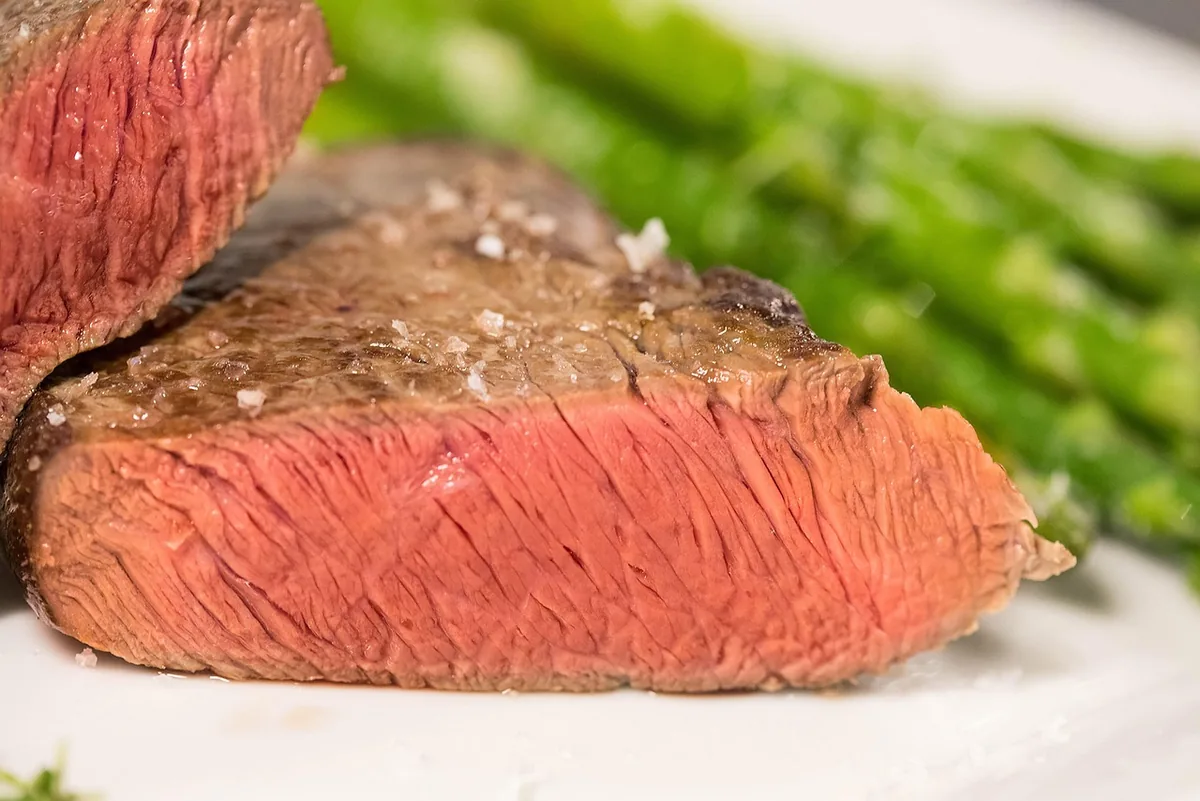
Learning how to reverse sear a steak is the surest way to cook a thick cut so it’s the same rosy pink from edge to edge, with a dark, crackly crust and no wide gray band under the surface. You bake the steak low and slow first, then sear it hard for a couple of minutes at the very end. It’s the opposite order from a classic pan steak, and that’s where the name comes from.
This guide works for any steak 1½ to 2½ inches thick: New York strip, ribeye, filet mignon, a bone-in tomahawk, picanha or tri-tip. Below you’ll find why it works, a time chart by thickness, searing options, grill, smoker and sous vide versions, and a troubleshooting table. The printable recipe card for 2 thick New York strips (4 servings) is at the bottom.
How to Reverse Sear a Steak: The Short Version
Here’s the whole method for two 1½- to 2-inch (4 to 5 cm) strip steaks. Once you’ve done it once, you won’t need the list again.
- Salt early. Season with kosher salt 45 minutes to 24 hours ahead and leave the steaks uncovered on a rack in the fridge.
- Heat the oven to 250°F (120°C). Set the steaks on a wire rack over a rimmed sheet pan.
- Bake low until the center reads about 115°F (46°C) for medium-rare, usually 40 to 55 minutes.
- Heat a cast iron skillet until the oil just smokes.
- Sear fast, 60 to 90 seconds per side plus the fat edge, and baste with butter for the last 30 seconds.
- Slice and serve. A reverse sear steak needs little or no rest.
Why the Reverse Sear Works
A thick steak seared first in a hot pan cooks from the outside in. By the time the center is pink, the outer half inch has gone gray and dry. The reverse sear fixes that by using two different jobs for two different kinds of heat.
- Gentle heat cooks evenly. At 225°F to 275°F (110°C to 135°C), the outside of the meat is only a little hotter than the inside, so the whole steak rises in temperature together. The result is even color from edge to edge.
- A dry surface browns fast. Low oven heat with air circulating under a rack dries the outside of the steak. Browning (the Maillard reaction) can’t start until surface water is gone, so a dry steak forms a crust in about a minute instead of three or four.
- You have a wide window. The temperature climbs slowly in a low oven, so it’s hard to overshoot by much. That’s why the reverse sear is so forgiving for expensive cuts.
A bonus: natural enzymes that tenderize beef stay active below about 122°F (50°C), so a slow climb helps lean cuts like filet feel more tender.
Best Cuts and Thickness for a Reverse Sear Steak
Thickness matters more than the cut. The method shines at 1½ inches and up, because thick steaks are exactly the ones that overcook on the outside when you sear them first. Ask the butcher to cut them if the case only has thin ones.
| Cut | Best thickness | Why it suits the method | Notes |
|---|---|---|---|
| New York strip | 1½ to 2 inches | Even shape, firm and beefy | Score the fat cap and sear it on its edge. See our New York strip steak guide. |
| Ribeye | 1½ to 2 inches | Marbling renders slowly in the oven | Very forgiving; aim for medium-rare to medium so the fat softens. |
| Filet mignon | 2 to 2½ inches | Lean and tall, so it overcooks easily seared first | Tie with kitchen twine so it keeps its shape. |
| Tomahawk or cowboy ribeye | 2 to 2½ inches, bone-in | Too thick for direct heat alone | Takes longer near the bone; probe the thickest part, not near the bone. |
| Picanha | Whole roast or 2-inch steaks | Thick fat cap renders while the meat cooks gently | Score the fat and sear it well. See our picanha steak guide. |
| Tri-tip | Whole roast, 1½ to 2 inches | Uneven taper; low heat evens it out | The grain changes direction halfway, so slice each half across its own grain. |
Plan on 8 ounces (225 g) of raw boneless steak per person. For more cuts and ideas, browse all our steak recipes.
When Not to Reverse Sear
The reverse sear is a tool for thick meat, not for every steak. For thin cuts it adds time and gives you nothing in return, because a hot pan or grill can already brown the outside before the center overcooks.
- Steaks under 1 inch (2.5 cm): skip it. A thin steak is through in the low oven before it ever sees the pan, and then it overcooks during the sear. Cook it fast and hot instead, as in our cast iron skillet steak.
- Thin, loose-grained cuts such as skirt, flank and flap: cook over the highest heat for a few minutes.
How to Reverse Sear a Steak in the Oven, Step by Step
This is the method behind the recipe card: two thick New York strips in the oven, then a quick sear in cast iron. It takes about an hour, almost all of it hands-off. You need a wire rack set in a rimmed sheet pan, a digital thermometer (a leave-in probe with an alarm is easiest), a 12-inch cast iron skillet and a high-smoke-point oil such as avocado oil or beef tallow.
1. Dry brine the steaks
Salt the steaks on all sides with about 1 teaspoon of Diamond Crystal kosher salt per pound (450 g), or half that of table salt. Set them on the wire rack and refrigerate uncovered for at least 45 minutes and up to 24 hours. The salt seasons the meat and dries the surface, and a dry surface is half the secret of a fast crust. A blend like our steak seasoning recipe works too, as long as it has little or no sugar.
2. Bake low and slow
- Heat the oven to 250°F (120°C) with a rack in the center.
- Pat the steaks dry, add black pepper and set them on the wire rack with space between them.
- Push the probe in from the side so the tip sits in the very center of the thickest steak.
- Bake until the center reads 115°F (46°C) for medium-rare. For 1½ inches, that’s about 35 to 45 minutes; for 2 inches, about 45 to 60.
Cooking straight from the fridge is fine; it just takes a few more minutes. There’s no need to let the steaks sit out first.
3. Heat the pan
About 10 minutes before the steaks are ready, set the skillet over medium-high heat for 5 minutes, then turn it to high. Add 1 tablespoon of oil when the steaks come out. It should shimmer and send up the first wisp of smoke. Turn on the vent fan.
4. Sear and baste
- Lay the steaks in the pan away from you. Sear 60 to 90 seconds without moving them, until deep brown.
- Flip and sear the second side 60 to 90 seconds.
- Hold each steak on its fat edge with tongs for 30 to 60 seconds to render and crisp it.
- Lower the heat to medium, add the butter, garlic and thyme, tilt the pan and spoon the foaming butter over the steaks for 30 seconds.
Check the center: after a 115°F pull, a reverse seared steak usually lands around 125°F to 130°F (52°C to 54°C), which is medium-rare. Move the steaks to a board, slice against the grain and pour the pan butter over the top.
Reverse Sear Time and Temperature Chart
Times are for steaks straight from the fridge in a 250°F (120°C) oven, pulled at 115°F (46°C) for medium-rare. Use them for planning and let your thermometer make the call.
| Thickness | Oven at 225°F (110°C) | Oven at 250°F (120°C) | Oven at 275°F (135°C) |
|---|---|---|---|
| 1½ inches (4 cm) | 45 to 55 minutes | 35 to 45 minutes | 25 to 35 minutes |
| 2 inches (5 cm) | 60 to 75 minutes | 45 to 60 minutes | 35 to 45 minutes |
| 2½ inches (6 cm) | 75 to 90 minutes | 60 to 75 minutes | 45 to 60 minutes |
| Bone-in tomahawk, 2 to 2½ inches | 80 to 100 minutes | 65 to 85 minutes | 50 to 65 minutes |
| Whole tri-tip or picanha roast, about 2 lb (900 g) | 70 to 90 minutes | 55 to 75 minutes | 45 to 60 minutes |
225°F gives the most even color but is slow; 275°F is fastest with a slightly wider brown edge. 250°F is the sweet spot and what the recipe card uses.
- Convection fan on: expect it to run 15 to 20% faster and dry the surface a bit more.
Doneness Temperatures and Food Safety
Pull the steak from the oven 10°F to 15°F below your goal. The sear adds roughly that much, and with so little time in the pan, there’s not much carryover after.
| Doneness | Pull from oven | After the sear | What it looks like |
|---|---|---|---|
| Rare | 105°F to 110°F (41°C to 43°C) | 120°F to 125°F (49°C to 52°C) | Deep red, very soft |
| Medium-rare | 115°F (46°C) | 125°F to 130°F (52°C to 54°C) | Rosy pink throughout, juicy |
| Medium | 125°F (52°C) | 135°F to 140°F (57°C to 60°C) | Light pink, slightly firmer |
| USDA safe minimum | 135°F (57°C) | 145°F (63°C), then rest 3 minutes | Faint pink to tan, firm |
| Well done | 145°F to 150°F (63°C to 66°C) | 155°F to 160°F (68°C to 71°C) | No pink |
To be clear about safety: the guidance on FoodSafety.gov for whole cuts of beef, including steak, is 145°F (63°C) with a 3-minute rest. Many cooks and steakhouses pull and serve steak earlier, at 125°F to 135°F, because they prefer it rare or medium-rare. That’s a personal choice and below the official guidance.
- If you’re serving anyone pregnant, very young, older or with a weakened immune system, cook to 145°F and rest 3 minutes.
- Mechanically tenderized (blade-tenderized) or “enhanced” steaks should always reach 145°F. The label must say so if a steak was tenderized.
- To hit 145°F with a reverse sear, pull from the oven at 135°F (57°C), sear, then rest for 3 minutes.
Searing Options: Cast Iron, Grill or Broiler
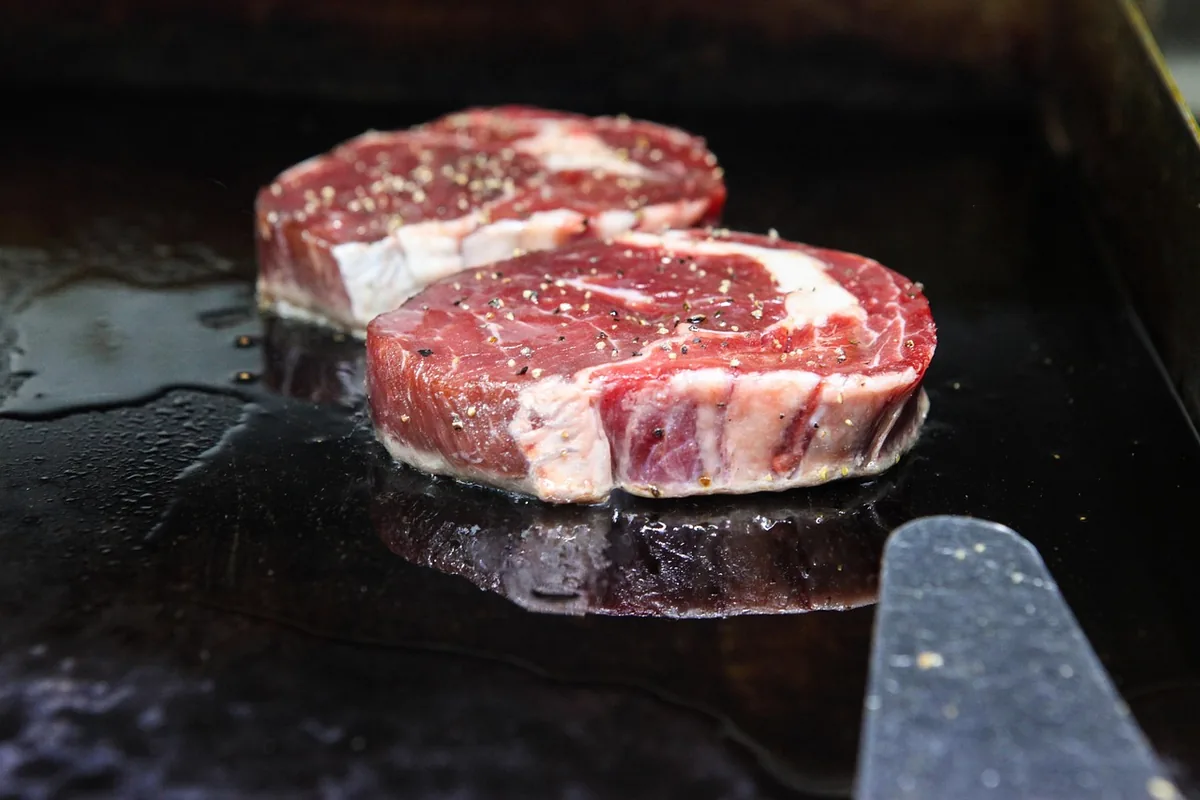
The low-and-slow part is the same every time; how you finish it is up to you. Whichever way you sear, the goal is the hottest surface you can get, for the shortest time.
| Method | Heat | Time per side | Best for |
|---|---|---|---|
| Cast iron or carbon steel | High, oil just smoking | 60 to 90 seconds | The deepest, most even crust and butter basting |
| Gas or charcoal grill | Hottest direct heat, 500°F+ (260°C+) | 1 to 2 minutes | Smoky flavor and grill marks; big bone-in steaks |
| Broiler | High, rack 3 to 4 inches from the element | 2 to 3 minutes | Several steaks at once, no smoke on the stove |
In cast iron, use a 12-inch pan for two steaks, since crowding drops the heat, and add butter only at the end. Under the broiler, preheat 5 to 10 minutes, brush the steaks lightly with oil and watch closely.
Reverse Sear on the Grill, Smoker or Sous Vide Instead
The oven is the easiest place to learn, but the same idea works anywhere you can make low heat and then high heat.
Two-zone grill
- Light one side of a gas grill, or bank charcoal on one side, and aim for 225°F to 275°F on the cool side with the lid closed.
- Cook the steaks on the cool side, lid down, until 10°F to 15°F below your goal.
- Open the vents or turn the burners to high, and sear 1 to 2 minutes per side over the hot side.
Our full guide to how to grill steak covers setting up the two zones on gas and charcoal.
Smoker or pellet grill
Set a smoker or pellet grill to 225°F (110°C) and smoke the steaks until 10°F to 15°F short of your target, about 50 to 70 minutes for 2 inches. Then sear in a screaming-hot cast iron pan or over a hot grill. A light smoke is plenty for beef. Our Traeger steak recipes have more pellet-grill ideas.
Sous vide
Sous vide is a cousin of the reverse sear. Instead of a low oven, a water bath holds the steak at an exact temperature, such as 130°F (54°C) for medium-rare, so there’s no risk of overshooting. The surface is wet afterward, so pat it very dry before searing. It’s the better choice for very thick cuts or when you want dinner ready on your schedule. See our sous vide steak guide.
Do You Need to Rest a Reverse Seared Steak?
Little or no rest is needed. Resting matters with a classic sear because the outside is much hotter than the middle, so heat keeps moving inward and the juices are still settling. With a reverse sear steak, the whole inside has already warmed up slowly in the oven, and only a thin outer layer gets hot in the pan.
- Less carryover: the temperature rises only 2°F to 5°F after a short sear.
- Less juice on the board: a slowly cooked steak has already relaxed.
- A crisper crust: slicing right away keeps the crust from steaming soft.
Some cooks still give it 2 to 3 minutes while they spoon the pan butter over, and that’s fine. If you’re following the USDA guidance, rest for the full 3 minutes after the steak reaches 145°F.
Troubleshooting
Most reverse sear problems come down to the thermometer, the oven or a wet surface. Here’s how to fix them.
| Problem | Likely cause | Fix |
|---|---|---|
| Steak overcooked | Pulled too late, or probe in the wrong spot | Pull 10°F to 15°F below your goal; place the probe tip in the thickest center, away from bone and fat |
| Pale, weak crust | Pan not hot enough, or wet surface | Preheat cast iron 5 minutes or more until the oil smokes; pat the steak dry before it goes in |
| Gray band under the crust | Sear too long at too low a heat | Use a hotter pan and keep each side under 90 seconds |
| Taking far too long in the oven | Oven running cool, or steak very cold | Check the oven with an oven thermometer; raise it to 275°F |
| Chewy fat edge | Fat cap not rendered | Hold the steak on its edge in the pan 30 to 60 seconds |
Serving, Leftovers and Storage
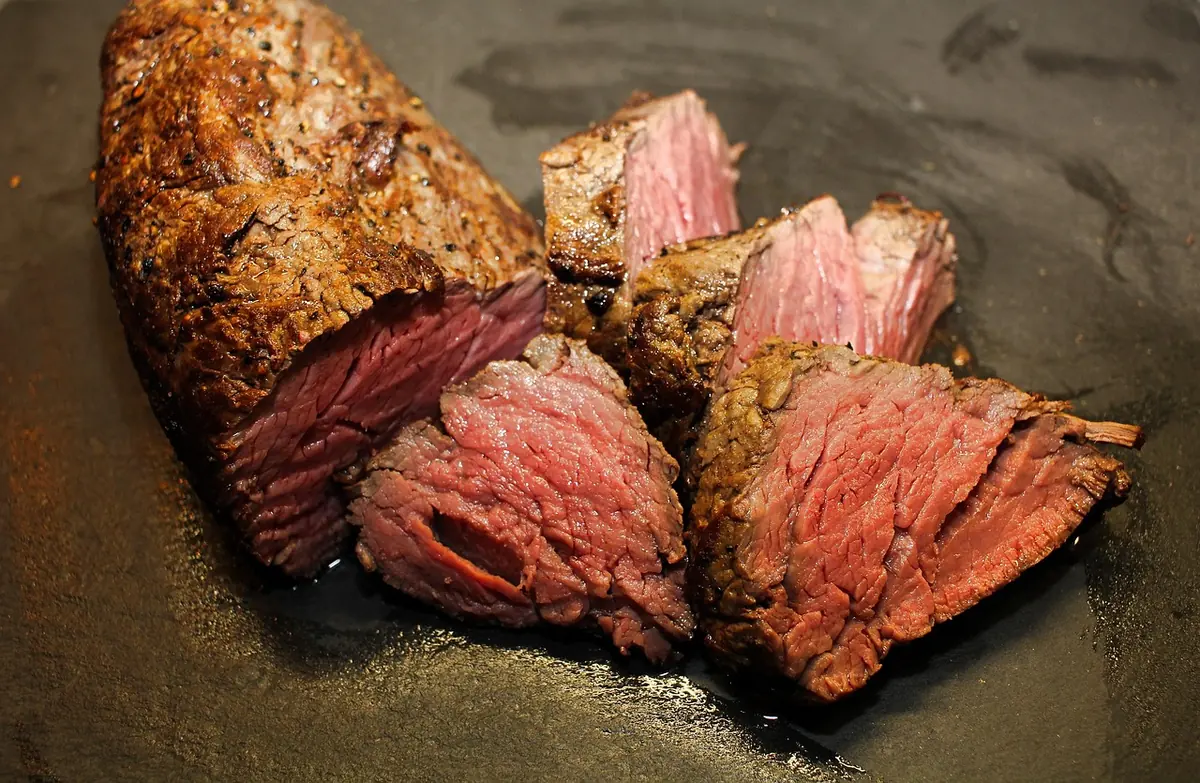
A reverse seared steak is rich, so simple sides balance it best. Slice the strip across the grain into ½-inch (1 cm) slices and fan them on a warm plate with the pan butter poured over.
- Sides: roasted potatoes, a crisp green salad, garlic green beans or creamed spinach.
- Sauces: herb butter, chimichurri or a quick pan sauce.
- Dessert: a rich steak dinner pairs well with something small, such as our mini cheesecake recipe.
Refrigerate leftovers within 2 hours in an airtight container and use them within 3 to 4 days, following the cold food storage chart. To reheat without overcooking, warm the slices on a rack in a 250°F (120°C) oven, then sear them for a few seconds per side. Leftover slices also make an excellent steak sandwich recipe.
How to Reverse Sear a Steak: FAQ
What temperature do you reverse sear a steak at?
Bake at 225°F to 275°F (110°C to 135°C); 250°F (120°C) is a good default. Then sear in a smoking-hot pan or over the hottest part of the grill.
How long does it take to reverse sear a steak?
For a 1½-inch steak at 250°F, about 35 to 45 minutes in the oven plus 3 to 4 minutes of searing. A 2-inch steak takes 45 to 60 minutes. Use a thermometer rather than the clock.
What temperature do you pull a steak for reverse sear?
Pull it 10°F to 15°F below your target: about 115°F (46°C) for medium-rare or 125°F (52°C) for medium. For the USDA’s 145°F, pull at 135°F, then sear and rest 3 minutes.
Is reverse sear better than searing first?
For steaks 1½ inches and thicker, yes: you get more even color, a faster crust and less risk of overcooking. For thinner steaks, a classic hot sear is quicker and just as good.
Do you rest a steak after a reverse sear?
Little or no rest is needed because the inside has already warmed slowly. A 2- to 3-minute rest is fine, and 3 minutes is part of the USDA guidance at 145°F.
Reverse Seared Steak Recipe Card
Calories are an estimate per serving (half a strip steak, about 8 oz raw) based on USDA FoodData Central values for raw choice top loin (strip) steak with its fat, avocado oil and butter. Some fat and butter stay in the pan, so the real number is a little lower.

Reverse Seared Steak (Thick New York Strip)
Ingredients
Equipment
Method
- Salt the steaks on all sides, set them on a wire rack over a rimmed sheet pan and refrigerate uncovered at least 45 minutes and up to 24 hours.
- Heat the oven to 250°F (120°C). Pat the steaks dry, season with pepper and insert a probe thermometer from the side into the center of the thickest steak.
- Bake on the rack until the center reads 115°F (46°C) for medium-rare, about 35 to 45 minutes for 1½-inch steaks or 45 to 60 minutes for 2-inch steaks. For the USDA’s 145°F, bake to 135°F (57°C).
- About 10 minutes before the steaks are done, heat a 12-inch cast iron skillet over medium-high heat for 5 minutes, then turn it to high. Add the oil when the steaks come out; it should just begin to smoke.
- Sear the steaks 60 to 90 seconds per side until deep brown, then hold each one on its fat edge with tongs for 30 to 60 seconds to render it.
- Lower the heat to medium, add the butter, garlic and thyme, and spoon the foaming butter over the steaks for 30 seconds. The center should read about 125°F to 130°F (52°C to 54°C) for medium-rare.
- Move the steaks to a board. Slice against the grain into ½-inch slices right away, or rest 2 to 3 minutes, and pour the pan butter over the top. If following the USDA guidance, rest 3 minutes after reaching 145°F.


