

Blog
Korean Fried Chicken Recipe (Extra Crispy, Gochujang Glaze)

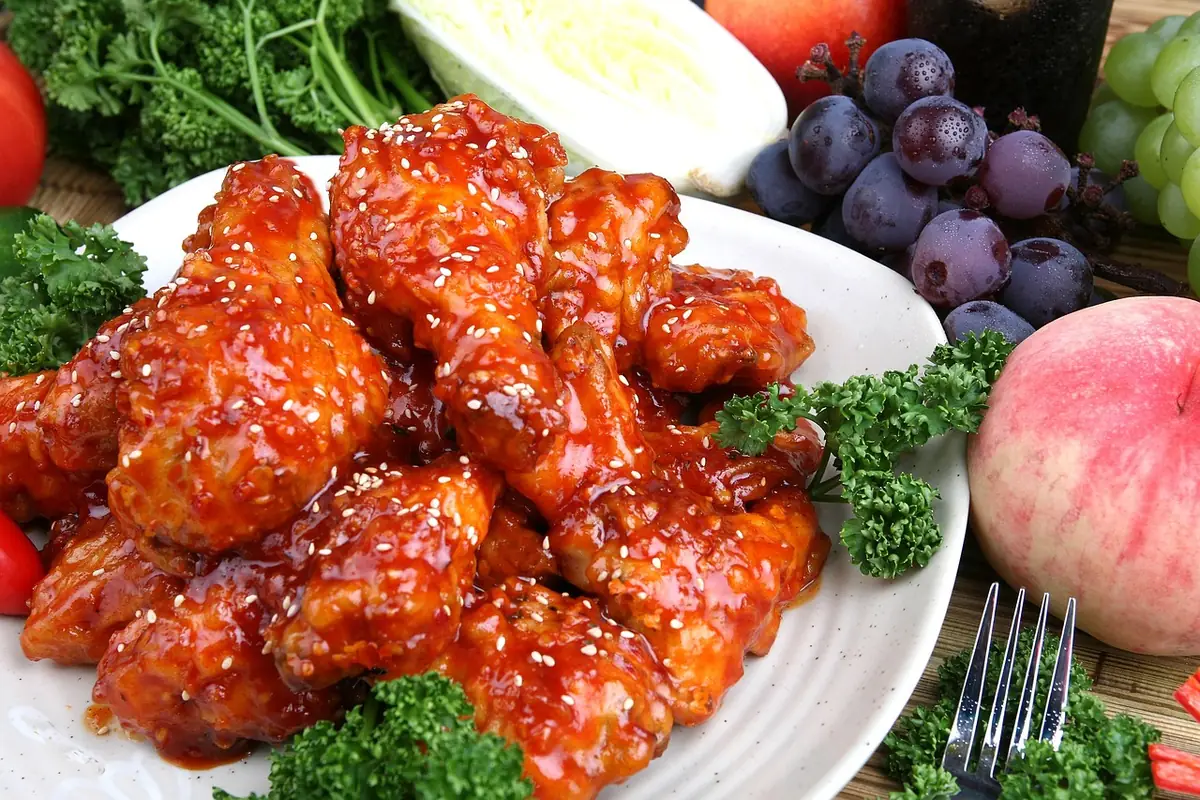
This Korean fried chicken recipe gives you wings with a thin, glassy crust that stays crunchy even under a sticky, sweet-spicy glaze. The secret is not a special flour or a fancy fryer. It’s a light potato starch batter and two trips into the oil: a gentle first fry that cooks the chicken through, and a hot second fry that turns the coating shatter-crisp.
Below you’ll find what makes this style different, the science behind the double fry, the full ingredient list, step-by-step frying, a gochujang-honey-garlic glaze plus a soy-garlic option, oil safety, an air fryer version with times, a troubleshooting table, sides, and storage. The printable recipe card is at the bottom.
What Is Korean Fried Chicken?
Korean fried chicken, often called “chikin” in Korea, is chicken coated in a thin starch batter and fried twice. Compared with American fried chicken, the crust is lighter, thinner and crackly rather than thick and craggy, and it’s usually made with wings, drumettes or bite-size boneless pieces so there’s more crust in every bite.
There are a few classic styles you’ll see on a Korean menu:
- Huraideu (plain fried): just the double-fried chicken with salt, often served with pickled radish and a dipping sauce.
- Yangnyeom (seasoned): the chicken tossed in a red, sticky gochujang glaze that’s sweet, spicy and garlicky. This is the version in our recipe.
- Ganjang (soy-garlic): a glossy, dark soy, honey and garlic glaze with no chili heat. The option is included below.
How it compares with other sticky chicken dishes:
| Dish | Coating | Sauce | Texture |
|---|---|---|---|
| Korean fried chicken | Thin starch batter, fried twice | Gochujang or soy-garlic glaze | Glassy, crackly crust that stays crisp |
| Southern fried chicken | Buttermilk and seasoned flour, fried once | Usually none | Thick, craggy, crunchy crust |
| Buffalo wings | Usually naked, fried once | Butter and hot sauce | Crisp skin, saucy |
| Bourbon chicken | No coating, pan-cooked | Sweet soy and bourbon | Tender and sticky, no crunch |
If you like sweet, sticky sauces on chicken but want a skillet dinner instead of frying, the bourbon chicken recipe is the easier cousin. For more ideas, browse all of our chicken recipes.
Why the Double Fry and Starch Make It So Crispy
Crispness is really about water. Chicken skin and batter are full of moisture, and any water left in the crust turns to steam and softens it. Korean fried chicken removes that water in two stages, and the starch batter makes the crust easy to dry out.
Why potato starch or cornstarch
- Pure starch has no gluten, so it can’t turn chewy or bready the way an all-flour batter can. It fries up thin and brittle.
- Starch absorbs less oil than flour and releases moisture quickly, which is why the crust tastes light rather than greasy.
- Potato starch gives the crunchiest, most glass-like shell. Cornstarch is a close second and easier to find.
- A little flour (about one-quarter of the dry mix) helps the batter brown and cling to the chicken.
- Baking powder makes tiny bubbles in the crust, which create more surface area and more crunch.
What each fry does
| Stage | Oil temperature | Time (wings) | What happens |
|---|---|---|---|
| First fry | 325°F (163°C) | 9 to 10 minutes | Cooks the meat through gently and sets the batter without burning it |
| Rest | Off the oil, on a rack | 5 to 10 minutes | Moisture from inside the chicken moves out to the crust and steams away |
| Second fry | 375°F (190°C) | 2 to 3 minutes | Drives off that surface moisture and turns the crust deep gold and hard |
If you fried once at 375°F, the outside would brown before the meat near the bone was done. If you fried once at 325°F, the meat would be cooked but the crust would be pale and turn soft within minutes. Two fries give you both: juicy meat and a crust strong enough to hold a glaze.
Korean Fried Chicken Ingredients
These amounts serve 4 as a main course, or 6 to 8 as a snack. Gochujang and potato starch are sold in Asian markets and in the international aisle of most large supermarkets.
For the chicken
- Chicken wings, 3 lb (1.36 kg), split into drumettes and flats with the tips removed. Or use 2 lb (900 g) boneless, skinless thighs cut into 1½-inch (4 cm) pieces.
- Diamond Crystal kosher salt, 1 teaspoon (or ½ teaspoon table salt) and black pepper, ½ teaspoon.
- Garlic, 2 cloves, grated, and fresh ginger, 1 teaspoon, grated.
For the batter
- Potato starch, ¾ cup (96 g), or cornstarch.
- All-purpose flour, ¼ cup (31 g).
- Baking powder, 1 teaspoon, and kosher salt, ½ teaspoon.
- Ice-cold water, ¾ cup (180 ml). Cold water slows gluten and keeps the batter thin.
- Neutral oil for frying, about 2 quarts (1.9 L): peanut, canola, vegetable or rice bran oil.
For the gochujang glaze
- Gochujang, 3 tablespoons (Korean red chili paste).
- Honey, ¼ cup (85 g).
- Low-sodium soy sauce, 2 tablespoons, and rice vinegar, 1 tablespoon.
- Brown sugar, 1 tablespoon.
- Garlic, 4 cloves, minced, and fresh ginger, 1 teaspoon, grated.
- Unsalted butter, 1 tablespoon, and toasted sesame oil, 1 teaspoon.
- To finish: 1 tablespoon toasted sesame seeds and 2 scallions, thinly sliced. Crushed peanuts are a classic extra.
Swaps that work
| Instead of | Use |
|---|---|
| Potato starch | Cornstarch, same amount (slightly less glassy, still very crisp) |
| All-purpose flour | Rice flour for a gluten-free batter (check that your gochujang and soy sauce are gluten-free too) |
| Wings | Boneless thighs (juiciest), drumsticks (add 4 to 5 minutes to the first fry) or breast chunks (watch closely, they dry out fast) |
| Honey | Rice syrup or corn syrup, the traditional Korean choice, for an even glossier glaze |
How to Make This Korean Fried Chicken Recipe
Plan on about 25 minutes of prep and 40 minutes of frying and glazing, since the chicken goes into the oil in batches. Set up everything before the oil gets hot.
- Season the chicken. Pat the wings very dry with paper towels. Toss with the salt, pepper, grated garlic and ginger. Let them sit 15 minutes at room temperature, or cover and refrigerate up to 8 hours.
- Heat the oil. Pour the oil into a heavy 5- to 6-quart Dutch oven to a depth of about 2 inches (5 cm), keeping it no more than half full. Clip on a deep-fry thermometer and heat over medium to 325°F (163°C).
- Make the batter. Whisk the potato starch, flour, baking powder and salt in a large bowl. Whisk in the ice-cold water until smooth. It should be thinner than pancake batter, like heavy cream.
- Coat the chicken. Add the wings to the batter and toss to coat. Lift each piece and let the extra drip off for a few seconds.
- First fry. Lower 8 to 10 pieces into the oil one at a time, away from you. Fry 9 to 10 minutes, stirring gently now and then, until pale gold and cooked through. Keep the oil between 315°F and 330°F (157°C to 166°C).
- Rest. Move the chicken to a wire rack set over a sheet pan. Fry the remaining batches the same way and let everything rest at least 5 minutes.
- Second fry. Raise the heat and bring the oil to 375°F (190°C). Fry the chicken again in batches for 2 to 3 minutes, until deep golden and very crisp. Return to the rack.
- Check the temperature. The thickest piece should read at least 165°F (74°C) near, but not touching, the bone.
- Glaze and serve. Toss the hot chicken with the warm glaze in a large bowl just before serving. Sprinkle with sesame seeds and scallions.
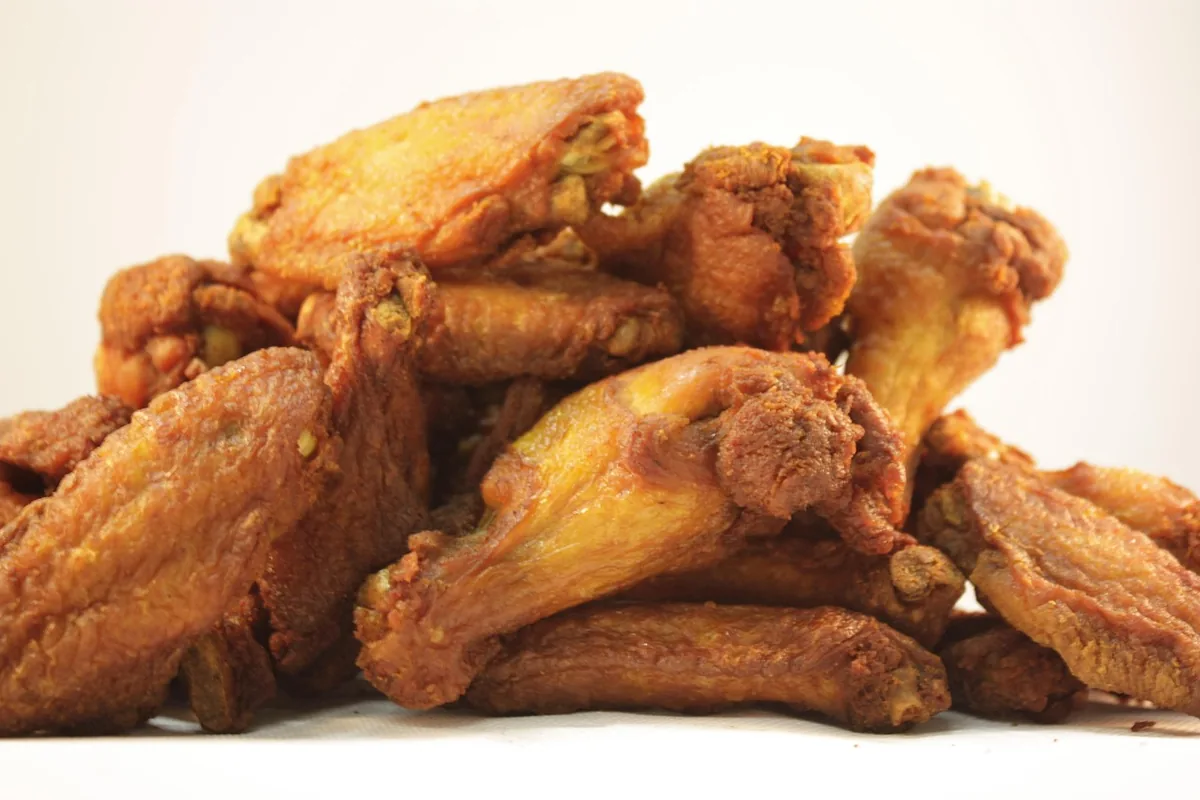
Make the glaze while the chicken rests between fries so it’s warm and ready. Toss only when everyone is at the table: even the best crust starts to soften after about 20 minutes under a sauce.
Boneless thigh timing
- First fry: 1½-inch thigh pieces need 5 to 6 minutes at 325°F (163°C).
- Second fry: 1½ to 2 minutes at 375°F (190°C).
Food safety note: chicken is safe at 165°F (74°C), per the FoodSafety.gov safe minimum temperatures chart. Wings and thighs are actually more tender at 175°F to 185°F (79°C to 85°C), because their connective tissue softens further, so don’t worry if yours read a bit higher.
Gochujang Chicken Glaze and Soy-Garlic Option
The glaze takes about 5 minutes. It should be warm and syrupy when it meets the chicken, so it coats thinly instead of pooling.
Gochujang-honey-garlic glaze
- Melt the butter in a small saucepan over medium-low heat. Add the minced garlic and ginger and cook 1 minute, until fragrant but not brown.
- Stir in the gochujang, honey, soy sauce, rice vinegar and brown sugar.
- Simmer 2 to 3 minutes, stirring, until it bubbles and thickens enough to coat a spoon.
- Take it off the heat and stir in the sesame oil.
This is the same sweet-heat flavor people search for as gochujang chicken, and it works on grilled or baked chicken too. For less heat, use 2 tablespoons gochujang and add 1 tablespoon ketchup; for more, add ½ to 1 teaspoon gochugaru (Korean chili flakes).
Soy-garlic glaze (no chili)
- ¼ cup (60 ml) low-sodium soy sauce
- 3 tablespoons honey and 2 tablespoons brown sugar
- 1 tablespoon rice vinegar and 2 tablespoons water
- 6 cloves garlic, minced, and 1 teaspoon grated ginger
Simmer everything 4 to 5 minutes until it reduces to a thin syrup, then toss with the chicken the same way. It’s milder and a good choice for kids.
Deep-Frying Safely at Home
Deep-frying is easy once you respect the oil. A few habits make it calm and safe.
- Use a thermometer. A clip-on deep-fry or instant-read thermometer is the single most useful tool here. Guessing leads to burnt crust or undercooked meat.
- Never leave hot oil alone, not even for a minute. Keep kids and pets out of the kitchen.
- Use a heavy, deep pot, filled no more than halfway, so the oil can bubble up without spilling over.
- Dry the chicken and let batter drip off. Extra water makes oil spatter.
- Lower food in gently, away from you, with tongs or a spider. Don’t drop it from high up.
- Keep a lid and a sheet pan nearby. If the oil smokes heavily, turn off the heat. If it ever catches fire, turn off the heat and slide the lid on. Never use water.
What to do with used oil
- Cool it completely in the pot, which can take a few hours.
- To reuse it, strain through a fine sieve lined with a paper towel into a clean jar, cover and store in a cool, dark place. Use it 2 or 3 more times for frying, then throw it out once it darkens, smells off or foams.
- To throw it out, pour the cooled oil into its original bottle or a sealed container and put it in the trash, or take it to a local cooking-oil recycling drop-off.
- Never pour oil down the sink or toilet. It clogs pipes and sewers.
Air Fryer Korean Fried Chicken
A wet batter drips through an air fryer basket, so this version uses a dry starch coating. It’s not quite as glassy as deep-fried, but it’s crunchy, much less messy and uses only a spoonful of oil.
- Pat the wings very dry and season with salt, pepper, garlic and ginger as above.
- Toss with ½ cup (64 g) potato starch or cornstarch and 1 teaspoon baking powder until every piece is coated. Shake off the extra.
- Arrange in a single layer with space between pieces and mist all over with oil spray.
- Air fry at 380°F (193°C) for 20 minutes, flipping halfway. Spray any dry, floury spots.
- Raise to 400°F (204°C) and cook 5 to 7 minutes more, until deep golden and 165°F (74°C) inside.
- Toss with the warm glaze and serve right away.
| Cut | Stage 1 | Stage 2 |
|---|---|---|
| Wings, split | 380°F (193°C), 20 minutes | 400°F (204°C), 5 to 7 minutes |
| Boneless thighs, 1½-inch pieces | 380°F (193°C), 12 minutes | 400°F (204°C), 3 to 4 minutes |
| Drumsticks | 380°F (193°C), 22 minutes | 400°F (204°C), 5 to 6 minutes |
Most baskets hold 1½ lb (680 g) of wings at a time, so cook in two batches. For more air fryer chicken, see the air fryer chicken thighs and these crisp air fryer chicken cutlets.
Korean Fried Chicken Recipe Troubleshooting
Almost every problem traces back to oil temperature, moisture or timing. Here’s how to fix them.
| Problem | Likely cause | Fix |
|---|---|---|
| Soggy crust | Skipped the second fry, or glazed too early | Re-fry 2 minutes at 375°F (190°C); toss with glaze just before eating |
| Crust goes soft fast | Glaze too thin or too much of it | Simmer the glaze until it coats a spoon; use just enough to coat |
| Greasy chicken | Oil too cool, or pot overcrowded | Fry fewer pieces; let the oil come back to temperature between batches |
| Batter falls off | Chicken too wet, or batter too thin | Pat dry; add 1 to 2 tablespoons more starch to the batter |
| Dark outside, raw inside | First fry too hot | Keep the first fry at 325°F (163°C); check for 165°F (74°C) |
| Burnt glaze | Heat too high; honey and sugar scorch fast | Simmer on medium-low and stir; start over if it smells bitter |
What to Serve With Korean Fried Chicken
In Korea, fried chicken is often eaten with cold beer (“chimaek”) and a little dish of pickled radish. These sides balance the rich, sweet crunch.
- Quick pickled radish (chicken-mu): cut 1 lb (450 g) daikon into ¾-inch cubes. Stir together ½ cup (120 ml) water, ½ cup (120 ml) rice vinegar, ¼ cup (50 g) sugar and 1 teaspoon salt until dissolved, pour over the radish, and chill at least 1 hour. It keeps about 2 weeks in the fridge.
- Steamed white rice: short-grain rice soaks up any extra glaze.
- Crunchy slaw: shredded cabbage and carrot with a dressing of mayo, rice vinegar and a pinch of sugar.
- Cucumber salad: thin cucumbers with rice vinegar, sesame oil and a pinch of gochugaru.
For another Asian-style dinner later in the week, try this quick pepper steak stir-fry over rice. When you want something cozy instead of crispy, the creamy chicken tetrazzini is a make-ahead favorite.
Storing and Reheating Korean Fried Chicken
Korean fried chicken is best right after glazing, but leftovers reheat surprisingly well if you bring back the crunch with dry heat.
- Refrigerate within 2 hours in an airtight container, for 3 to 4 days, per the FoodSafety.gov cold food storage chart.
- Store unglazed chicken and glaze separately if you plan for leftovers. The glaze keeps a week in the fridge.
- Freeze double-fried, unglazed chicken on a sheet pan, then bag it for up to 3 months.
- Reheat in an air fryer at 375°F (190°C) for 5 to 7 minutes, or in a 400°F (204°C) oven on a rack for 10 to 12 minutes, until 165°F (74°C) inside.
- Skip the microwave, which steams the crust soft.
For step-by-step times and tips, our guide to reheating fried chicken in the air fryer works for any fried chicken, glazed or plain.
Make-ahead plan for a party
| When | What to do |
|---|---|
| Day before | Make the pickled radish and the glaze; refrigerate both |
| Up to 2 hours before | Do the first fry and let the chicken rest on a rack |
| 15 minutes before | Second fry, rewarm the glaze, toss and serve |
Korean Fried Chicken FAQ
What makes Korean fried chicken different?
It’s coated in a thin starch batter and fried twice. The result is a lighter, crackly crust that stays crisp even when glazed, unlike the thick flour crust of Southern fried chicken.
Is potato starch or cornstarch better for Korean fried chicken?
Potato starch gives the lightest, glassiest crunch and is the traditional pick. Cornstarch works almost as well and is easier to find. Use the same amount of either.
Why do you fry Korean fried chicken twice?
The first, gentler fry at 325°F cooks the meat through. After a short rest, the hotter second fry at 375°F drives out the last moisture from the crust so it turns hard and crisp.
Is Korean fried chicken spicy?
The gochujang version is medium-spicy and sweet. For no heat, use the soy-garlic glaze, or serve the chicken plain with the glaze on the side.
Can I make Korean fried chicken in the oven?
Yes. Coat dry wings with starch and baking powder, bake on a rack at 425°F (218°C) for 40 to 45 minutes, flipping halfway, until crisp and 165°F inside, then toss with the glaze.
Korean Fried Chicken Recipe Card
Calories are an estimate per serving (¼ of the recipe, with the gochujang glaze, without rice or sides) based on USDA FoodData Central values for raw chicken wings (meat and skin), potato starch, flour, honey, gochujang, soy sauce, brown sugar, butter and sesame, plus an estimated 1 to 2 tablespoons of frying oil absorbed per serving.

Korean Fried Chicken
Ingredients
Equipment
Method
- Pat the wings very dry. Toss with the salt, pepper, grated garlic and ginger and let sit 15 minutes (or refrigerate up to 8 hours).
- Pour the oil into a heavy Dutch oven to about 2 inches deep, no more than half full. Heat over medium to 325°F (163°C) on a thermometer.
- Whisk the potato starch, flour, baking powder and salt, then whisk in the ice-cold water until smooth and thin like heavy cream. Toss the wings in the batter and let the excess drip off.
- First fry: fry 8 to 10 pieces at a time for 9 to 10 minutes (boneless thighs 5 to 6 minutes), keeping the oil at 315°F to 330°F, until pale gold. Move to a wire rack and rest at least 5 minutes.
- Meanwhile make the glaze: melt the butter over medium-low heat, cook the garlic and ginger 1 minute, then stir in the gochujang, honey, soy sauce, vinegar and brown sugar. Simmer 2 to 3 minutes until it coats a spoon. Stir in the sesame oil off the heat.
- Second fry: heat the oil to 375°F (190°C) and fry the chicken again in batches for 2 to 3 minutes (boneless 1 1/2 to 2 minutes) until deep golden and very crisp. The thickest piece should read at least 165°F (74°C).
- Toss the hot chicken with the warm glaze just before serving and sprinkle with sesame seeds and scallions.


