

Blog
Sous Vide Steak (Temperature Chart, Times and a Hard Sear)


A sous vide steak is cooked in a sealed bag in a water bath held at the exact temperature you want the center to reach, then seared hard in a hot pan for a dark crust. The result is the same doneness from edge to edge, with no gray band under the crust and almost no way to overcook it. You need a precision cooker, a bag, a cast iron skillet and about 1½ hours, most of it hands-off.
Below you’ll find the equipment, a sous vide steak temperature chart for every doneness in °F and °C, how long to cook by thickness, the best cuts, the sear, a fix-it table and storage tips. The printable recipe card for 2 thick steaks is at the bottom.
Why Cook Sous Vide Steak?
On a grill or in a pan, heat moves from a very hot surface toward a cool center. By the time the middle is medium-rare, the outer layer has gone past it. A water bath only ever gets as hot as the number you set, so a sous vide steak can’t climb above it.
- Even doneness: pink from edge to edge instead of a bullseye.
- Precise control: 130°F in the bath means 130°F in the center, every time.
- A flexible window: tender steaks can sit in the bath for an extra hour or two without drying out.
- Less stress for guests: the steaks wait for you, and the sear takes about 2 minutes.
- Thick cuts made easy: a 1½-inch ribeye cooks evenly without a probe, reverse sear or oven.
The trade-off is time. Sous vide steak takes longer than a quick pan sear, and the bag alone won’t brown anything. The final sear does that job, so don’t skip it.
Equipment for Sous Vide Steak
You don’t need a vacuum sealer or a restaurant setup. Here’s what matters:
- Immersion circulator (precision cooker): clips to a pot, heats the water and keeps it moving at a set temperature.
- A pot or container: a large stockpot, Dutch oven or plastic food container that holds at least 4 quarts (4 liters) of water.
- Bags: heavy-duty zip-top freezer bags labeled safe for cooking, or vacuum-seal bags. Avoid thin sandwich bags.
- Cast iron or carbon steel skillet: heavy pans hold heat for a fast, deep crust.
- Paper towels, tongs and an instant-read thermometer for checking the bath if you’re unsure of your cooker.
The water displacement method
If you don’t own a vacuum sealer, a zip-top bag works fine. The goal is to push out the air so water touches the bag all around the meat.
- Put the seasoned steak in the bag and seal it almost all the way, leaving a 1-inch gap at one corner.
- Slowly lower the bag into the water. The pressure squeezes air out through the gap.
- When the open corner is just above the water line, seal it shut.
- Clip the bag to the side of the pot so it can’t float or sit against the heater.
If a bag of sous vide steak floats during cooking, it has air in it. Weigh it down with a heavy spoon or a small plate, or reopen and lower it again.
Sous Vide Steak Temperature Chart
The right sous vide steak temperature is simply the final center temperature you want, so set the bath to that number. The sear adds very little because it’s so fast. Use this chart for tender steaks such as ribeye, strip, sirloin and filet:
| Doneness | Bath temperature | What it looks like |
|---|---|---|
| Rare | 124°F (51°C) | Deep red, very soft, almost cool-looking center |
| Medium-rare | 130°F (54°C) | Rosy pink edge to edge, juicy, the most popular choice |
| Medium | 135°F (57°C) | Light pink, a little firmer, fat fully softened |
| Medium-well | 145°F (63°C) | Faint pink, firm, still moist |
| Well done | 155°F (68°C) | Gray-brown throughout, firm |
For a marbled ribeye, many cooks like 131 to 135°F (55 to 57°C), because the extra heat softens the fat. Leaner filet and sirloin are at their best around 129 to 130°F (54°C).
Food safety: read this before you pick a temperature
The USDA guidance on FoodSafety.gov for whole cuts of beef is 145°F (63°C) with a 3-minute rest. Rare, medium-rare and medium steaks, whether cooked sous vide or any other way, are below that guidance. That’s a personal choice, and it’s not recommended for pregnant people, young children, older adults or anyone with a weakened immune system.
- Choose whole, intact steaks from a source you trust. Bacteria sit mostly on the surface of intact cuts, and the hot sear treats the outside.
- Skip low temperatures for mechanically tenderized (blade-tenderized) or “enhanced” steaks, and for ground beef. Follow the 145°F guidance for tenderized steaks and 160°F (71°C) for ground beef.
- Below 130°F (54°C), keep the total time in the bath under 4 hours.
- Serve right after searing, or chill quickly (see storage below).
Sous Vide Steak Time by Thickness
Temperature decides doneness; sous vide steak time decides whether the center has caught up with the water. Thickness matters far more than weight. These times are for tender cuts going in straight from the fridge:
| Thickness | Minimum time | Maximum time for tender cuts |
|---|---|---|
| 1 inch (2.5 cm) | 1 hour | 4 hours |
| 1½ inches (4 cm) | 1½ hours | 4 hours |
| 2 inches (5 cm) | 2½ hours | 4 hours |
| Frozen, 1 to 1½ inches | Add about 1 hour | 4 hours from when it’s thawed |
- Minimum time is how long the center needs to reach the bath temperature.
- Maximum time is about texture. After roughly 4 hours, tender steaks can turn soft and slightly mushy.
- Tougher cuts such as chuck or short rib are different: they use long cooks of 24 hours or more, which is outside the scope of this recipe.
For this recipe, 1½ to 3 hours covers steaks from 1 to 1½ inches thick, so you can start dinner without watching the clock.
Best Cuts for Sous Vide Steak
Any tender, quick-cooking cut makes a good sous vide steak. Pick a thickness of at least 1 inch; thin steaks leave no room for a sear without overcooking.
| Cut | Why it works | Suggested bath |
|---|---|---|
| Ribeye | Rich marbling, big beefy flavor; fat softens nicely | 131–135°F (55–57°C) |
| New York strip | Firm, beefy, with a fat cap that crisps in the sear | 129–131°F (54–55°C) |
| Top sirloin | Lean and budget-friendly; sous vide keeps it tender | 129–131°F (54–55°C) |
| Filet mignon | Very tender and mild; easy to overcook any other way | 129–130°F (54°C) |
| Flat iron or chuck eye | Good value, well marbled | 130–133°F (54–56°C) |
If you buy a strip, our New York strip steak guide covers trimming and choosing a good one. For a leaner weeknight cut, see our top sirloin steak recipe.
How to Sous Vide Steak, Step by Step
This sous vide steak method serves 4 from 2 large steaks, about 12 oz (340 g) each and 1 to 1½ inches thick.
- Heat the water. Fill the pot, clip on the circulator and set it to 130°F (54°C) for medium-rare, or pick a number from the chart. Heating takes 10 to 20 minutes.
- Season. Pat the steaks dry. Sprinkle each side with kosher salt and black pepper. Add a thyme or rosemary sprig to each bag if you like.
- Bag the steaks. Put one steak per bag in a single layer. Remove the air with a vacuum sealer or the water displacement method.
- Cook. Lower the bags into the bath once it reaches temperature. Make sure they’re fully under water. Cook 1½ to 3 hours.
- Dry. Take the steaks out of the bags and pat them very dry on all sides with paper towels. A wet surface steams instead of browning.
- Sear. Sear in a smoking-hot pan 45 to 60 seconds per side, then the edges (details below).
- Slice and serve. Because the steak is already evenly cooked, a long rest isn’t needed. Give it a minute, slice against the grain and finish with flaky salt.
Salt timing: salting right before bagging is fine for cooks under 4 hours. If you’d rather season ahead, our steak seasoning recipe makes a jar you can use on any cut, but keep garlic powder light, since it can taste stronger after a long cook.
How to Sear Sous Vide Steak
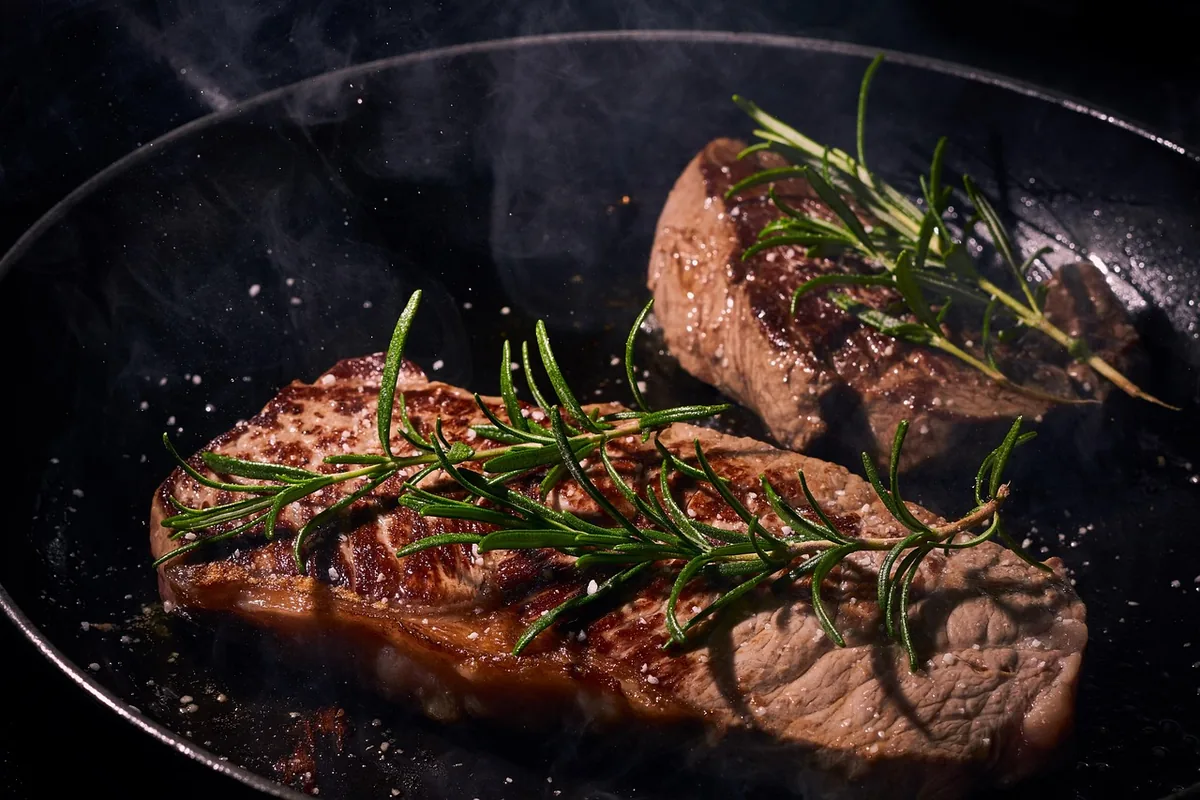
The sear is where a sous vide steak gets its flavor. You want a crust in about a minute per side, before the heat reaches the perfectly cooked center.
- Pan: cast iron or carbon steel, heated over high heat for 4 to 5 minutes, until it just starts to smoke.
- Fat: 1 tablespoon high smoke point oil such as avocado, canola or refined peanut oil. Olive oil burns too fast.
- Time: 45 to 60 seconds per side. Don’t move the steak while it browns.
- Edges: hold the steak on its side with tongs for 15 to 20 seconds to render the fat cap.
- Butter baste (optional): in the last 30 seconds, add 2 tablespoons (28 g) butter, a smashed garlic clove and a thyme sprig, then spoon the foaming butter over the top.
Other ways to sear
- Chill first: dunk the bags in ice water for 5 to 10 minutes before searing. The cooler surface gives you a few extra seconds for browning.
- Grill: heat the grill as hot as it goes and sear 1 minute per side with the lid open.
- Torch: a propane or butane kitchen torch works, though a pan gives a more even crust.
Our cast iron skillet steak has more detail on heating the pan and butter basting.
Sous Vide Steak vs Pan-Seared and Reverse-Seared Steak
All three methods can give you a great steak. The difference is how much control you have and how much attention each one needs.
| Method | Hands-on time | Doneness | Best for |
|---|---|---|---|
| Sous vide steak | About 10 minutes | Even edge to edge, exact | Thick steaks, dinner parties, cooks who want a sure result |
| Pan-seared | 10 to 15 minutes, all active | Gray band under the crust | Thinner steaks and quick weeknights |
| Reverse sear (oven, then pan) | About 15 minutes, plus thermometer checks | Very even, but you need to watch it | Thick steaks when you don’t own a circulator |
If you only cook a steak now and then, a hot pan is fine. If you want medium-rare exactly the same way every time, the water bath is the easiest route.
Sous Vide Steak Troubleshooting
Most problems come from moisture, air in the bag or a pan that isn’t hot enough. Here’s how to fix them:
| Problem | Likely cause | Fix |
|---|---|---|
| Gray band under the crust | Seared too long or the pan wasn’t hot enough | Preheat longer; sear only 45–60 seconds per side |
| Pale, patchy crust | Surface still wet | Pat dry thoroughly; let it air-dry 2–3 minutes |
| Bag floats | Air left inside | Redo the water displacement or add a weight |
| Soft, mushy texture | Held far past 4 hours, or acidic marinade | Keep tender cuts to 1–4 hours; skip citrus or vinegar in the bag |
| Chewy fat on ribeye | Bath too low for a fatty cut | Use 131–135°F (55–57°C) for ribeye |
| Harsh garlic taste | Raw garlic in the bag | Add garlic to the butter baste instead |
| Bland flavor | Not enough salt | Use about ¾ tsp Diamond Crystal kosher salt per steak; finish with flaky salt |
What to Serve With Sous Vide Steak
Classic steakhouse sides fit sous vide steak best. You can make most of them while the steaks cook.
- Mashed potatoes, baked potatoes or crispy roasted potatoes
- Roasted asparagus, green beans or broccoli
- Creamed spinach or sautéed mushrooms
- A crisp Caesar or wedge salad
- Chimichurri, compound butter or a peppercorn sauce
For a sauce, our steak au poivre pan sauce works well: make it in the same skillet right after the sear. If you’re cooking for a crowd with mixed tastes, our sous vide chicken breast uses the same equipment, and you can browse more ideas in our steak recipes.

Make-Ahead, Storage and Reheating
Sous vide makes planning ahead easy, as long as you cool and store the meat safely.
- Cook ahead: after the bath, plunge the sealed bags into ice water (half ice, half water) for 30 to 45 minutes, then refrigerate up to 3 days. Rewarm in the bath at the same temperature for 30 to 45 minutes, then dry and sear.
- Freeze raw: season and seal the steaks, then freeze up to 6 months. Cook straight from frozen and add about 1 hour.
- Leftovers: refrigerate sliced steak within 2 hours and use within 3 to 4 days, following the FoodSafety.gov cold storage chart.
- Reheat: the USDA advises reheating leftovers to 165°F (74°C). Gentler rewarming in a sealed bag keeps the pink, but it’s below that guidance.
Cold sliced sous vide steak is also great in salads, tacos and sandwiches. Our leftover steak recipes have more ideas.
Sous Vide Steak FAQ
What temperature should I sous vide steak at?
For medium-rare, set the bath to 130°F (54°C). Use 124°F (51°C) for rare, 135°F (57°C) for medium, 145°F (63°C) for medium-well and 155°F (68°C) for well done. Only 145°F and above meet the USDA guidance for whole beef cuts.
How long does it take to sous vide steak?
About 1 hour for a 1-inch steak and 1½ hours for a 1½-inch steak, plus 10 to 20 minutes to heat the water and 2 minutes to sear. Tender cuts can stay in the bath up to about 4 hours.
Can you sous vide steak from frozen?
Yes. Seal it, put it straight into the heated bath and add about 1 hour to the cooking time. Season before freezing or rub salt on after cooking.
Do you need a vacuum sealer?
No. Heavy-duty zip-top freezer bags and the water displacement method remove enough air for steaks cooked under 4 hours.
Should you rest sous vide steak?
A long rest isn’t needed for sous vide steak, because the center is already at the target temperature and juices stay put. A minute after searing is enough before slicing.
Sous Vide Steak Recipe Card
Calories are an estimate per serving (half of a 12-oz ribeye) based on USDA FoodData Central values for raw ribeye with fat, oil and butter. A strip or sirloin steak will be lower.

Sous Vide Steak
Ingredients
Equipment
Method
- Fill a large pot with water, attach the immersion circulator and set it to 130°F (54°C) for medium-rare (124°F/51°C rare, 135°F/57°C medium, 145°F/63°C medium-well).
- Pat the steaks dry and season both sides with the kosher salt and pepper. Put each steak in its own bag with a herb sprig, if using.
- Remove the air with a vacuum sealer or by slowly lowering the open zip-top bag into the water and sealing it just above the water line.
- When the water reaches temperature, submerge the bags and clip them to the pot. Cook 1 1/2 to 3 hours (at least 1 hour for 1-inch steaks, 1 1/2 hours for 1 1/2-inch steaks).
- Take the steaks out of the bags and pat them very dry with paper towels.
- Heat the oil in a cast iron skillet over high heat until it just smokes. Sear the steaks 45 to 60 seconds per side, then hold the edges in the pan for 15 to 20 seconds.
- If using, add the butter, garlic and thyme for the last 30 seconds and spoon the foaming butter over the steaks.
- Slice against the grain, sprinkle with flaky salt and serve right away.


