

Blog
Denver Steak: What It Is and How to Cook It

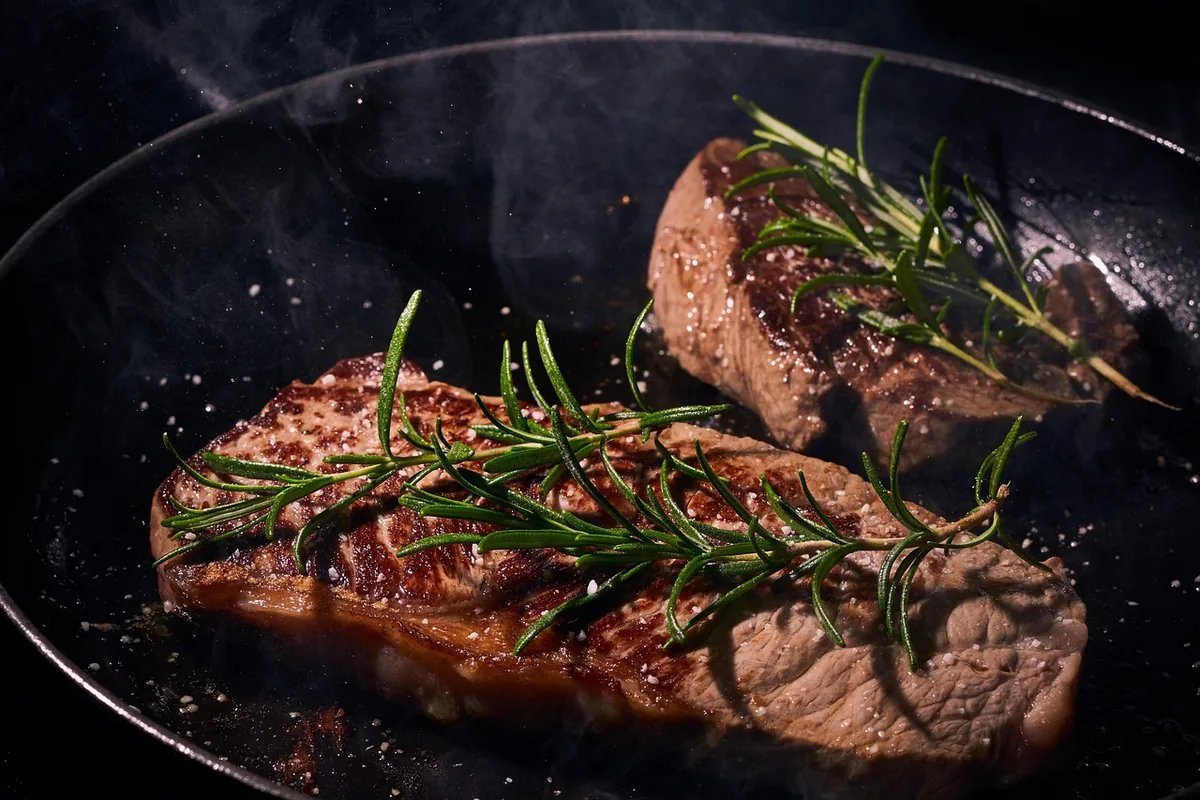
A Denver steak is a well-marbled, budget-friendly steak cut from the chuck, the shoulder of the cow. It has rich beefy flavor, cooks in minutes, and, when it is sliced across the grain, it is surprisingly tender. If you have seen it in the meat case and wondered what it is, this guide explains where Denver steak comes from, how it compares to other cuts, and exactly how to cook it in a cast-iron skillet with garlic butter.
What Is Denver Steak?
Denver steak comes from the serratus ventralis muscle, which sits under the shoulder blade in the chuck primal. It is cut from the part of the chuck often called the underblade. Because this specific muscle does not do as much heavy work as the rest of the shoulder, it is more tender than most chuck cuts while keeping the deep, beefy taste chuck is known for.
The name is a marketing name. It came out of beef industry research in the 2000s that looked for new, affordable steaks within the chuck and round. Other chuck “discoveries” from the same era include the flat iron steak. You may also see Denver steak labeled as underblade steak, chuck underblade steak or, in some stores, boneless chuck short rib steak, because the same muscle continues into the short rib area.
What does Denver steak taste like?
Expect a juicy, rich, very beefy steak with plenty of fine marbling. Its texture is a little coarser than ribeye, closer to a tender sirloin. Most Denver steaks are about ¾ to 1 inch (2 to 2.5 cm) thick and weigh 8 to 12 oz (225 to 340 g) each.
Denver Steak vs. Other Cuts
- Denver vs. ribeye: ribeye is more tender and fattier, and usually costs a lot more. Denver steak gives you a similar richness at a lower price, as long as you slice it thinly against the grain.
- Denver vs. flat iron: both come from the chuck. Flat iron is very uniform and tender; Denver has a bit more chew and more marbling.
- Denver vs. chuck eye: chuck eye comes from the end of the chuck next to the ribeye and eats like a mini ribeye. Denver is a different muscle, cut from under the blade.
- Denver vs. chuck roast: a chuck roast includes several muscles and lots of connective tissue, so it needs hours of braising (like our crock pot chuck roast). A Denver steak is trimmed from one tender muscle, so it is cooked quickly with high heat.
Ingredients for Pan-Seared Denver Steak
- Denver steaks. Two steaks, about 1½ lb (680 g) total and roughly 1 inch thick, serve 3 to 4 people.
- Kosher salt and coarsely ground black pepper. For the crust. You can also use our homemade steak seasoning.
- High smoke point oil. Avocado, canola or vegetable oil. Olive oil smokes too early at searing heat.
- Butter, garlic and thyme. Added at the end for basting. Rosemary works instead of thyme.
- Flaky salt (optional). For finishing the sliced steak.
Equipment You Need
- A heavy cast-iron or carbon-steel skillet (12 in / 30 cm)
- Tongs and a large spoon for basting
- An instant-read meat thermometer
- A cutting board and a sharp slicing knife
How to Cook Denver Steak (Step by Step)
1. Dry and season
Pat the steaks dry with paper towels. Season both sides well with salt and pepper. For the best crust and more seasoned meat, salt the steaks 1 to 24 hours ahead and leave them uncovered on a rack in the fridge. Take them out about 20 minutes before cooking.
2. Heat the pan until very hot
Heat the skillet over medium-high to high heat for 3 to 5 minutes, then add the oil. When the oil shimmers and just begins to smoke, the pan is ready. Turn on your kitchen fan.
3. Sear the first side
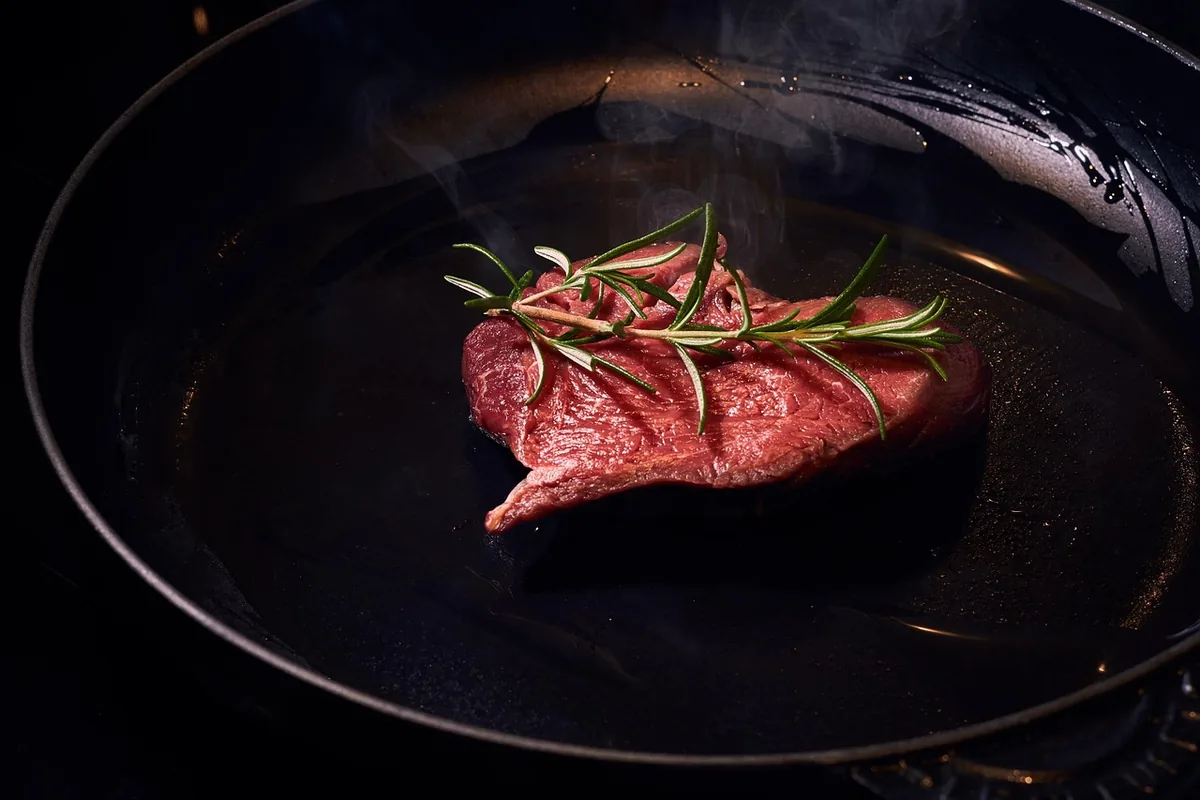
Lay the steaks in the pan, away from you. Leave them alone for 3 minutes so a deep brown crust can form.
4. Flip and baste with garlic butter
Flip the steaks and cook for 2 minutes. Lower the heat to medium, add the butter, smashed garlic and thyme, and tilt the pan slightly. As the butter foams, spoon it over the steaks continuously for 1 to 2 minutes.
5. Check the temperature
Insert an instant-read thermometer into the side of the thickest part of each steak. The USDA safe minimum for beef steaks is 145°F (63°C) followed by a 3-minute rest, which is medium. Many steak lovers cook Denver steak to medium-rare, around 130°F to 135°F (54°C to 57°C); that is a personal choice and is below the USDA recommendation. Because the temperature keeps rising a few degrees while the steak rests, pull it from the pan 3 to 5°F before your target.
| Doneness | Pull from pan | After resting |
|---|---|---|
| Medium-rare | 125 to 130°F (52 to 54°C) | 130 to 135°F (54 to 57°C) |
| Medium (USDA minimum) | 140°F (60°C) | 145°F (63°C), rest at least 3 minutes |
| Medium-well | 145 to 150°F (63 to 66°C) | 150 to 155°F (66 to 68°C) |
6. Rest, then slice against the grain
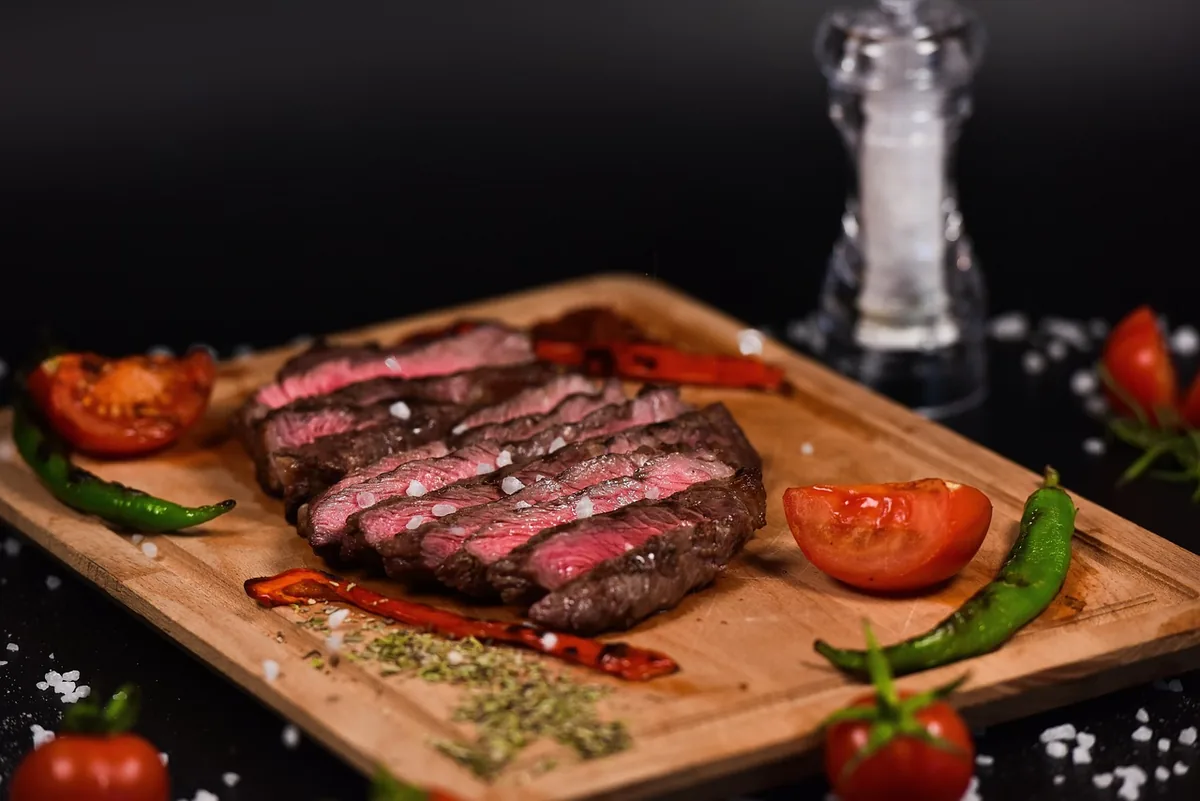
Move the steaks to a cutting board and rest for 5 minutes. Look closely at the meat to find the direction of the muscle fibers (the grain), then cut thin slices, about ¼ inch (6 mm), across the grain. This is the single most important step for a tender Denver steak: slicing with the grain leaves long fibers that feel chewy. Spoon the pan butter over the slices and add a pinch of flaky salt.
Other Ways to Cook Denver Steak
Grilled Denver steak
Heat a grill to high, about 450°F to 500°F (230°C to 260°C). Grill the steaks for 3 to 5 minutes per side with the lid closed, until they reach your target temperature. Rest and slice against the grain.
Reverse sear for thick steaks
If your steaks are thicker than 1¼ inches, bake them on a rack at 250°F (120°C) until they are about 15°F below your target, usually 25 to 35 minutes. Then sear them in a very hot pan for 1 minute per side.
Air fryer
Cook at 400°F (200°C) for 8 to 12 minutes, flipping halfway, until the thermometer reads your target. The crust will be lighter than a pan sear.
Tips for the Best Denver Steak
- Do not overcook it. Denver steak is tender when cooked to medium-rare to medium. Past medium-well it tightens up quickly.
- Slice thinly and against the grain. This matters more for Denver steak than for premium cuts like ribeye.
- Pat dry before searing. A wet surface steams instead of browning.
- Do not crowd the pan. If the steaks touch, cook them one at a time.
- Try a marinade. Denver steak takes marinades well. A simple mix of 3 tablespoons soy sauce, 2 tablespoons olive oil, 1 tablespoon balsamic vinegar and 2 cloves garlic for 2 to 8 hours in the fridge works nicely. Pat dry before searing.
What to Serve With Denver Steak
- Roasted or mashed potatoes, or crispy oven fries
- Chimichurri or a simple herb butter
- Grilled asparagus, green beans or a Caesar salad
- Sliced over rice bowls, in tacos or on a steak sandwich
If you enjoy affordable steak cuts, try our top sirloin steak or, for a slow-cooked version, this crock pot chuck steak.
How to Store, Freeze and Reheat
- Refrigerate leftover steak within 2 hours in an airtight container and eat within 3 to 4 days, per the FoodSafety.gov cold storage chart.
- Freeze cooked steak, sliced or whole, for best quality within about 2 to 3 months. Thaw in the refrigerator.
- Reheat slices briefly in a hot skillet with a little butter, or warm whole steak at 250°F (120°C) until heated through. Leftovers should reach 165°F (74°C); if you prefer to keep the steak pink, enjoy it cold in salads and sandwiches straight from the fridge.
Denver Steak FAQs
Is Denver steak a good cut?
Yes. It is one of the most tender cuts from the chuck, with lots of marbling and strong beefy flavor, at a much lower price than ribeye or strip steak.
Is Denver steak tough?
Not when it is cooked to medium-rare or medium and sliced thinly against the grain. It can seem chewy if it is overcooked or sliced with the grain.
What is Denver steak also called?
Underblade steak, chuck underblade steak and sometimes boneless chuck short rib steak. All come from the serratus ventralis muscle of the chuck.
How long do you cook a Denver steak on each side?
For a 1-inch steak in a very hot skillet, about 3 minutes on the first side and 3 to 4 minutes on the second, including basting. Always confirm with a thermometer.
Where can I buy Denver steak?
Many supermarkets, warehouse clubs and butchers carry it. If you do not see it, ask the butcher for chuck underblade steak.
Should I marinate Denver steak?
You do not have to, because it is flavorful on its own, but it takes marinades well. Keep acidic marinades under 8 hours so the surface does not get mushy.
Denver Steak Recipe Card
Calories are an estimate based on USDA FoodData Central values for cooked beef chuck underblade steak, plus part of the basting butter. Find more ideas in our steak recipes.

Pan-Seared Denver Steak with Garlic Butter
Ingredients
Equipment
Method
- Pat the steaks dry and season both sides with salt and pepper. Let them sit at room temperature about 20 minutes (or salt up to 24 hours ahead, uncovered in the fridge).
- Heat a cast-iron skillet over medium-high to high heat 3 to 5 minutes. Add the oil and heat until it shimmers and just starts to smoke.
- Add the steaks and sear without moving for 3 minutes, until deeply browned.
- Flip and cook 2 minutes. Lower the heat to medium, add the butter, garlic and thyme, and baste the steaks with the foaming butter for 1 to 2 minutes.
- Check the thickest part with a thermometer. USDA recommends 145°F (63°C) plus a 3-minute rest; for medium-rare (below the USDA recommendation) pull at 125 to 130°F (52 to 54°C).
- Rest 5 minutes, then slice thinly (1/4 inch / 6 mm) against the grain. Spoon over the pan butter and sprinkle with flaky salt.


