

Blog
Steak Temperature Chart: Rare to Well Done

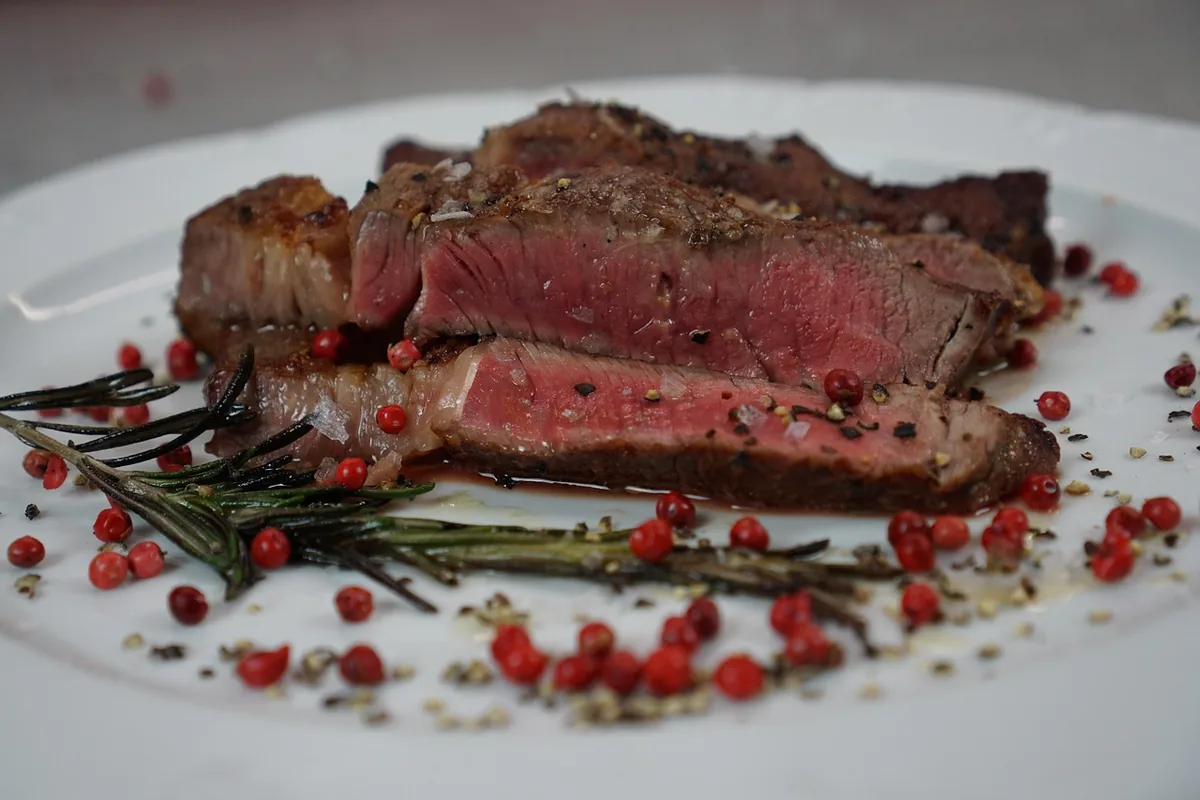
The medium rare steak temp is 130°F to 135°F (54°C to 57°C) after resting. To get there, take the steak off the heat at about 125°F to 130°F (52°C to 54°C) and let carryover cooking finish the job. That gives you a warm red-pink center from edge to edge, soft juicy meat and fat that has started to melt. A medium steak lands at 140°F to 145°F (60°C to 63°C), and a medium well steak at 150°F to 155°F (66°C to 68°C).
This guide gives you the full steak temperature chart from rare to well done, with pull temps and final temps in °F and °C, plus what each level looks and feels like. You’ll also get carryover by thickness, thermometer tips, the best doneness for six cuts, temps for four cooking methods and the USDA safety numbers.
Quick Answer: Medium Rare Steak Temp
If you only need the numbers, here is the steak temperature chart in short. “Pull” means the moment you take the steak off the heat. “Final” means the temperature after a 5- to 10-minute rest.
- Rare: pull at 115°F to 120°F (46°C to 49°C), final 120°F to 125°F (49°C to 52°C).
- Medium-rare: pull at 125°F to 130°F (52°C to 54°C), final 130°F to 135°F (54°C to 57°C).
- Medium: pull at 135°F to 140°F (57°C to 60°C), final 140°F to 145°F (60°C to 63°C).
- Medium-well: pull at 145°F to 150°F (63°C to 66°C), final 150°F to 155°F (66°C to 68°C).
- Well done: pull at 155°F (68°C), final 160°F (71°C) and up.
- USDA safe minimum for whole cuts: 145°F (63°C) with a 3-minute rest.
The medium rare steak temp is the one most steakhouses default to, because it keeps the meat juicy while giving the fat time to soften. It’s a cooking preference rather than the official safety target, and the food safety section below explains the difference clearly.
Steak Temperature Chart: Rare to Well Done
Here is the full steak temperature chart in one place. The pull temps assume a steak about 1 to 1½ inches (2.5 to 4 cm) thick cooked over high heat; thinner steaks rise less after cooking and very thick ones rise more.
| Doneness | Pull temp | Final temp after rest | Center color | Texture |
|---|---|---|---|---|
| Rare | 115°F to 120°F (46°C to 49°C) | 120°F to 125°F (49°C to 52°C) | Deep red, cool-looking center | Very soft, almost raw-feeling |
| Medium-rare | 125°F to 130°F (52°C to 54°C) | 130°F to 135°F (54°C to 57°C) | Warm red-pink throughout | Soft, springy, very juicy |
| Medium | 135°F to 140°F (57°C to 60°C) | 140°F to 145°F (60°C to 63°C) | Pink center, tan edges | Firmer with some give |
| Medium-well | 145°F to 150°F (63°C to 66°C) | 150°F to 155°F (66°C to 68°C) | Faint hint of pink | Firm, less juice |
| Well done | 155°F (68°C) | 160°F (71°C) and up | Gray-brown throughout | Very firm, dry if overdone |
Two things make this steak temperature chart work. First, measure the very center of the thickest part, because that’s the coolest spot. Second, respect the gap between the pull and final columns. That 5°F (3°C) jump is carryover cooking, and ignoring it is the most common reason a planned medium-rare steak turns out medium.
What Each Steak Doneness Looks and Feels Like
Here’s what to expect when you slice into each level of steak doneness.
Rare (120°F to 125°F / 49°C to 52°C)
The center is deep red and looks barely warmed, with a thin brown band under the crust. The meat is very tender but the fat hasn’t melted, so marbled cuts can taste waxy. Rare suits lean, tender cuts like filet mignon better than fatty ones.
Medium-rare (130°F to 135°F / 54°C to 57°C)
The center is warm, rosy red-pink and glossy, and it fades into a narrow tan ring under the crust. The juices stay in the meat, the texture is soft but not mushy, and intramuscular fat has begun to render. This is why the medium rare steak temp is the classic steakhouse choice.
Medium (140°F to 145°F / 60°C to 63°C)
The middle is a lighter pink, surrounded by a wider band of tan meat. The steak feels firmer, still releases juice when sliced, and the fat in a ribeye is fully soft. The medium steak temp is a great target for fatty cuts and for anyone who finds medium-rare too red.
Medium-well (150°F to 155°F / 66°C to 68°C)
A medium well steak shows just a faint blush of pink in the very center. It’s noticeably firmer and loses more moisture, so it tastes less juicy. Choose well-marbled cuts if you prefer a medium well steak, because the fat helps keep each bite moist.
Well done (160°F / 71°C and up)
There’s no pink left; the inside is gray-brown from edge to edge. The muscle fibers have tightened and squeezed out most of their juice. If you like well done, cook more gently, use a fattier cut and slice it thin against the grain.
- Juiciest: rare to medium.
- Best fat rendering: medium-rare to medium.
- Firmest bite: medium-well to well done.
Medium Rare Steak Temp and Food Safety (USDA Guidelines)
Here is the clear version. The USDA, through FoodSafety.gov’s safe minimum internal temperature chart, recommends cooking whole cuts of beef, including steaks and roasts, to 145°F (63°C) and then resting them for at least 3 minutes. That’s the official safety target.
Rare and medium-rare steaks finish below 145°F, so they fall short of that recommendation. Many cooks still choose them, because bacteria on a whole, intact steak sit mainly on the outer surface, which the sear heats far past 145°F. That’s a personal choice, not a USDA endorsement.
| Beef product | USDA safe minimum | Why it’s different |
|---|---|---|
| Whole steaks and roasts (intact) | 145°F (63°C) + 3-minute rest | Surface bacteria are killed by searing; the rest holds the heat |
| Mechanically tenderized or blade-tenderized steak | 145°F (63°C) + 3-minute rest | Needles can push surface bacteria into the center, so don’t serve it rare |
| Ground beef, burgers and meatballs | 160°F (71°C) | Grinding mixes surface bacteria all through the meat |
| Leftover cooked steak | 165°F (74°C) when reheated | Standard target for reheating leftovers |
Who should skip rare and medium-rare: pregnant people, young children, adults over 65 and anyone with a weakened immune system should eat steak cooked to at least 145°F (63°C), which matches the medium steak temp on the steak temperature chart above. To hit it, pull the steak at about 140°F (60°C) and rest it.
- Check the label. Mechanically tenderized beef sold in the US must say so on the package. If it does, cook it to 145°F.
- Cool leftovers fast. Refrigerate cooked steak within 2 hours and eat it within 3 to 4 days.
- Keep ground beef separate. Burgers need 160°F (71°C) no matter how you like your steak; our guide to how to tell if ground beef is bad covers storage.
Carryover Cooking: Pull Temps by Thickness
A steak doesn’t stop cooking when it leaves the heat. The hot outer layer keeps pushing heat toward the cooler center for several minutes, so the internal temperature climbs. Thin steaks barely move; thick ones can jump 10°F (6°C) or more. Use this table to decide how early to pull.
| Steak thickness | Typical rise during rest | Pull for a medium rare steak temp of 130°F to 135°F |
|---|---|---|
| ¾ inch (2 cm) | 2°F to 3°F (1°C to 2°C) | 128°F to 130°F (53°C to 54°C) |
| 1 inch (2.5 cm) | 3°F to 5°F (2°C to 3°C) | 126°F to 128°F (52°C to 53°C) |
| 1½ inches (4 cm) | 5°F to 7°F (3°C to 4°C) | 124°F to 126°F (51°C to 52°C) |
| 2 inches (5 cm) | 7°F to 10°F (4°C to 6°C) | 120°F to 124°F (49°C to 51°C) |
| 2½ inches (6 cm) and roasts | 10°F to 15°F (6°C to 8°C) | 115°F to 120°F (46°C to 49°C) |
The cooking method changes the rise too. A steak seared over very high heat has a hotter outer layer, so it carries over more. A reverse-seared or sous vide steak cooks gently and evenly, so it rises only a few degrees after the final sear. When in doubt, pull a little early; you can always put a steak back on the heat, but you can’t uncook it. For a medium steak temp, add about 10°F (6°C) to each pull number; for a medium well steak, add about 20°F (11°C).
How to Use a Meat Thermometer for Steak
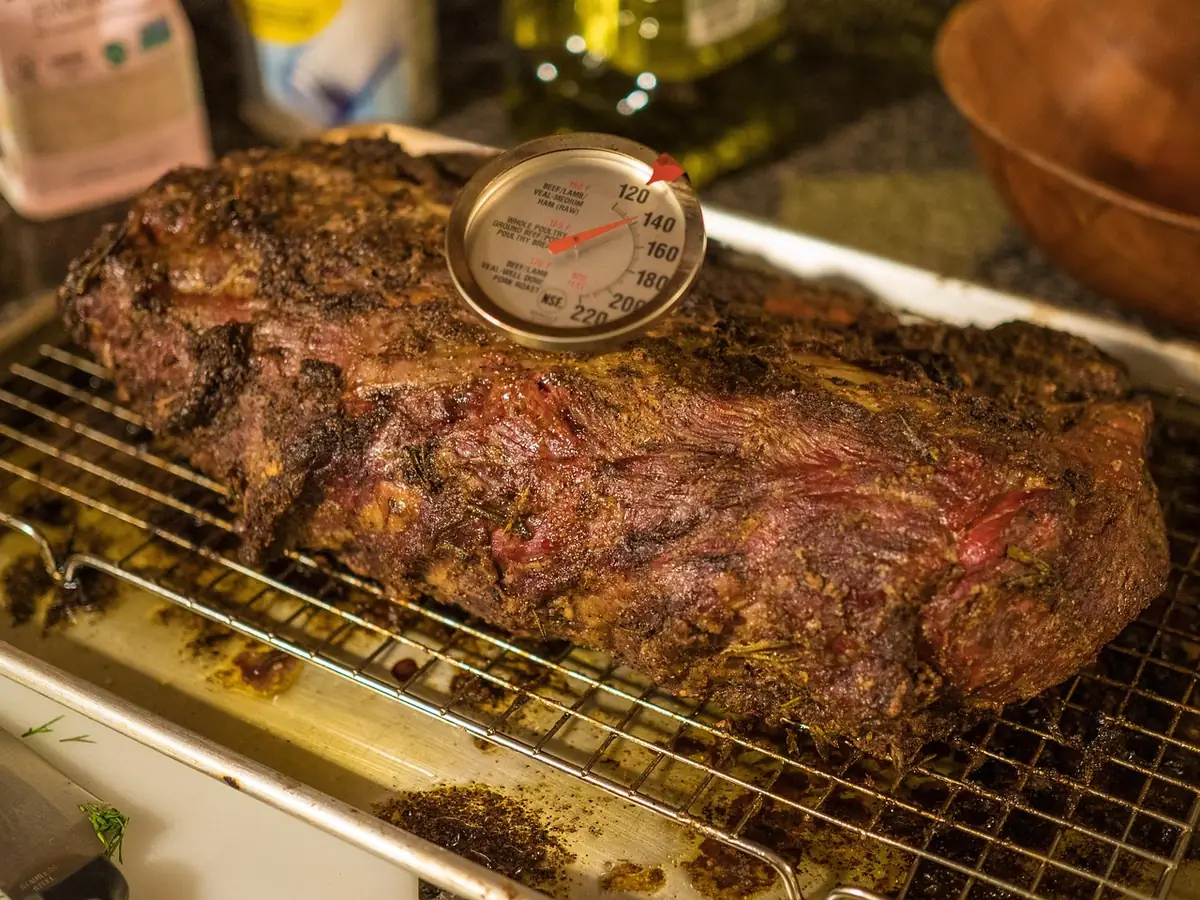
A thermometer is the only reliable way to hit the medium rare steak temp every time. Times vary with thickness, the meat’s starting temperature and the heat, so the clock is only a rough guide.
Instant-read vs. leave-in probe
| Type | Best for | Tips |
|---|---|---|
| Instant-read digital | Pan-seared and grilled steaks | Reads in 2 to 4 seconds; check often in the last few minutes |
| Leave-in probe with cable or wireless | Thick steaks, reverse sear, roasts | Set an alarm 5°F below your pull temp; no lid opening needed |
Where to put the probe
- Go in from the side. Slide the tip horizontally into the edge of the steak, so it sits in the center of the thickest part. Pushing down from the top makes it easy to go too far.
- Find the lowest number. Move the tip slightly in and out; the lowest reading is the true center.
- Stay away from bone and fat. Bone conducts heat and fat pockets read differently, so both give false numbers.
- Check two spots on big or uneven steaks. Tapered cuts like picanha or tri-tip cook faster at the thin end.
How to calibrate it
Fill a glass to the top with ice, add cold water and stir for 30 seconds. Put the probe in the middle of the glass without touching the sides. It should read 32°F (0°C). If it’s off by more than 1°F to 2°F, recalibrate using the reset button or nut, or simply remember the difference and adjust your targets.
Why the Finger Test Is Unreliable
The touch test compares the feel of a steak to the fleshy base of your thumb as you touch your thumb to different fingers. Thumb to index finger feels like rare, thumb to middle finger like medium-rare, and so on. It’s a fun trick, but a poor way to judge steak doneness.
- Hands differ. Your palm’s firmness depends on your age, size and muscle tone, so the scale shifts from person to person.
- Cuts differ. A filet is naturally soft and a flank steak is naturally firm, so a medium well steak of one cut can feel like a medium-rare steak of another.
- Thickness and fat matter. A thick, marbled ribeye feels softer than a thin sirloin at the same doneness.
- Safety needs a number. If you want a medium steak temp of 145°F for safety, only a thermometer can confirm it.
Use touch only as a hint that it’s time to grab the thermometer.
Best Doneness by Cut
Every cut has a sweet spot. Lean cuts dry out fast past medium, while heavily marbled cuts need a bit more heat for the fat to soften. This table pairs common steaks with the doneness that suits them best.
| Cut | Best doneness | Why |
|---|---|---|
| Ribeye | Medium-rare to medium (130°F to 140°F / 54°C to 60°C) | Rich marbling needs heat to melt; rare ribeye can taste waxy |
| New York strip | Medium-rare (130°F to 135°F / 54°C to 57°C) | Firm and beefy with a fat cap; stays juicy at medium-rare |
| Filet mignon (tenderloin) | Rare to medium-rare (125°F to 135°F / 52°C to 57°C) | Very lean, so it turns dry and bland past medium |
| Flank and skirt | Medium-rare to medium (130°F to 140°F / 54°C to 60°C) | Thin and coarse; cook fast and slice thin against the grain |
| Top sirloin | Medium-rare (130°F to 135°F / 54°C to 57°C) | Lean and affordable; overcooking makes it chewy |
| Picanha | Medium-rare to medium (130°F to 140°F / 54°C to 60°C) | Thick fat cap renders best with a little more heat |
For cut-by-cut recipes, see our tenderloin steak guide for filet, the New York strip steak recipe, and our picanha steak guide for slicing and grilling that fat-capped cut.
Medium Rare Steak Temp by Cooking Method
The medium rare steak temp is the same whatever you cook on, but the pull temp and the amount of carryover change with the method. Here’s how to hit medium-rare four common ways.
| Method | Cooking heat | Pull for medium-rare | Notes |
|---|---|---|---|
| Grill (direct heat) | 450°F to 500°F (230°C to 260°C) | 125°F to 130°F (52°C to 54°C) | High heat means 3°F to 5°F of carryover |
| Cast iron pan | Smoking-hot skillet | 125°F to 128°F (52°C to 53°C) | Baste with butter in the last 1 to 2 minutes |
| Reverse sear | Oven at 225°F to 275°F (110°C to 135°C), then a hard sear | About 115°F (46°C) out of the oven | The sear adds 10°F to 15°F; little carryover after |
| Sous vide | Water bath set to 130°F (54°C) | Bath temperature is the final temp | Sear 45 to 60 seconds per side, dry the surface first |
- Grill: our how to grill steak guide covers two-zone fires, flipping and grill marks.
- Pan: the cast iron skillet steak recipe walks through searing and butter basting.
- Reverse sear: for steaks 1½ inches (4 cm) or thicker, follow how to reverse sear a steak for even pink from edge to edge.
- Sous vide: our sous vide steak chart gives bath temps and times for every doneness.
Step-by-Step Method
This method works for a 1- to 1½-inch (2.5 to 4 cm) steak in a pan or on the grill. Adjust the pull temp to the doneness you want using the steak temperature chart above.
- Dry and salt early. Pat the steak dry and salt it with about ¾ teaspoon (4 g) kosher salt per pound (450 g), either 40 minutes to 24 hours ahead or right before cooking.
- Get the heat high. Heat a cast iron skillet until it just smokes, with 1 tablespoon (15 ml) of high-smoke-point oil, or bring the grill to 450°F to 500°F.
- Sear and flip often. Cook 3 to 5 minutes total per side, flipping every minute or so for an even crust and a narrower gray band.
- Start checking early. Take the first reading about 2 minutes before you expect it to be done, then every 30 to 60 seconds.
- Pull at the right number. To reach the medium rare steak temp, pull a 1-inch steak at 126°F to 128°F (52°C to 53°C).
- Rest, then slice. Rest 5 to 10 minutes, then slice against the grain and serve.
How Long to Rest a Steak
Resting lets carryover cooking finish and gives the juices a few minutes to thicken slightly, so less of them run onto the board when you slice. It carries the steak from its pull temp to the final number on the steak temperature chart, and it completes the USDA’s 3-minute rest if you’re cooking to 145°F.
| Steak | Rest time |
|---|---|
| Thin steaks under 1 inch (2.5 cm) | 3 to 5 minutes |
| Steaks 1 to 1½ inches (2.5 to 4 cm) | 5 to 10 minutes |
| Thick steaks 2 inches (5 cm) and up | 10 minutes |
| Reverse-seared or sous vide steaks | 0 to 3 minutes; they’re already even |
- Rest on a rack or board, not in the hot pan, which keeps cooking the bottom.
Common Mistakes to Avoid
Most overcooked or uneven steaks come down to a few small errors.
- Pulling at the final temp. If you take the steak off at 135°F, carryover takes it past the medium rare steak temp and into medium. Pull 5°F early, or more for thick cuts.
- Measuring in the wrong spot. A probe that’s too shallow, touching bone or sitting in fat reads high or low. Go in from the side to the center.
- Trusting time alone. Recipes give times as a guide. Thickness, fridge-cold meat and heat levels change them.
- Using an uncalibrated thermometer. A thermometer that’s 5°F off turns medium-rare into medium. Do the ice-water test.
- Starting with a wet steak. Moisture steams instead of searing, so the steak spends longer in the pan and overcooks before it browns.
- Cutting in right away. Slicing straight off the heat loses juice and stops carryover short of your target.
- Slicing with the grain. Long fibers make even a perfect medium rare steak chewy. Cut across them.
Easy Recipes to Try Next
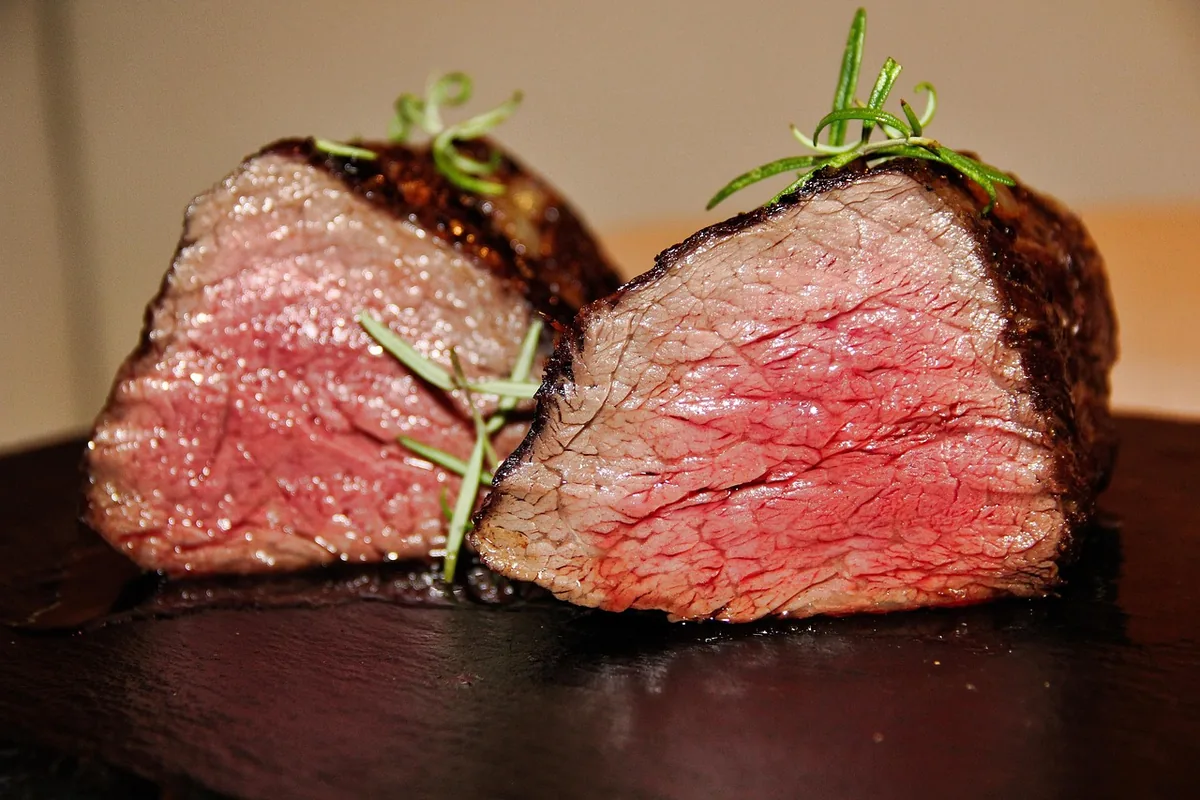
Put the steak temperature chart to work with one of these recipes. Each one names the pull temp for its method, so you can match it to your favorite doneness.
- Cast iron skillet steak: the fastest weeknight route to a dark crust and a pink center.
- Reverse sear steak: the most even result for thick cuts.
- Sous vide steak: set the bath to your exact final temperature.
- Steak sandwich: a good home for leftover medium-rare slices.
Cooking fish too? Our salmon internal temp guide covers the same pull-and-rest idea for salmon. For more cuts and ideas, browse all our steak recipes.
Steak Temperature FAQs
What is the medium rare steak temp?
Medium-rare steak is 130°F to 135°F (54°C to 57°C) after resting. Take it off the heat at about 125°F to 130°F (52°C to 54°C) and rest it 5 to 10 minutes; carryover cooking adds the last few degrees.
What is the medium steak temp?
The medium steak temp is 140°F to 145°F (60°C to 63°C) after resting, with a pink center and tan edges. Pull it at 135°F to 140°F (57°C to 60°C). At 145°F with a 3-minute rest it meets the USDA’s safe minimum for whole cuts.
What temperature is a medium well steak?
A medium well steak is 150°F to 155°F (66°C to 68°C) after resting, with only a faint hint of pink. Pull it at 145°F to 150°F (63°C to 66°C). Well-marbled cuts like ribeye stay juiciest at this level.
Is medium-rare steak safe to eat?
The USDA recommends 145°F (63°C) with a 3-minute rest for whole cuts of beef, and medium-rare is below that. Many cooks still choose it for intact steaks. Pregnant people, young children, older adults and anyone with a weakened immune system should eat steak cooked to at least 145°F.
How long should a steak rest?
Rest steaks 1 to 1½ inches thick for 5 to 10 minutes, thin steaks for 3 to 5 minutes, and thick steaks for about 10 minutes. Reverse-seared and sous vide steaks need little or no rest.
Is the finger test accurate for steak?
No. The touch test varies with your hand, the cut, its thickness and its fat, so it can be off by a whole doneness level. An instant-read thermometer in the center of the thickest part is the reliable way to check.


