
Blog
Easy Salmon Piccata With Lemon Caper Sauce

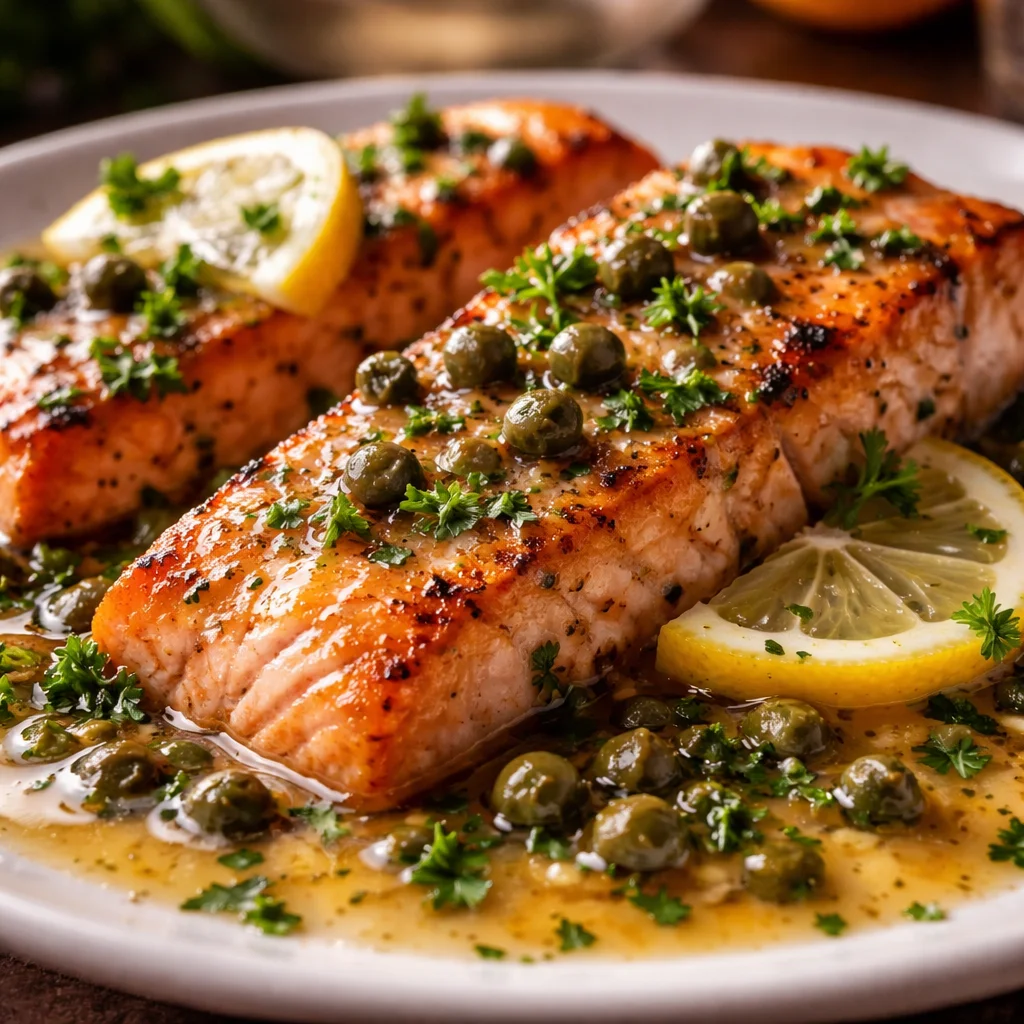
Salmon piccata is pan-seared salmon in a bright lemon, butter and caper sauce, the same pan sauce as classic chicken piccata, made in the same skillet in about 25 minutes. The salmon gets a light dusting of flour so it browns well, then the pan is deglazed with white wine (or broth), lemon juice and capers and finished with cold butter for a glossy sauce. It tastes like a restaurant dinner with weeknight effort.
Below you’ll find the ingredients, step-by-step instructions, how to tell when salmon is done, tips for a sauce that doesn’t split, variations and what to serve with it. The printable recipe card is at the bottom.
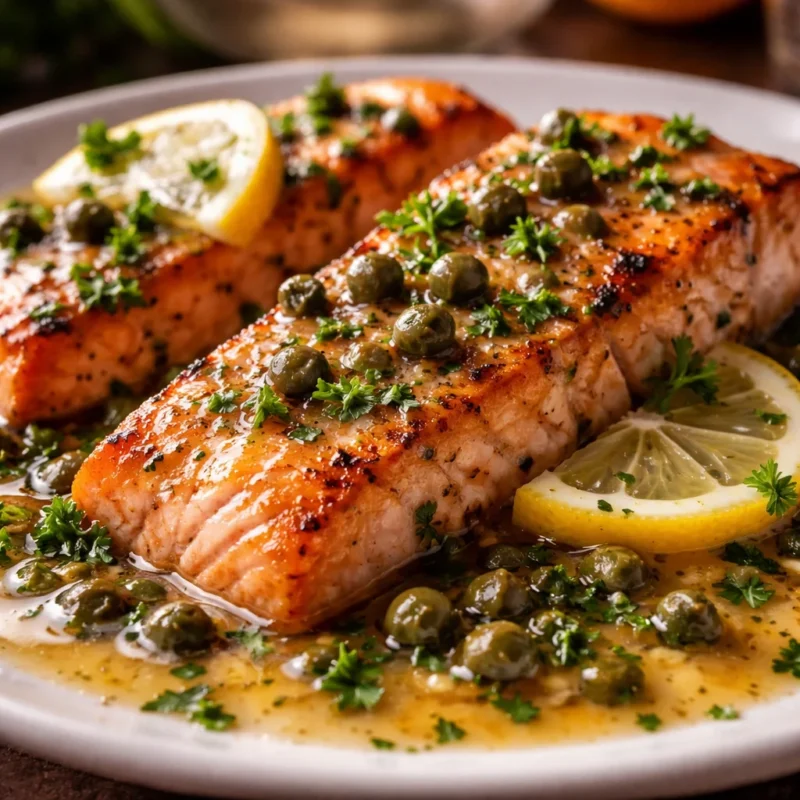
Ingredients for Salmon Piccata
For the salmon
- Salmon fillets, 4 (about 6 oz / 170 g each), about 1 inch (2.5 cm) thick, skin on or off.
- Salt, ¾ teaspoon, and black pepper, ¼ teaspoon.
- All-purpose flour, 3 tablespoons, for a light dusting (see the gluten-free note below).
- Olive oil, 1 tablespoon, and unsalted butter, 1 tablespoon.
For the lemon caper sauce
- Shallot, 1 small, finely chopped, and garlic, 2 cloves, minced.
- Dry white wine, ½ cup (120 ml), such as Sauvignon Blanc or Pinot Grigio, or more broth.
- Low-sodium chicken or vegetable broth, ½ cup (120 ml).
- Fresh lemon juice, 3 tablespoons (about 1 lemon), plus lemon slices to serve.
- Capers, 2 tablespoons, drained and rinsed.
- Cold unsalted butter, 3 tablespoons (42 g), cut into cubes.
- Fresh parsley, 2 tablespoons, chopped.
How to Make Salmon Piccata (Step by Step)
1. Prepare the salmon
Pat the fillets very dry with paper towels and season both sides with salt and pepper. Spread the flour on a plate, press the flesh side of each fillet into it, and tap off the excess. You want a thin, even coat, not a crust.
2. Sear
Heat the oil and 1 tablespoon butter in a large skillet over medium-high heat until the butter foams. Add the salmon flesh side down (skin side up) and cook without moving it for 4 minutes, until deep golden. Flip and cook 2 to 4 minutes more, until the thickest part reaches 145°F (63°C), or slightly less if you like it medium (see below). Move the salmon to a plate.
3. Start the sauce
Pour off all but about 1 teaspoon of fat and lower the heat to medium. Add the shallot and cook for 1 minute, then add the garlic for 30 seconds.
4. Deglaze and reduce
Pour in the wine and scrape up the browned bits. Simmer until reduced by half, about 2 minutes. Add the broth, lemon juice and capers and simmer 2 to 3 minutes more, until reduced to about ⅓ cup.
5. Finish with butter
Take the pan off the heat. Swirl in the cold butter a few cubes at a time until the sauce turns creamy and glossy. Stir in the parsley and taste; add a pinch of salt or a squeeze more lemon if needed.
6. Serve
Return the salmon to the pan for a moment and spoon the sauce over it. Serve right away with lemon slices.
How to Tell When Salmon Is Done
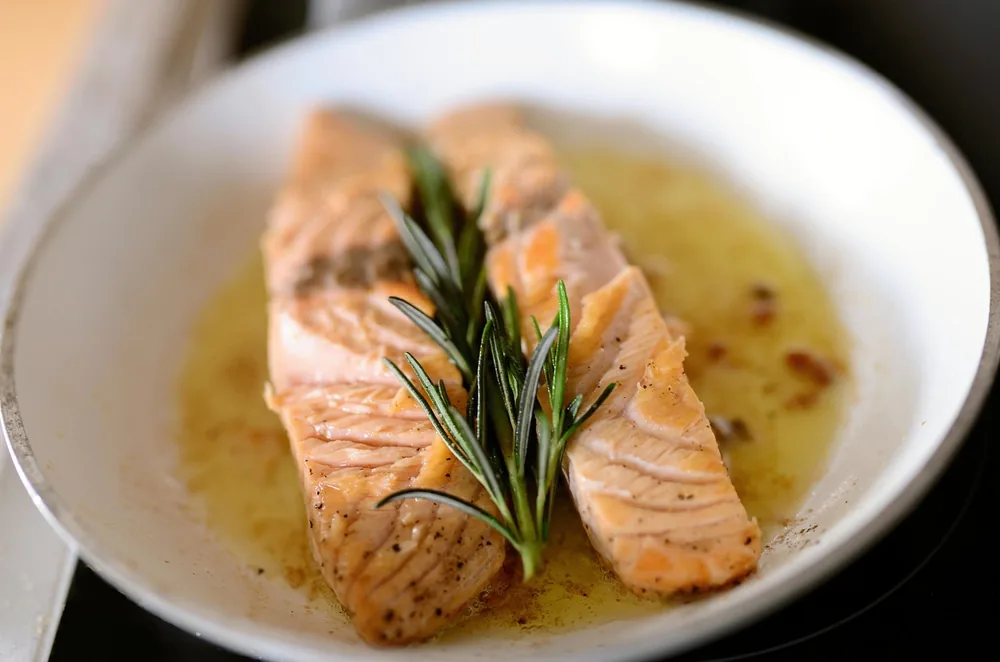
The FoodSafety.gov safe minimum temperature for fish is 145°F (63°C), when the flesh is opaque and separates easily with a fork. Many cooks take salmon off the heat at 125°F to 130°F (52°C to 54°C) for a moister, medium center; that’s a personal choice and below the official guideline, so cook to 145°F for anyone who is pregnant, young, older or has a weakened immune system. An instant-read thermometer in the thickest part is the easiest way to check.
Chef Emma’s Tips
- Dry fish browns, wet fish steams. Pat the fillets dry right before flouring.
- Don’t move it. Let the salmon sear undisturbed; it releases from the pan once a crust forms.
- Rinse the capers. Brined capers are salty, and rinsing keeps the sauce balanced.
- Butter goes in off the heat. Boiling the sauce after adding butter makes it greasy and split.
- Add lemon to taste at the end. Lemons vary, so taste before serving.
Variations
- No wine: use 1 cup broth total and an extra teaspoon of lemon juice.
- Gluten-free: dust with cornstarch or a gluten-free flour blend, or skip the flour entirely.
- Dairy-free: sear in olive oil and finish the sauce with 2 tablespoons olive oil instead of butter; it will be thinner.
- Creamy: stir 3 tablespoons heavy cream into the reduced sauce before the butter.
- Chicken or white fish: the same sauce works on pounded chicken cutlets (cooked to 165°F) or cod and halibut fillets.
What to Serve With Salmon Piccata
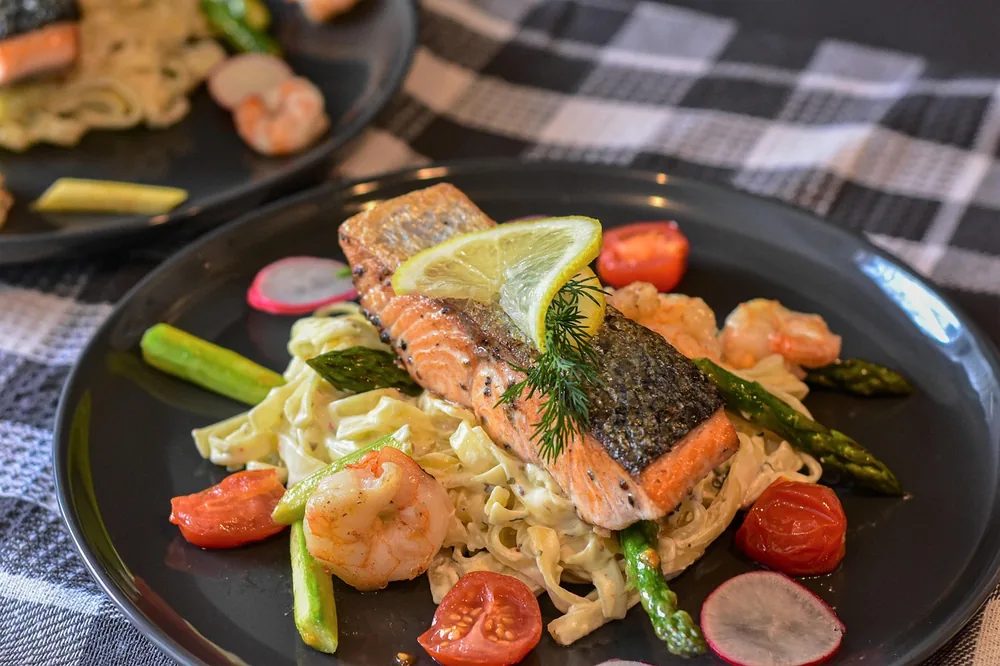
- Angel hair pasta or linguine tossed with a little olive oil, to catch the extra sauce
- Roasted asparagus or green beans
- Rice, orzo or mashed potatoes
- A simple green salad and crusty bread
More easy salmon dinners: our baked sockeye salmon with lemon garlic butter, the one-pan salmon with vegetables, honey garlic salmon bites, and how to grill salmon. See all our salmon recipes.
Storage and Reheating
- Refrigerate leftovers within 2 hours and eat within 3 to 4 days.
- Reheat gently, covered, in a 275°F (135°C) oven or a low skillet with a splash of broth until warm; high heat dries salmon out. Leftovers are also good cold, flaked over a salad.
- Freeze cooked salmon for up to 2 to 3 months for best quality; the sauce may separate, so whisk it while reheating.
These times follow the FoodSafety.gov cold food storage chart.
Salmon Piccata FAQs
What does piccata mean?
In Italian-American cooking, “piccata” means a thin cutlet, usually floured and pan-fried, served with a lemon, butter and caper sauce. With salmon, the fillet stays whole and the sauce is the same.
Do I have to flour the salmon?
No, but a light coat helps it brown evenly and slightly thickens the sauce. Without it, sear the fillets in a well-heated pan.
Skin on or skin off?
Either works. With skin-on fillets, sear the flesh side first, then cook the skin side until crisp.
Can I use frozen salmon?
Yes. Thaw it overnight in the refrigerator, then pat it very dry before seasoning.
Salmon Piccata Recipe Card
Calories are an estimate per serving (1 fillet with sauce) based on USDA FoodData Central values for farmed Atlantic salmon and the sauce ingredients.

Salmon Piccata
Ingredients
Equipment
Method
- Pat the salmon dry, season with salt and pepper, and dust the flesh side lightly with flour.
- Heat the oil and 1 tbsp butter in a large skillet over medium-high heat. Sear the salmon flesh side down 4 minutes, flip and cook 2 to 4 minutes more, until it reaches 145°F (63°C). Move to a plate.
- Pour off all but 1 tsp fat, lower to medium, and cook the shallot 1 minute and the garlic 30 seconds.
- Add the wine, scrape up the browned bits and reduce by half. Add the broth, lemon juice and capers and simmer until reduced to about 1/3 cup.
- Off the heat, swirl in the cold butter until glossy, then stir in the parsley and season to taste.
- Spoon the sauce over the salmon and serve with lemon slices.